






Karnataka: Better prep, preparatory exams & extra classes – What helped boost SSLC pass percentage?
In a structured and data-driven effort to raise SSLC pass percentages, the Karnataka School Education Department rolled out targeted interventions across the 2025–26 academic year, following clear directions from the chief minister to prioritise learning outcomes and accountability.
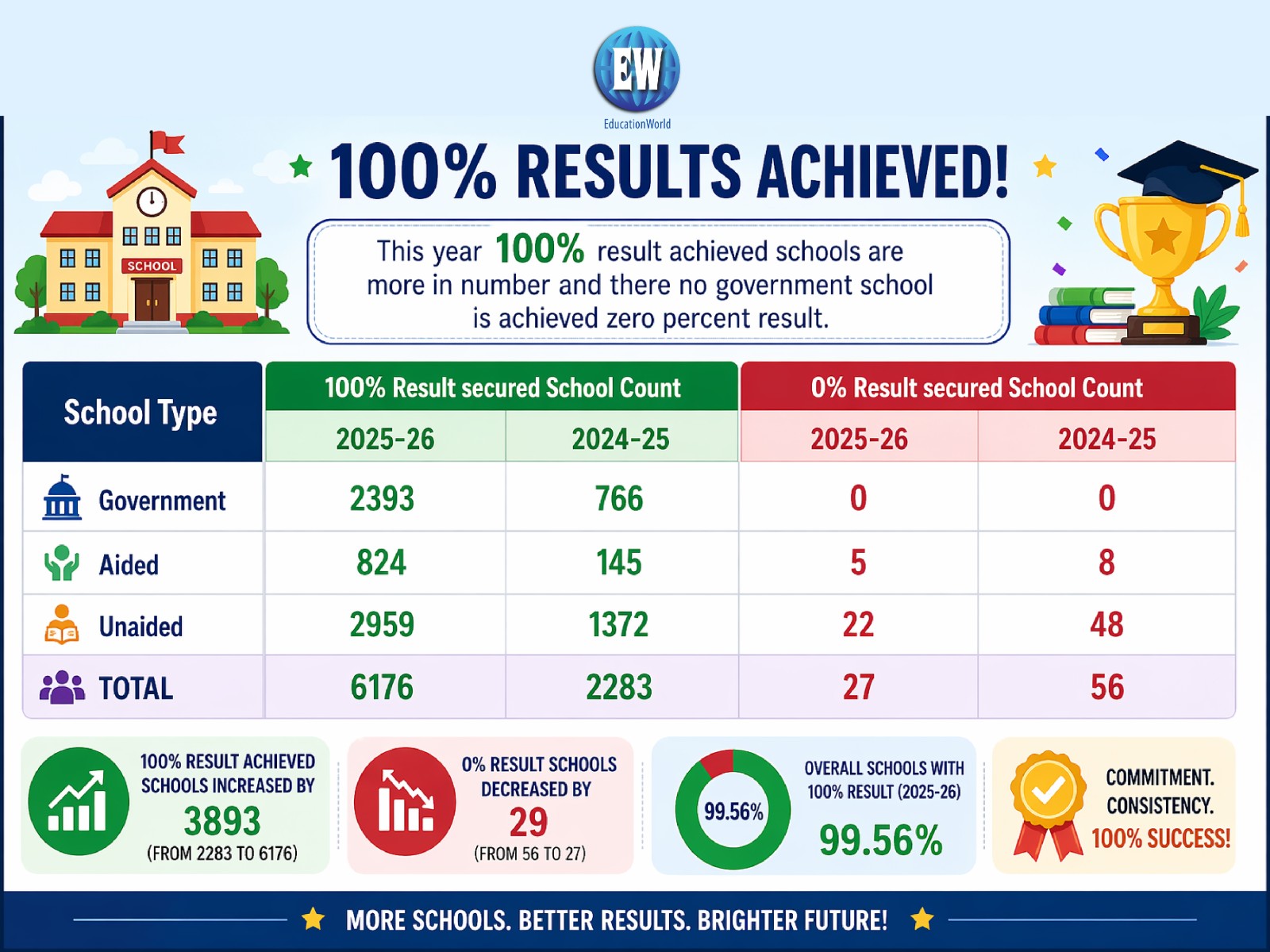
Karnataka’s pass percentage rose by a 14.06% among freshers for this academic year. The pass percentage of SSLC students in government schools rose from 16.8% as compared to the previous year with no government school reporting 0% pass results.
Karnataka’s education minister Madhu Bangarappa attributed this to year-long efforts by department officials, parents and stakeholders.
For instance, a Mega Parents-Teachers Meeting chaired by the Chief Minister on November 14 was conducted simultaneously across all government high schools, KPS institutions, and junior colleges, ensuring direct parental engagement. Guest teachers were appointed from June 1, eliminating early-year vacancies and enabling uninterrupted teaching from day one.
A detailed 29-point circular issued in June mandated completion of the SSLC syllabus by December 2025, followed by revision. Students were categorised into Above Average, Average, and Below Average groups for targeted interventions, with daily after-school remedial classes focused on writing skills and reading practice. Lesson-Based Assessments (LBA) were conducted after every lesson, with student-wise data uploaded to SATS for continuous tracking. Low-performing schools were placed on a “watchlist” and adopted by district and taluk officials for focused monitoring, alongside mandatory school inspections through the SATS app.
The department introduced an SSLC Student Corner providing subject-wise blueprints, model papers, previous year question papers with key answers, and scanned answer scripts of 2024–25 centum scorers. Exhaustive graded question banks enabled students to practise from basic to application-level questions. Examination timetables, including Examination-2, were announced in advance to support structured preparation.
For the first time, three state-level preparatory exams were conducted between January 5–10, January 27–February 2, and February 23–28, 2026, using centrally prepared question papers. Performance data from these exams enabled student-wise and subject-wise interventions, with noticeable improvement from Preparatory Exam 1 to 3.
Review mechanisms included monthly district-level meetings led by CEOs, fortnightly reviews by DDPIs, and block-level follow-ups. Teachers underwent training at DIETs and online through DSERT on question bank usage and pedagogy.
In the Kalyana Karnataka region, focused interventions included teacher training workshops in Kalaburagi and Raichur, extra classes with refreshments, writing practice sessions, and a ₹3.6 crore incentive programme providing ₹1,000 per month to teachers and headmasters for three months. Community participation further supported preparation, with study groups, transport arrangements, and local support systems contributing to improved student performance.
Also read: Karnataka: Pass percentage in SSLC exams increases by 14.06%









Add comment