
No products in the cart.






Karnataka: Under-funded reform
– Reshma Ravishanker (Bengaluru)
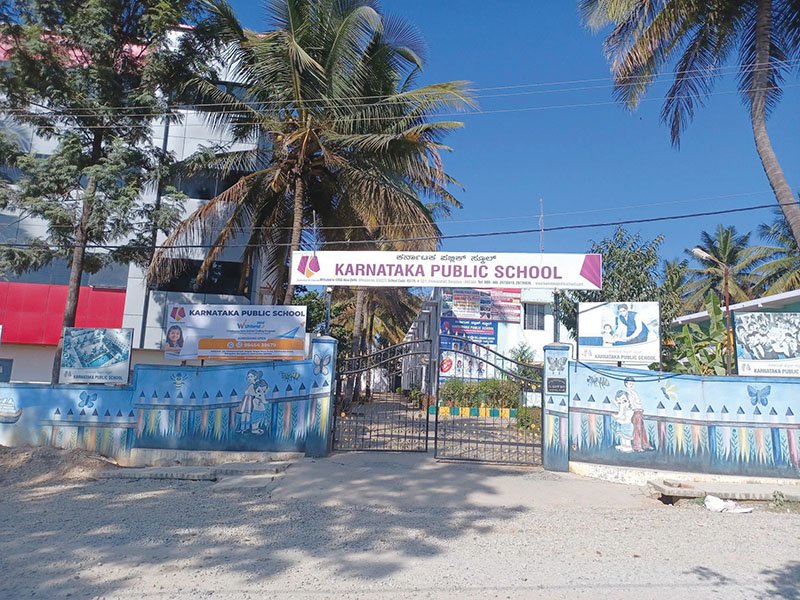 Against the backdrop of a top-level leadership tussle between Chief Minister Siddaramaiah and his deputy D.K. Shivakumar for the chief minister’s chair, the Congress-led state government is proceeding with several school education “reform” initiatives.
In early October, it issued a Government Order (GO) reducing the minimum average pass marks required to clear the state’s class X SSLC (Secondary School Leaving Certificate) exam from 35 to 33 percent, and the pass average for II PUC (Pre-University Class i.e, class XII) exam from 35 to 30 percent. Subsequently on October 15, the Department of School Education and Literacy (DSEL) announced a plan to upgrade 800 (out of a total 49,300) government schools across the state into Karnataka Public Schools (KPS).
Launched in 2018-19, KPS schools are well-equipped K-12 institutions affiliated with the Karnataka Secondary Education Examination Board. Modeled on the highly-reputed Central government-run Kendriya Vidyalayas (KVs), they provide superior academic infrastructure, rigorous curriculum and well-trained teachers. More importantly, KPS schools offer bilingual instruction — Kannada and English medium at the option of students. This is a departure from state government schools in which English is taught as a language with Kannada as the medium of instruction. Currently, 308 KPS schools with an aggregate enrolment of 2.83 lakh students are operational statewide.
According to the state’s school education minister Madhu Bangarappa, upgradation will cost the exchequer Rs.4 crore per institution, with 500 schools to be funded by the Asian Development Bank, 200 by the Kalyan Karnataka Development Board, and 100 by the Karnataka Mining Environment Restoration Corporation. “KPS schools offer education from pre-primary to II PUC (class XII) in one institution. Parents have the option of enrolling their children in Kannada or English medium. You will see a significant change in two to three years. People will be eager to send their children to government schools,” Bangarappa informed media persons, adding that the long-term plan is to establish 6,000 KPS schools statewide — one in every gram panchayat.
Initially the KPS initiative was welcomed by teachers and parents. However, a subsequent proposal to shut down government schools within a 5 km circumference of a KPS and merge their students has drawn flak. Under a proposed KPS Magnet Schools scheme, government schools with fewer than 50 students will be merged with newly-established KPS schools.
According to the All India Save Education Committee (AISEC), a network of academics, teachers and students, the Congress-led state government is “attempting to dismantle the public education system” through the KPS Magnet Schools scheme. Comments Allamaprabhu Bettadur, president of AISEC: “The KPS scheme funded from a Rs.2,000-crore loan from the Asian Development Bank is a cover for shutting down around 7,000 government schools. It’s death knell for public education in Karnataka.”
Similarly, the All-India Democratic Students’ Organisation (AIDSO) has strongly opposed the KPS Magnet School scheme. “The task of the government is not to shut down but to strengthen every government school by equipping them with adequate teachers, infrastructure, learning materials, and democratic functioning. Education is a fundamental right and a social responsibility — it cannot be sacrificed for cost-cutting, corporate-style management. This is nothing but another attempt to merge and shut down existing government schools in the guise of a new scheme. It will increase the number of dropouts, especially among girl students, because of their having to commute longer distances to KPS schools. This will also result in further commercialisation and privatisation of education under the guise of ‘reform,’” says Nithin, AIDSO Mysuru District Secretary. “With the annual budgetary allocation for education almost stationary for the past three years, there’s been no improvement in the condition of the state’s 49,300 government primary-secondary — especially rural schools which grudgingly host 5 million children,” he adds.
According to the latest UDISE+ (2023-24) data, 1,052 government schools in Karnataka don’t have functional electricity, 1,000 don’t provide toilets for girls and 29,000 don’t provide computer/internet facility. Moreover, 1,078 schools have zero enrolment. Therefore, the government’s proposal to merge and upgrade them into larger, well-equipped KPS schools makes good sense, say informed educationists.
“Consolidation of small unviable schools into large, well-equipped KPS is a long-overdue reform. In 2018, the education ministry proposed 6,000 KPS schools statewide — one in every gram panchayat of the state. Currently, most gram panchayats have separate primary, upper primary and secondary schools, most of them in run-down condition. The KPS model aims to merge and consolidate these fragmented institutions into single pre-primary to class XII schools with better infrastructure, qualified teachers and the option of Kannada or English medium instruction. It’s better to have 6,000 well-equipped KPS schools than 49,000 under-resourced public schools. Students will surely gain from learning in a well-resourced composite campus. However government must ensure good roads and free transport so children can reach their KPS schools conveniently and safely,” says Prof. A.S. Seetharamu, former professor of education at the Institute of Social and Economic Change, Bengaluru.
However, the state government’s proposal to increase the number of KPS schools statewide from 308 to 1,100 by 2029-30 — and that too on borrowed money — is an indicator of its bankrupt finances. With 25 percent of annual revenue allocated towards freebies — free bus rides for women, 200 units of free electricity for all, and doles for unemployed youth — attaining the target of 6,000 KPS statewide won’t be fulfilled in the forseeable future.
But with protests mounting against shut down and consolidation of existing government schools, education minister Bangarappa made a U-turn declaring “no government school will be shut down”. Therefore, government school reforms — and the KPS schools programme — is likely to be placed on a distant backburner.







Add comment