






Tamil Nadu: New curriculum anxiety
– Shivani Chaturvedi (Chennai)
 Soon after the landmark National Education Policy (NEP) 2020 was promulgated on July 29, 2020, the Tamil Nadu state government rejected it — mainly because it had resurrected a long-buried proposal for all primary-secondary school children nationwide to learn three languages — mother tongue, Hindi and a ‘foreign’ language (i.e, English). According to Tamil Nadu chief minister M.K. Stalin, despite the united opposition of Dravidian political parties to the ‘imposition’ of Hindi on Tamil Nadu way back in the 1960s, NEP 2020 again reimposes Hindi on children of the state.
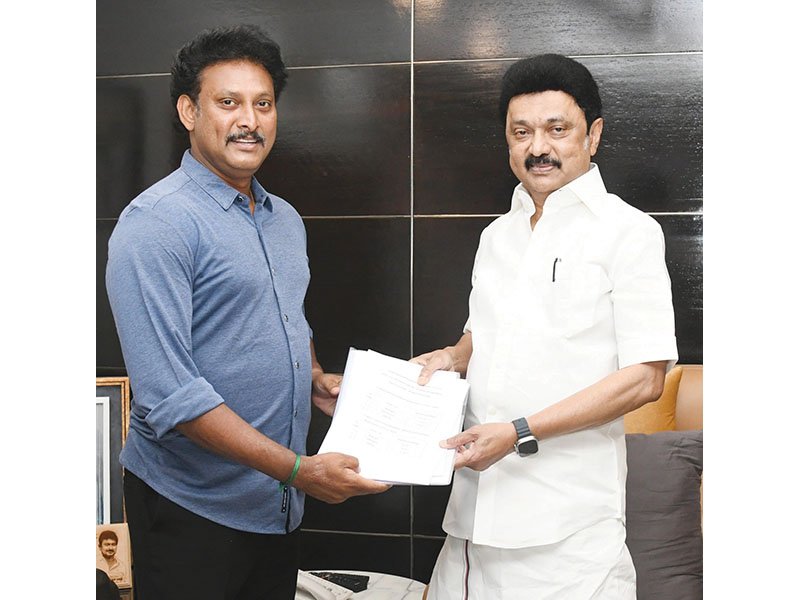
Therefore, in 2022 the state’s Dravida Munnetra Kazhagam (DMK) government constituted a committee chaired by retired Justice D. Murugesan to formulate a separate and distinct State Education Policy for Tamil Nadu. In July 2024, the Murugesan Committee submitted a draft SEP. The latest development is that on August 8, the state government appointed a high-powered committee chaired by Anil Mahesh Poyyamozhi, the state’s school education minister to draft a new K-12 curriculum.
The committee — comprising leading academics, researchers, and educationists — will play a central role in shaping classroom learning for 9 million public (government) schoolchildren across the state. Among others the curriculum committee comprises V. Narayanan, chairman, ISRO, R. Ashwin, well-known cricketer, and Sultan Ahmed Ismail, member of the Tamil Nadu State Planning Commission who chairs the Curriculum Design Committee.
According to education ministry sources, the curriculum committee has been instructed to ensure departure from textbook-heavy, exams-driven instruction towards competency-based learning, creativity, digital literacy, environmental awareness, arts integration, and social-emotional development. SEP 2025 also mandates children to learn only two languages — Tamil and English (cf. the NEP 2020’s three-language formula) and scraps the class XI board exam, replacing it with continuous evaluation.
Savvy educationists have welcomed the intent and direction of SEP 2025 and the curriculum design. Dr. S. Somasundaram, a Chennai-based educationist, says that curricular overhaul is overdue and “has the potential to change how children experience learning, especially if the new curriculum truly values conceptual over memory-based learning. The state government’s focus on Tamil history and culture, life skills, and innovative pedagogies could give students a more balanced education than conventional exam-centric models.”
However, there is apprehension about the government’s capability to overhaul the entrenched school education system. Teachers contend that revising curricula across nearly 37,000 government and aided schools will require unprecedented levels of teacher training, infrastructure upgrades, and resource mobilisation. A member of the Tamil Nadu Teachers’ Forum warns that “unless the state invests heavily in implementation, rural schools will struggle, while urban private schools will adapt quickly — widening the rural-urban education divide instead of narrowing it.”
Fear is also expressed about aligning Tamil Nadu’s new curriculum with national entrance exams. Experienced educators worry that if the state’s syllabus diverges too sharply from the Central Board of Secondary Education (CBSE) and Council for the Indian School Certificate Examinations (CISCE) curricula, it will disadvantage TN students in national competitive exams. “Reform is necessary, but it should not isolate our students from the national mainstream,” says a member of a Chennai-based education research institute, not wishing to be identified.
Stakeholder participation remains another sticking point. Civil society groups argue that the process leading up to SEP 2025 was not sufficiently transparent. They contend the time allotted for public debate and scrutiny of the Justice Murugesan Committee’s draft was inadequate. “The government has assembled an impressive committee to draft the new K-12 curriculum but people still don’t know enough about everything that SEP 2025 proposes. Without transparency, trust might become a casualty and parents may prefer to enrol their children in schools affiliated with CBSE, CISCE or international exam boards,” says a parents-rights advocate.
Despite these apprehensions, the government maintains that the composition of the curriculum committee will result in a syllabus of academic rigour and child-centred learning. Officials say the involvement of senior researchers, higher-education professors, and early childhood experts will ensure the syllabus is “grounded in evidence and responsive to Tamil Nadu’s social realities.”
However, these are early days. Now much depends on the next few months — release of the draft curriculum, the quality of consultations, and practical frameworks the committee recommends for teacher training and assessment. Middle class households are keeping their fingers crossed that Tamil Nadu’s SEP 2025 and K-12 reforms will translate into classrooms where children think critically, explore creatively, and learn without fear. Fear of a wide gap between statements of intent incorporated into SEP 2025 and the education ministry’s implementation capability is pervasive.








Add comment