






Letter from the Editor

Against the backdrop of alarming reports that 40 percent of graduates of India’s 53,000 undergrad colleges and 1,338 universities are unemployed for over 12 months, choosing the most academically and aptitudinally suitable higher education institution (HEI) has become a critical life shaping decision for school and college-leavers. The era when years spent in HEIs was a time for young men to woo and win women students in parks, picnics and gardens as depicted in Bollywood blockbusters, is well and truly gone.
Decades of low industry and economic growth combined with casually designed syllabuses and curriculums unaligned with industry requirements have taken their toll. Today a plain vanilla college degree is no longer a guarantee of a respectable, adequately remunerated job in this era of high inflation and scary new digital and AI technologies obsolescing traditional entry-level jobs.
This is not to say that jobs are vanishing. I have always agreed with a statement made by Morarji Desai, a long-forgotten former prime minister, to the effect that India is a big country with millions of problems and so work is always available. But amazingly, omniscient central planners who drew up detailed five-year plans for national development for over 60 years until the Planning Commission was moth-balled in 2014, never thought about inducting industry leaders and managers on HEI boards to shape syllabi and curricula aligned with industry and economy requirements. Therefore, 21st century India has an overwhelming surfeit of youth qualified for rapidly disappearing clerical and administrative work, but a massive shortage of formally trained plumbers, electricians, technicians, civic contractors and agriculturists.
Against this backdrop, since 2013 we have been commissioning and publishing the annual EducationWorld India Higher Education Rankings (EWIHER) to inform and advise school and college-leavers about the country’s best 400-500 undergrad colleges and universities. Given their life-shaping importance, considerable planning and effort is invested in the annual EWIHER based on the knowledge and perception of over 2,000 faculty, HEI students and industry leaders across the country. They are interviewed by a professional market research agency (AZ Research, Bangalore) and persuaded to rate HEIs on several parameters of higher education excellence (faculty competence, leadership, industry interface, curriculum and pedagogy, infrastructure etc).
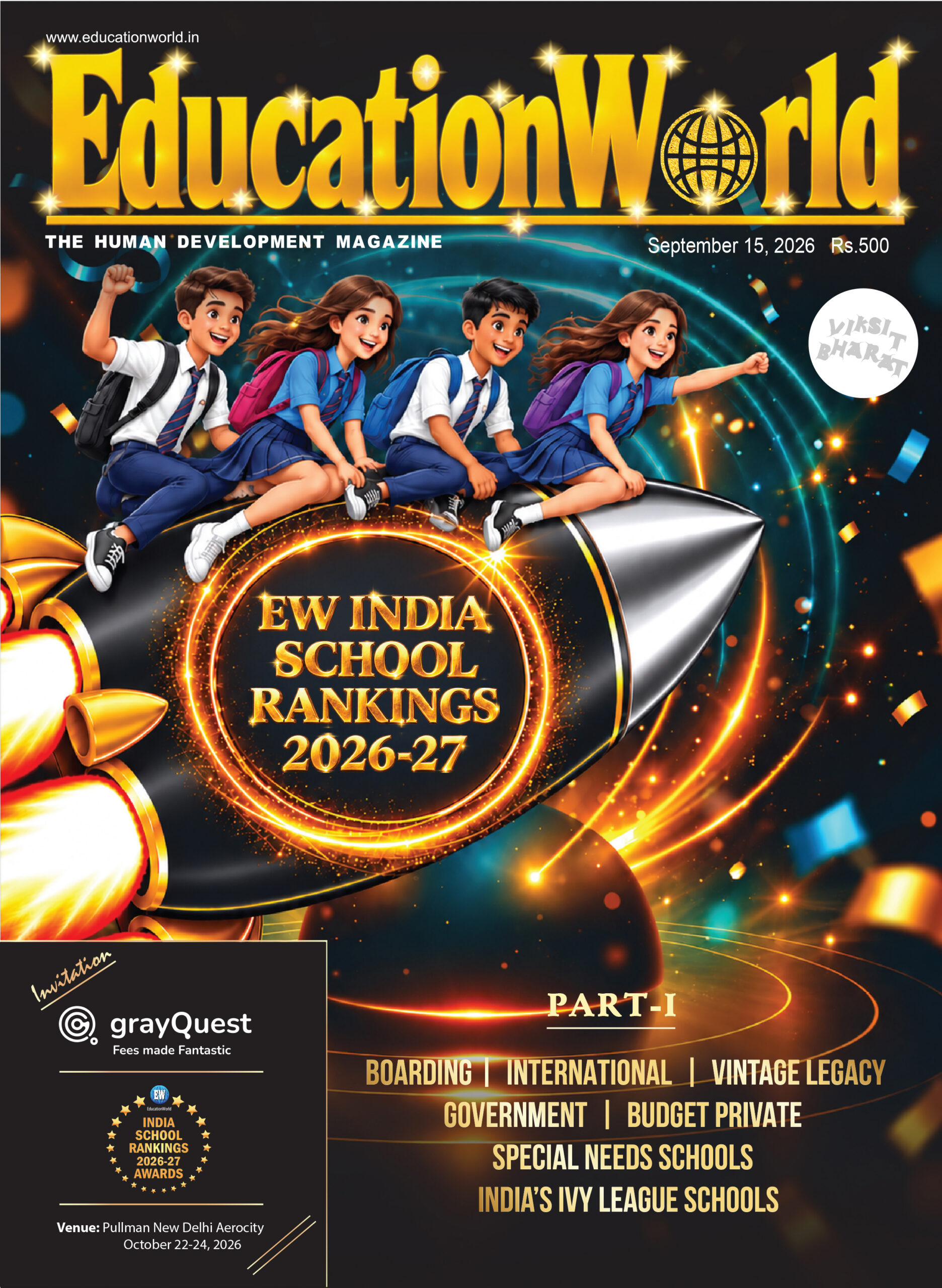
Last month, we ranked best universities. This month, we present detailed league tables ranking the country’s best Arts, Science and Commerce colleges, private engineering colleges and private B-schools. The objective is not only to aid and enable students to select the most suitable college/university but also to prompt HEIs to compete with each other to improve their rankings to attract high quality faculty, and perhaps endowments.
In the circumstances, ambitious students, faculty and institutional managements are advised to study the EW league tables carefully. The age of plain vanilla degrees serving as passports to employment and upward mobility is over.









Add comment