
No products in the cart.







Mayo College, Ajmer: 150 Years of Light, Leadership and Learning
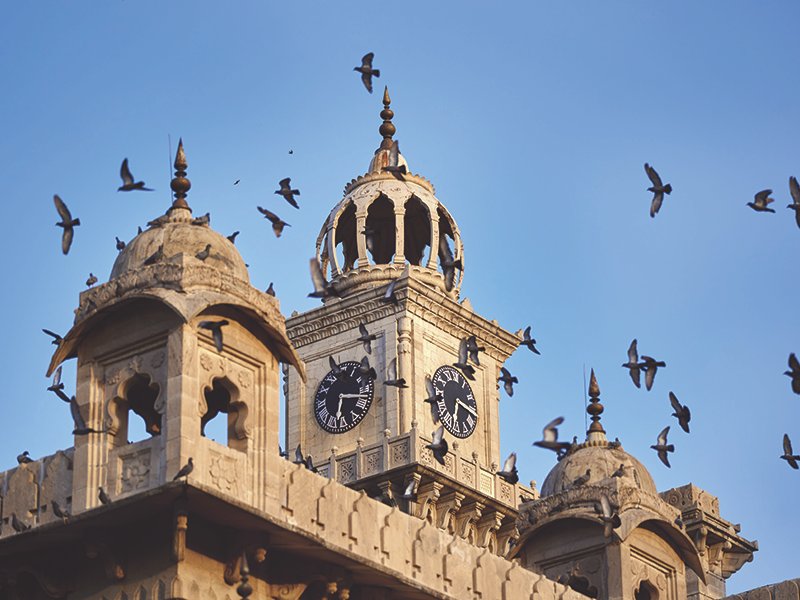
Across 187 acres of sweeping lawns, quiet colonnades, and athletic fields that hum with youthful energy, Mayo College stands not merely as a school, but as a living institution — one that continues to shape character, intellect, and destiny. Founded in 1875 with a visionary mandate to cultivate leaders for a rising India, Mayo’s legacy has never been confined to the past. It is, instead, a constant conversation between heritage and the future — between the solemn strength of tradition and the continuous reinvention that a modern world demands. A century and a half on, Mayo remains a rare synthesis: resolutely grounded, restlessly modern.
This is a school where the clang of a tennis ball echoes through century-old courts as a robotics workshop unfurls in a neighbouring lab; where equestrian grace meets the discipline of the STEM classroom; where the quiet of morning prayer gives way to the roar of young voices at St. John’s Ground. Amid the daily choreography of scholarship, sport, service, and self-discovery it is here that Mayo’s values come alive: leadership anchored in integrity, compassion embodied in action, and all-round excellence pursued with humility and purpose.
 The Spirit of a Living Tradition
Walk through Mayo’s main gate and the narrative begins at once. The Main Building — designed in Indo-Saracenic style — rises like a statement of continuity: a reminder that endurance and elegance can coexist. Around it, the campus unfurls with modern academic blocks, laboratories, STEM and robotics centres, digital learning hubs, and art studios; residential houses that become homes; and gardens that breathe life into learning. This is a school designed as a world to inhabit — where architecture becomes pedagogy, and space itself becomes a teacher.
Mayo’s 12 boarding houses form the heart of this living world. With 64 dormitories, 124 rooms, and 836 beds, residential life here is structured and carefully curated. Housemasters, matrons, tutors, and counsellors together form a net of care. The school’s Wellness Centre — equipped with medical professionals, 40 beds across five wards, two ambulances, ECG, defibrillators, monitors, nebulisers, and a sports-medicine unit — speaks to a deep understanding of the whole boy: mind and body, heart and spirit.
Pastoral care at Mayo is a promise. Every student is known. Noticed. Guided. The school’s Life Skills Programme integrates lessons on empathy, resilience, leadership, and digital citizenship. Peer mentoring and structured wellbeing sessions anchor adolescence with self-awareness and respect. Discipline here is strong, but never severe; expectations are high but never dehumanising.
 An Academic Culture That Thinks Beyond Exams
Mayo’s academic philosophy is founded on a practice rare in Indian schooling: the belief that true education transcends examinations. Here, learning is designed to begin at a question.
The school’s dual-curriculum framework — spanning CBSE and the Cambridge IGCSE (with A Levels commencing in 2026) — is more than a matter of options. It is deliberate academic architecture that allows for cross-pollination: the analytic rigour and structure of CBSE harmonising with the inquiry-driven, globally benchmarked Cambridge approach. For students, this results in intellectual capacity to move across domains, synthesize ideas, and engage with complexity.
The data tells its own unambiguous story: 46 percent of IGCSE grades at A/A*, and 85 percent A–C*. Over ₹25 crore in international scholarships in 2024–25. Graduates attending UC Berkeley, Cornell, Imperial College London, McGill, University of Melbourne, Sciences Po, NUS, Ashoka University, and other leading institutions worldwide. Students entering India’s premier civil and defence services, building ventures, shaping industries, enriching the arts, and guiding policy. These numbers are not just achievements; they are affirmations of a culture.
And yet, what makes these outcomes remarkable is the context: Mayo boys don’t rely on private tuition. Their average study time outside school hovers at 1.5 hours daily because their days are whole and expansive. They are designed to make room for a life well-lived: rigorous academics, compulsory sporting participation, cultural engagement, and leadership responsibilities.
“We see ourselves as guardians of our students’ heads, hearts, and hands,” says Vice Principal, Priyanka Bhattacharya. “Our curriculum is deliberately interdisciplinary in the truest sense — wherever curiosity leads, learning follows. Whether in a classroom, on the playing field, or upon a stage, every space becomes a site of inquiry, growth, and discovery.”
This philosophy is scaffolded by relentless faculty development. Mayo’s teachers refine their practice through curated learning and partnerships with institutions like the IITs, IIMs, IBM, University of Melbourne, and Stanford University. Regular INSET sessions bookend vacations. Workshops, action research, and external collaborations keep teaching continuously reflective and responsive. The Mayo College Faculty Fellowship Programme brings bright, young global educators into this ecosystem — an annual infusion of innovation and exchange.
 Sport as Philosophy, Not Extra
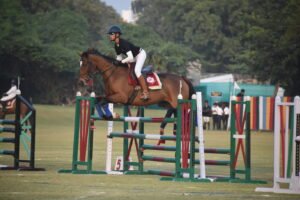
If Mayo’s classrooms cultivate intellect, its fields and courts forge character. The school’s sporting legacy is a way of life. Mens sana in corpore sano — a sound mind in a sound body — is not upheld here as a motto; it is lived, day after day, across a sprawling landscape of training grounds and opportunities.
Over the past year, Mayo registered over 100 state-level selections and 29 national representations. But numbers alone don’t define the ethos. “Sport at Mayo is not just about competition — it’s a philosophy of character,” says Aman Sharma, Director of Sports. “We teach our boys to lead, to endure, and to respect victory and defeat.” This turns games into moral classrooms and competition into a crucible for grace under pressure.
The infrastructure is as comprehensive as the intent. St. John’s Ground anchors a world-class sporting ecosystem: a nine-hole golf course; archery ground; a 400 m athletics track; six basketball courts; four cricket grounds (two multipurpose); two football grounds; two hockey grounds (clay and grass); eight tennis courts (five synthetic, three clay); six squash courts (including a glass-backed court); a 25-metre swimming pool and junior pool; a ten-lane shooting range; gymnastics and weightlifting halls; and a dedicated yoga centre. Adventure sports — trekking, cycling, mountaineering — round out the calendar with discipline, nature, and endurance.
The 2024–25 season reads like a compendium of ambition and achievement. In archery, Mayo clinched Overall Winner (U-17) at IPSC, with nine boys qualifying for SGFI Nationals.
Beyond the scoreboard, the journeys stand out: Udhav Singh Rathore’s gold in junior trap shooting at the 16th Asian Shooting Championships 2025 in Shymkent, Kazakhstan; Anjaneya Singh Mandawa’s bronze in skeet shotgun at the 7th Khelo India Youth Games 2025 — ecoming the youngest shotgun shooter to medal there and earning selection for the Asian Championship; Amough Gautam (Class 12/E), captaining Rajasthan’s U-17 hockey team; and Jaivir Singh Nagra (Class 9B), winning the Best Rider Trophy at the Junior National Equestrian Championship 2024–25 with individual and team eventing golds. Altogether, 29 boys qualified for SGFI Nationals, with 22 participating — underscoring the scale and depth of Mayo’s athletic culture.
 Horses, Heritage, and the Poetry of Motion
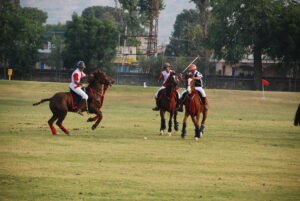
Perhaps nothing embodies Mayo’s heritage more vividly than its equestrian and polo programme — the only full-fledged, internationally affiliated setup of its kind in a boys’ boarding school in India. The Mayo College Horse Riding Club, affiliated with the Indian Polo Association (IPA) and the Equestrian Federation of India (EFI), anchors a tradition that is as demanding as it is noble. A stable of 65 horses — including 20 dedicated polo ponies — becomes, for many boys, the crucible of patience, accountability, fear management, and grace.
Training here is rigorous and holistic: riding techniques, horse management, dressage, polo tactics, and the subtler art of partnership between rider and animal. Mayo boys compete in prestigious tournaments — the Junior IPA Cup, Mayo Polo Cup (Jaipur), Bhopal Pataudi Cup, Bombay Gymkhana Arena Polo — and represent India internationally. The celebrated victory over the Harvard University Polo Team at the Myopia Polo Club, USA, is as much a symbol of athletic prowess as it is of Mayo’s distinctive character,
Recognition has followed. Mayo was honoured as Best School Promoting Sports in India at the FICCI India Sports Awards 2024. Clinics with national equestrian and polo icons keep the programme aspirational while retaining the rigour that sustains its prestige.
 Music, Theatre, and the Arts of the Heart
If sports at Mayo build leaders in motion, the arts build their inner life. Music here is an inheritance. The day may begin with hymns that steady the spirit, but it unfolds into practices and performances that sharpen technique and expand emotion. Students train across Indian and Western classical traditions — tabla, sitar, violin, piano, guitar, drums, and voice — guided by a distinguished faculty that includes performing professionals. Graded certifications, national festivals, recordings, and the Mayo College Orchestra and Choir’s performance calendar together speak to a culture that values mastery, precision, and the expressive power of art.
As part of its sesquicentennial celebrations in 2025, Mayo’s musical ensemble Rhythms of Heritage, performed at the Edinburgh Fringe Festival in Scotland — a benchmark international platform that few schools aspire to and fewer still achieve. In that appearance was a message: the arts at Mayo are foundational, and they reach outward into the world.
The Dramatic Society carries this outward gaze into performance. The Junior School Play marshals 150 young performers into a celebration of confidence and collaboration; the Class VII production brings 80 budding actors to the stage; eight Senior House plays bring more than 500 students into the exhilarating crucible of team creativity. The year crescendos in the Prize Giving Production — an annual testament to discipline, craft, and the courage to inhabit another voice, another world.
This creative culture is not insular. Earlier this year, a delegation of 17 students and three faculty travelled to the UK to watch a live performance of Oliver Twist — an immersion into the layered traditions of British theatre. The Trinity Speech and Drama Examination Programme sharpens voice, presence, and technique for students and teachers; the outcomes have been consistently outstanding.
Language becomes a bridge to worldliness: Mayo hosts one of Asia’s largest school-level French and German festivals, convening students from across India and beyond. Annual exchange programmes see Mayo boys living and learning in Europe for a month or two, then hosting their peers in Ajmer. The result is an authentic intercultural fabric that promotes reciprocity, respect, and real friendship.
Debating and MUN-ning remain cornerstones of intellectual culture. Year-round training — guided by specialist teachers and external experts — builds fluency in diplomacy, argumentation, and public reason. The Invitational Gibson Debates, hosted by Mayo, draw over 24 leading schools worldwide, creating a forum where ideas cross swords.
 Service as Scholarship: Apna Mayo and Muskaan
At the heart of Mayo’s identity lies a conviction: leadership without service is incomplete. Every Sunday, classrooms transform for Apna Mayo, the school’s community education initiative — a cherished idea championed by Principal Saurav Sinha. Here, Mayo boys, guided by faculty mentors, teach 172 children — sons and daughters of support staff — dedicating two hours weekly to this effort.
The Muskaan Project, a flagship collaboration with Mayo College Girls’ School and partner schools, enlarges that circle of care. Classroom renovations, sanitation infrastructure, plantation drives, physiotherapy camps are steady outward commitments to dignity and health. In Muskaan, the Mayo boy learns that leadership is service with sleeves rolled up.
 Careers, Universities, and the World Beyond
Mayo’s Career Guidance Department stands at the nexus of aspiration and opportunity. The dual-curriculum advantage — CBSE and Cambridge — expands pathways; the school’s exchange programmes, festivals, and competitions open perspectives. The result is visible in outcomes: over ₹25 crore in international scholarships in 2024-25 and placements at leading global universities across North America, Europe, Asia, and Australia.
But the larger story is about trajectories. Mayo alumni step into India’s civil and defence services, build enterprises, lead creative industries, and shape public life. They carry with them courage in decision, curiosity in inquiry, and conviction in conduct.
Names on the alumni roll call read like an index of national life. Harsh Vardhan Shringla, former Foreign Secretary; and Natwar Singh, former Cabinet Minister and diplomat. The arts and letters find powerful voice in Vir Sanghvi, Pradip Krishen, and Vikram Chandra. Cinema remembers Vivek Oberoi and Tinnu Anand. Polo’s storied legacy connects to Col. (Retd.) Bhawani Singh of Jaipur, former India Captain for Polo. Public service and philanthropy are embodied by Shivraj Singh of Jodhpur and the late Jaswant Singh, former Foreign Minister. Diplomacy remains a Mayo thread, with Gurjit Singh among those who have served the tricolour with distinction abroad. Through them — and countless others — Mayo’s pedagogy finds its test and triumph in the world.
 The Architecture of a Day: How Mayo Shapes Boys into Men
To understand Mayo’s distinctive impact, it helps to inhabit a day in the life of a boy on campus. Dawn might break with an assembly — music turning into mindfulness, mindfulness into intention for the day. Classes veer between the structured proofs of mathematics and the open-ended inquiry of literature. A physics lab merges seamlessly into a coding session; a history seminar cross-pollinates with an ethics discussion sparked by current events. Teachers, honed by continuous professional development and animated by collegial collaboration, guide not only content, but character.
Afternoons belong to the fields and studios. Training sessions demand discipline and reward perseverance; performances demand practice and reward courage. The equestrian centre, with its rhythm and ritual, offers a beautiful counterpoint to the precision of the shooting range or the explosive energy of the hockey ground. The library — 41,000 volumes deep, with rare manuscripts, journals, and multimedia resources — plays its quiet part, giving breadth to thought and depth to research.
Evenings return boys to their houses — spaces of camaraderie and accountability. Tutors and housemasters keep a wise eye, balancing firmness with kindness. Prep time is focused; the short span of daily study outside classes — about 1.5 hours — remains productive precisely because the day itself is full. Leadership is practiced, in small responsibilities and large, in the lived politics of fraternity: listening, persuading, supporting, stepping up.
Over time, what emerges is not simply the sum of activities, but a formation. Mayo’s genius lies in orchestration: the way it harmonises a boy’s head, heart, and hands into an integrated self that is not perfect, but purposeful; not unscarred, but resilient; not loud, but clear.
Leadership, Compassion, Excellence:
The Mayo Triad
Three values anchor Mayo’s identity and animate its daily life:
- Leadership: At Mayo, leadership is less a badge than a bearing. It begins in the mastery of self — timeliness, consistency, integrity — and extends into service to others. On the field, it is visible in the captain who sets the tone in defeat, not only in victory. In class, it is visible in the boy who asks the difficult question and owns the tentative answer. In the house, it is visible in the quiet enforcement of standards and the quiet acceptance of responsibility when things go wrong. Leadership here is character.
- Compassion: The school’s community initiatives — Apna Mayo and Muskaan — transform empathy from sentiment into structure. The Wellness Centre transforms care into protocol. Pastoral systems transform concern into presence. Compassion at Mayo is a habit — a reliable readiness to see, to listen, to act.
- All-round Excellence: Mayo refuses to specialise the child before the child has discovered himself. A boy might be a goalkeeper and a guitarist, a debater and a designer, a rider and a researcher. The institution’s dual-curriculum model, diverse co-curriculars, and high-performance sports framework encourage boys to develop multiple literacies — intellectual, ethical, physical, artistic, and civic. Excellence at Mayo is polymathic and portable.
A Community That Endures
Schools are not buildings; they are communities. Mayo’s community extends across time and continents: old boys whose bonds outlast distance, teachers whose impact outlasts syllabi, families whose trust outlasts trends. The Mayo College Old Boys’ Society stands as an emblem of this continuity — supporting scholarships, infrastructure, and mentorship, and keeping alive a fraternal energy that reinvests in the school’s future. Governance through the Mayo College General Council ensures that administrative excellence keeps pace with aspiration.
 The Next 150 Years
In an age of speed and spectacle, where attention is a currency and identity a product, a school like Mayo offers a different proposition: slow strength. It offers boys a place to develop not just a résumé, but a self; not just a skillset, but a compass.
The world our children inherit is complex, contested, and connected. It will require leaders who are resilient without being rigid, decisive without being dogmatic, ambitious without being amoral. It will require citizens who understand that the public good is not an abstraction but a shared labour, that innovation without ethics is impoverished, and that excellence without empathy is incomplete.
For 150 years, Mayo College has built such people — not by formula, but by formation; not by pressure, but by practice. In its halls and houses, on its fields and stages, in its clinics and classrooms, Mayo continues to craft, with patient insistence, a certain kind of human being: ethical, articulate, resilient.
As dusk falls over St. John’s Ground and the last echoes of the day fade into the Ajmer night, one can almost hear the invisible continuity that binds generations: the whispered counsel of old wisdom, the eager footfall of bold vision. Not a museum of its past, but a maker of the future — Mayo stands ready for its next century and a half.
Leadership with conscience. Compassion with action. Excellence with breadth. Light, learning, and the courage to carry both forward.
Old wisdom, Bold Vision; Leveraging legacy, Embracing change; Celebrating the bright past, ensuring an even brighter future
 Contemporary Vision
Principal Saurav Sinha articulates Mayo’s modern vision through what he calls the 3E’s: Enquiry, Emotional intelligence, and Entrepreneurial spirit.
“Enquiry means cultivating intellectual curiosity, critical thinking, and the courage to question. It means teaching boys how to think, how to evaluate evidence, construct arguments, recognize bias, and change their minds.
Emotional intelligence means developing self-awareness, empathy, and the capacity for genuine human connection. It means understanding that leadership is not about dominance but about service, that strength includes vulnerability, and that the ability to understand and manage one’s own emotions and respond to others’ emotions is as important as any technical skill.
Entrepreneurial spirit means fostering creativity, resilience, and the capacity to imagine and build new possibilities. It means teaching boys to see problems as opportunities, to embrace failure as learning, to collaborate across differences, and to take initiative.
These three capacities — intellectual, emotional, and creative — form the foundation for leadership in the 21st century. They are what Mayo seeks to cultivate in every boy who passes through its gates.
This is not reinvention for its own sake. It is fidelity to first principles — intellect sharpened by curiosity, character tempered by challenge, and citizenship animated by conscience. Tradition provides the ballast; innovation provides the sail.”
Facts File
- Year established: 1875
- Campus area: 187 acres
- Number of students: 850
- Number of faculty: 110
- Board: CBSE and Cambridge IGCSE (A Levels from 2026)
- Location: Ajmer (Rajasthan)
- Major international affiliations: International Boys’ Schools Coalition (IBSC), Round Square, TAISI
Also Read: BML MUNJAL UNIVERSITY: Multidimensional Liberal Arts Education








Add comment