






Higher education challenge & response
India’s most transformative ideas in higher education have come from institutions that dare to start differently. They take time to show outcomes but they offer what doesn’t exist

DIPANITA MALIK
PRAMATH SINHA
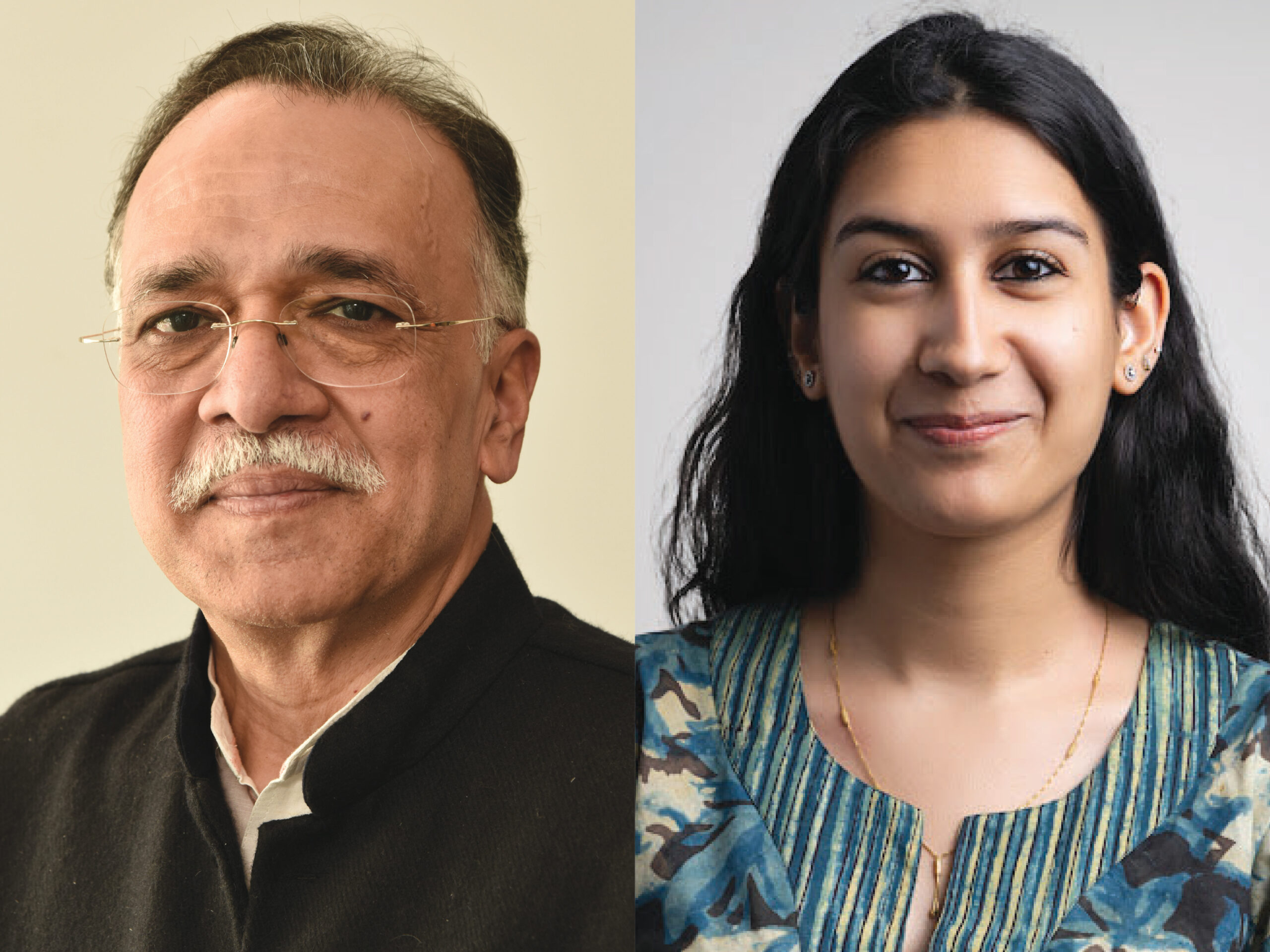
An editorial in the 26th Anniversary issue of this publication lamented that despite contemporary India hosting 52,081 junior and undergrad colleges and 1,338 universities with an aggregate enrolment of 45 million students, they have not ideated a single globally transformative innovation or disruptive technology in 78 years since independence. Pramath Raj Sinha, Founder & Chairperson of the Board of Trustees at Ashoka University & Founding Senior Partner at Jetri, and Dipanita Malik of Jetri, an education-focused strategic advisory and implementation firm, comment in this context.
Discovery is about finally finding what already exists, while innovation is about creating what never existed before. India’s higher education institutions (HEIs) need work at both. Thanks to globalisation, the discovery of new models of research, ideation and innovation is speedier today than ever before.
There are two verities that make innovation in existing institutions appealing to the public interest, but challenging to initiate.
Change is not constant. First is ability to change. Education is a deeply human enterprise. Students, parents, faculty, administrators, boards, regulators, recruiters, and wider society all have a stake in what education means and delivers. Every stakeholder carries distinct expectation and imagination of success, forming a web of caution for HEIs to manage.
For example, students schooled in systems that prioritise memorisation over exploration, find it overwhelming to adjust to the freedom and self-direction that new holistic higher education demands. Parents, with older reference points of institutional repute (such as the IITs and IIMs), tend to view new models of education as risky departures from proven precedents. Faculty accustomed to be driven by incentives and motivation that privilege research output and hierarchy over teaching innovation and collaboration, are also likely to resist transformation as are administrators and boards accustomed to balancing academic ideals with resource constraints. So any shake-up around established norms becomes a delicate affair, making institutions hesitant and slow to embrace change, even when necessary.
Regulation induces an additional layer of inertia. India’s regulatory frameworks have in the past focused more on preventing misconduct by worst offenders rather than encouraging innovation and diversification. Compliance rules differ by degree, body, and state, slowing transformation. Institutional focus ends up shifting toward checks and balances rather than pioneering new ideas.
Outcomes. Second is essential need to show proof. For instance, Ashoka University (estb.2014) has established a national reputation for innovative education because of the success of its students, faculty, and global partnerships.
Game-changing solution. While innovation is hard to push through existing structures, it can be built into new ones. India’s most transformative ideas in higher education have come from institutions that dared to start differently. They take time to show outcomes, but they certainly offer what does not yet exist in the landscape of education. That creation is a mark of innovation.
ISB (estb.2001) is one example where innovation meant setting up a management institution (that was not an IIM) of global quality. It was spared strict regulatory control, tenure, or permanent faculty, and sustained through collective philanthropy and shared governance. Ashoka University introduced liberal arts and sciences education in which students can explore, choose, and curate their interdisciplinary learning pathways after they enter college — a rare possibility in a system that follows linear student progression and rigid disciplinary specialisations. Anant National University, Ahmedabad (estb.2016) has established a reputation as a design-first institution that consciously chose not to repeat traditional curricula. Each institution began with the same intent: to build what was not seen before.
The India moment. India needs more institutions that do more. While the number of HEIs (58,643) and the gross enrolment ratio (28.4 percent) have been improving over the years, the goal before us is far bigger: to raise GER to 50 percent by 2035, and to compete globally.
Our higher education system ranks high in size, but not in the distinctiveness of our institutions. The first reason behind this is lack of adequate, high-quality and collaborative research. While research certainly signals academic maturity, we must equally reflect on a more zoomed out environment within which the focus on research output, traditionally through published work, is found and nurtured. All institutions live and grow in an ecosystem, comprising processes, practices, structural legacies as well as contemporary mindsets.
Twenty-first century India is witnessing an extraordinary entrepreneurship movement. The spirit of conceptualising new ideas and implementing them at speed, and a solution-building culture is transforming sectors. Higher education too needs to match that spirit: to wonder, attempt, and create.
We need to build many more universities that expand access and achieve a global competitive edge. Our young population, one of the largest and still growing, is reason to move faster.











Add comment