






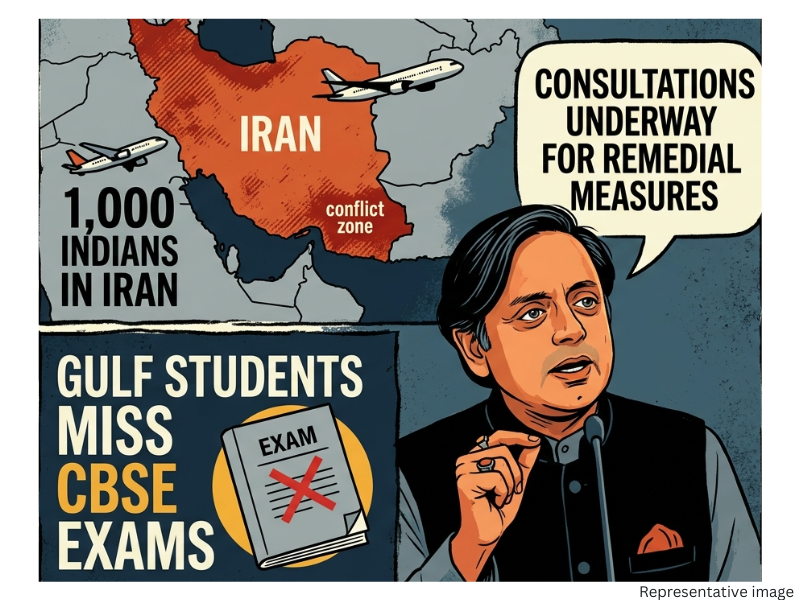
MEA tells panel 1,000 Indians remain in Iran; 23,000 Gulf students miss CBSE exams
Nearly 1,000 Indian nationals remain in Iran amid the ongoing conflict in West Asia, while around 23,000 students in the Gulf region were unable to sit their Central Board of Secondary Education examinations, the Ministry of External Affairs informed the Parliamentary Standing Committee on External Affairs on Wednesday.
Committee chair Shashi Tharoor said not all Indians in Iran wished to leave. He added that Class 10 and 12 students in the Gulf had missed ongoing CBSE examinations due to the situation, and consultations were under way between the MEA and the Ministry of Education to arrange remedial measures for affected candidates.
Tharoor, a leader of the Indian National Congress, said members discussed regional developments, the safety of Indian nationals, diaspora concerns, and oil and gas supplies. He noted that some queries remained unanswered in the absence of Vikram Misri, who did not attend the meeting.
According to sources, members raised questions on India’s position regarding the reported killing of Iranian Supreme Leader Ali Khamenei, civilian casualties, energy security, and the call by former US President Donald Trump for international forces to protect the Strait of Hormuz. Officials did not provide responses on these issues.
Questions were also raised about Prime Minister Narendra Modi’s recent visit to Israel, though Tharoor declined to discuss internal deliberations.
He said commercial travel remained largely functional across the Gulf, with flights operating from the United Arab Emirates, Saudi Arabia and Oman, and more limited services from Qatar and Bahrain. He said the situation was no longer one of large-scale stranding, though complications persisted.
Members also sought details on the number of petroleum vessels affected. MEA officials indicated that several ships were involved but did not provide exact figures.
The committee also reviewed outcomes of the AI Impact Summit and discussed implications for India’s technology diplomacy and engagement with the Global South.
Also Read: Congress raises seven ‘serious concerns’ over new higher education bill









Add comment