





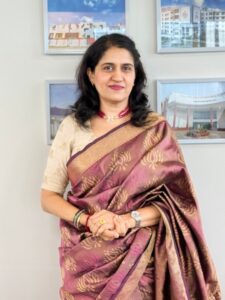
– Satwant Palekar, Vice President, Academics, Birla Open Minds
Education has made a difference in the lives of many individuals, communities, and nations. Celebrated every year on November 11, National Education Day marks the day of birth of Maulana Abul Kalam Azad who was the first education minister of post-independence India. It reminds us of the significance of making education easily accessible for every child, irrespective of his/her background. On this day, we should think about how to improve the system of education to meet the needs of modern times.
It can be stated that many scholars and teachers of education are of the opinion that education is not only about following the syllabus, achieving good marks, and preparing for exams. When we refer to education, it should be understood as a mechanism for instilling the spirit of curiosity in people’s minds and teaching them how to think independently and tackle life’s problems. Genuine education forms people who are educated, morally responsible, and able to make wise choices.
Moving Beyond Traditional Classroom Learning
Traditional education, characterised by textbooks and memorisation, is being replaced by interactive education and experiential learning. In today’s times, it is the good fortune of the educators to have the availability of all the resources that lead them to keep in mind not only the knowledge of the students, but also their methodology of acquiring the knowledge.
In a broader sense, experiential learning integrates the theory with the practical aspect through the participation of the students in activities such as laboratory experiments, research, project work, travel, group work, and resolution of real-life issues.
Recognising Every Child as a Unique Learner
 Part of an educator’s job is understanding the fact that every child has its own learning approach, learning speed, interests, and capabilities. Thus, a universal teaching method may not suit all pupils learning in the same classroom. Thus, while some children learn better with the help of visual materials, others would like to discuss, use practical tools of learning, or investigate by themselves.
Therefore, it is evident why it is necessary to employ a mix of personalised teaching methods. In particular, teachers should help students express their opinions and ask questions in a comfortable and free way while learning.
Technology as an Enabler of Meaningful Education
Technology has significantly changed the educational system, enriching the process of teaching and learning and providing various opportunities in this area. Digital platforms, exciting technologies, and AI technology in education can ease the work of teachers and make teaching more efficient. Besides, it can give students an opportunity to learn something else without the limits of an ordinary textbook.
Nevertheless, technology has to be supportive of a teacher, instead of taking his/her place. The reason for that is teachers are still better in providing understanding, guidance, and emotional connection, which is necessary for a child’s development. It is essential that schools ensure the use of technology is effective to develop digital literacy and responsible use of technology.
As technology advances, children need to learn to differentiate between what is true and false and how to use technology in an appropriate manner.
The Key to Education Reform is Teacher Empowerment
The first step towards moving on with educational reforms is empowering teachers, for they are the ones ensuring the quality of every learning environment. Effective schooling is influenced by how resourceful, imaginative and motivated educators are.
The professional growth process, taking into account innovative pedagogical approaches and networking with colleagues, will allow teachers to get accustomed to the new educational environment. Schools should invest resources in creating an atmosphere where teachers can experiment and exchange their experiences.
Creating a Holistic and Future-Ready Education System
People often tend to think that only schools build the future of education. However, it is necessary to have some conditions for the establishment of the educational ecosystem in which the development of the child would be actively promoted by the collaboration of parents, educators, schools, government, and the whole society.
The necessity of the development of educational systems connecting educational achievements with practical skills, the development of morals, creativity, and ability to live normally must not be overlooked.
In conclusion, we firmly believe that education must not be evaluated based on grades only but also on the confidence, ethics, skills, and sense of responsibility imparted through learning by students.
National Education Day serves as a reminder that learning never ends. Teachers are supposed to enable every child to have the chance to study and reach his or her full potential in life.
Also read: Why Books Matter More in the Age of AI








Add comment