






Steps to Build a Future in Business Leadership After 12th
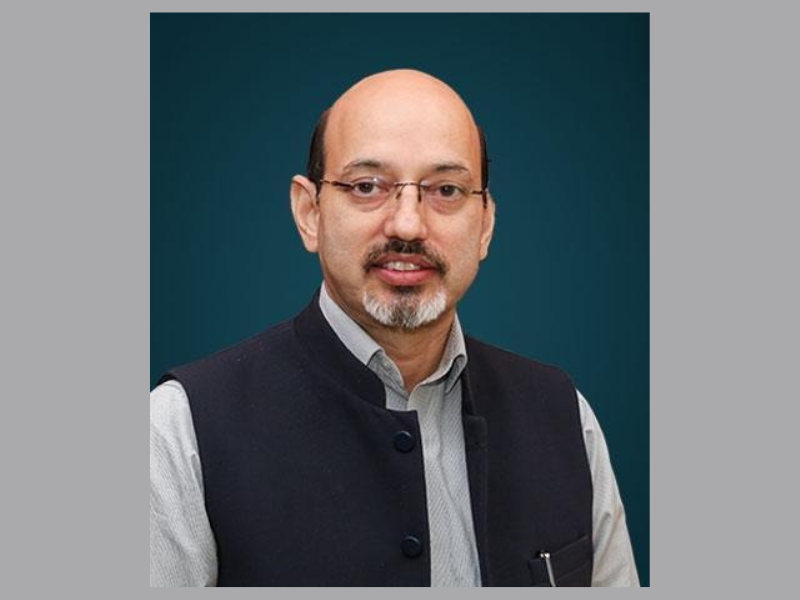
– Dr. Rajesh Verma, Head of School (HOS), Mittal School of Business, Lovely Professional University
India’s economic story in 2026 is one that few could have foreseen a decade ago. The country clocked a real GDP growth of 7.6% in FY 2025–26, according to the Ministry of Statistics and Programme Implementation (MoSPI), thereby cementing its position as the fastest-growing major economy in the world. This kind of growth does not sustain itself on infrastructure alone. It runs on leadership. Behind every expanding sector, every new enterprise, and every scaling startup is a generation of business-minded professionals at the helm. For students finishing Class 12, this economic reality translates into something personal and pressing. The decisions made immediately after school will shape whether they become part of that leadership class or spend years trying to catch up.
Understand Why Business Leadership Is the Need of the Hour
Rarely in India’s post-independence history has the demand for business leadership been this urgent or this widespread. The services sector grew at 9.3% in gross value added during the first half of FY26, according to the India Brand Equity Foundation (IBEF). Manufacturing, exports, and digital commerce are expanding in parallel. Each of these sectors needs people at the top who can think clearly under pressure, manage diverse teams, and make decisions that carry weight.
A common misconception among fresh Class 12 graduates is that leadership is something earned only after years on the job. The reality in today’s hiring landscape is quite different. Companies, from early-stage startups to established multinationals, are increasingly building leadership pipelines that begin at the campus level. Students who understand this shift early gain a significant advantage over those who do not. That advantage, however, is realised only when the next decision is made wisely.
Choose the Right Programme With Knowledge and Industry Exposure
The quality of the degree matters, but the quality of the experience within that degree matters even more. A programme built around theoretical frameworks and outdated syllabi will produce graduates who struggle to remain relevant in a fast-moving job market.
India’s National Education Policy (NEP) 2020 was designed with this gap in mind. Introduced by the Government of India, NEP 2020 places strong emphasis on interdisciplinary learning, vocational exposure, and partnerships between academic institutions and industry.
Students evaluating options after Class 12 should assess programmes in BBA, integrated BBA-MBA, or specialised management courses not merely by rankings, but by the practical depth they offer. Higher education itself is now undergoing a major shift, with universities moving beyond purely theoretical teaching toward industry-integrated and application-driven learning.
At institutions like Lovely Professional University, initiatives such as EduRevolution encourage students to gain practical exposure through internships, live projects, entrepreneurial ventures, startup incubation, and revenue-generation opportunities alongside academics. This evolving approach reflects how modern education is increasingly focusing on preparing students for industry realities rather than limiting learning to classrooms alone.
A degree from the right programme does not simply add a credential to a résumé. It develops a way of thinking. What happens during those four years, however, is where the real competition begins.
Build Core Leadership Competencies From Day One
There is a pattern that runs through the careers of most successful business leaders in India. Almost without exception, they began practising leadership long before they held a formal title.
NEP 2020 formally recognises communication, critical thinking, problem-solving, and analytical decision-making as essential life skills for a career-ready graduate. Students who take this seriously from their very first semester tend to emerge from campus with a profile that stands apart.
Taking the lead on group assignments, participating in business plan competitions, joining student bodies, and pursuing internships in their chosen domain are not optional activities. They are the training ground. The distinction between a student who simply graduates and one who emerges as a leader often comes down to how seriously these formative years are treated.
Once that discipline is in place, there remains another dimension that separates good leaders from exceptional ones.
Develop a Global Mindset With Local Relevance
India’s cumulative exports in goods and services reached a record figure in FY25. That number clearly signals that Indian business now operates within a global framework.
Students aspiring to business leadership must develop a mindset capable of navigating different markets, cultures, and regulatory environments without losing their grounding. Programmes offering international collaborations, student exchange opportunities, and globally benchmarked curricula are not merely added benefits. They are preparation for the world these students will eventually lead in.
At the same time, India’s domestic market remains one of the most complex and rewarding in the world. Its diverse consumer base, unique regulatory structures, and layered socio-economic realities demand leaders who can think effectively at both global and local levels.
Developing this dual fluency early gives students a foundation that very few of their peers possess. Yet even that is incomplete without one more deliberate choice.
Use Campus Networks, Mentorship, and Placements Strategically
What a university offers inside the classroom is only part of the equation. The mentors a student connects with, the alumni network available through the institution, and the corporate relationships built during campus years often determine where a graduate lands in their first role and how quickly they progress afterwards.
The Government of India’s National Skill Development Corporation (NSDC) has consistently highlighted industry-institution collaboration as one of the most effective tools for producing job-ready professionals.
Top management programmes today embed this collaboration directly into their structure through live consulting projects, pre-placement talks, and formal mentorship opportunities with senior industry leaders.
Students who actively engage with these resources, rather than treating them as background features of campus life, consistently outperform their peers. The gap between a graduate who waits for opportunity and one who builds toward it begins to form during these years.
The Leaders of Tomorrow Are Making Choices Today
India is heading toward a projected nominal GDP of ₹357.14 lakh crore in FY 2025–26 while pursuing the broader national ambition of Viksit Bharat 2047. That trajectory will require a generation of business leaders who are not only technically capable but also visionary, globally aware, and grounded in real-world experience.
Class 12 students who choose their next steps with clarity and purpose are positioning themselves to become part of that generation. The steps are known. The opportunity is wide open. At this stage, what defines outcomes is not talent alone, but the willingness to act on that talent with intention.
Also Read: Making AI Work for India’s Real Classrooms








Add comment