






The people behind the shelves
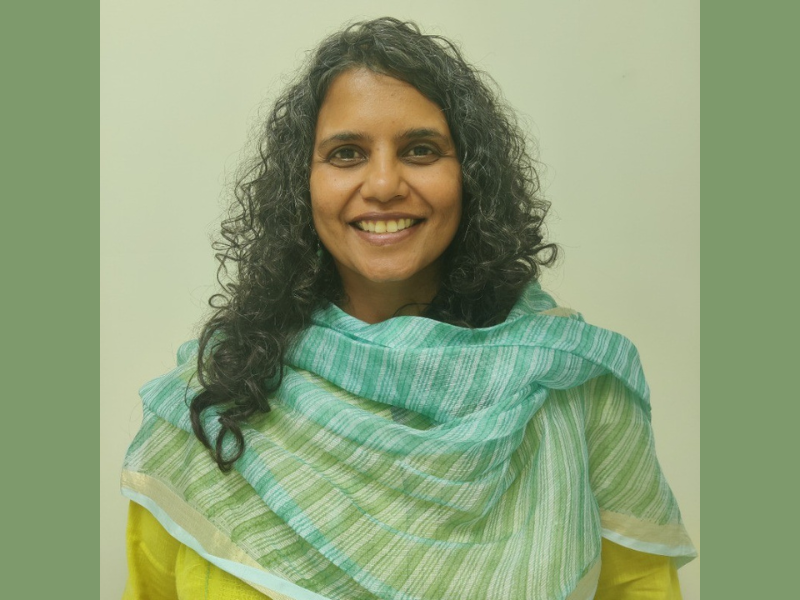
– Deepika Mogilishetty, Chief of Policy and Partnerships, EkStep Foundation
August 12 is observed as National Librarians’ Day in India, recognising the role librarians play in making books, knowledge and learning accessible to communities.
Beyond maintaining shelves and catalogues, librarians often become storytellers, mentors and community builders, particularly in rural and semi-urban India. Their work can transform libraries from quiet rooms into spaces where children discover the joy of reading and learning.
In Marihal, a village in Karnataka’s Belagavi district, there is a library that children run towards. It was not always this way. When Abhijeet Gudaketra took charge of the Grama Panchayat library 11 years ago, it was a quiet room lined with shelves and not much else. He began with the ordinary work of sorting old books and making the place feel welcoming, and then he did something that was not really in his job description. He started reading stories aloud.
After a read-aloud training programme in Karnataka, his storytelling changed. He learned to give each character a voice and to make a far-off place feel close. The children stopped being an audience and became part of the story. Before long, they were writing their own. Books began arriving as donations, some from within the state and some from as far away as the United Kingdom, each one a new world for a child in Marihal to walk into.
Approximately 3,000 km away, something similar has been unfolding in the hills of Arunachal Pradesh, at the Bamboosa Library in Lohit district, where Siwani Pul looks after the shelves and the many small programmes around them. One of her proudest moments did not come from anything she organised. A group of the library’s young readers, inspired by the outreach visits they had joined, decided on their own to take reading to a nearby government primary school. Soon, children from that school were walking back through Bamboosa’s doors. The library has also helped bring children’s books into print for the first time in local languages such as Kaman Mishmi and Adi, so that a child can encounter a story in the language spoken at home.
Not every act of change is dramatic. At Aseem’s Library, Priya Sharma runs what the children have come to call Doctor Book Day. Every Saturday, any book with a torn page or a loose spine is brought in to be mended with tape and glue, often by the children themselves. It is a small ritual, but it teaches something a lecture never could. The books belong to them, and the things you care about are worth repairing rather than throwing away.
Further north, in Hardoi in rural Uttar Pradesh, Jatin Lalit runs the Bansa Community Library on a simple and stubborn belief. For much of our history, he points out, the right to read belonged only to a few. A free library quietly overturns that. It says the door is open to everyone, whoever they are and wherever they come from, and that reading is a right rather than a privilege.
You can hear a pattern in these stories, though none of the people in them would put it so grandly. In much of rural and semi-urban India, where books, the internet and trustworthy information are still hard to come by, a library is not a pleasant extra. It is often the one place a child can go to be curious without being judged, whatever their age, gender, ability, caste or faith. And the person who makes that possible is rarely just someone who issues and receives books. On any given day, they are a storyteller, a teacher, a repairer of torn pages and the reason a shy reader comes back.
National Librarians’ Day is therefore not only about buildings, catalogues and quiet rules about silence. It is about people like Abhijeet, Siwani, Priya and Jatin, and the many others who open a room, turn on a light and wait to see who the next story will change.
Also Read: The Future of Education May Depend Less on AI Models and More on Knowledge Architecture









Add comment