






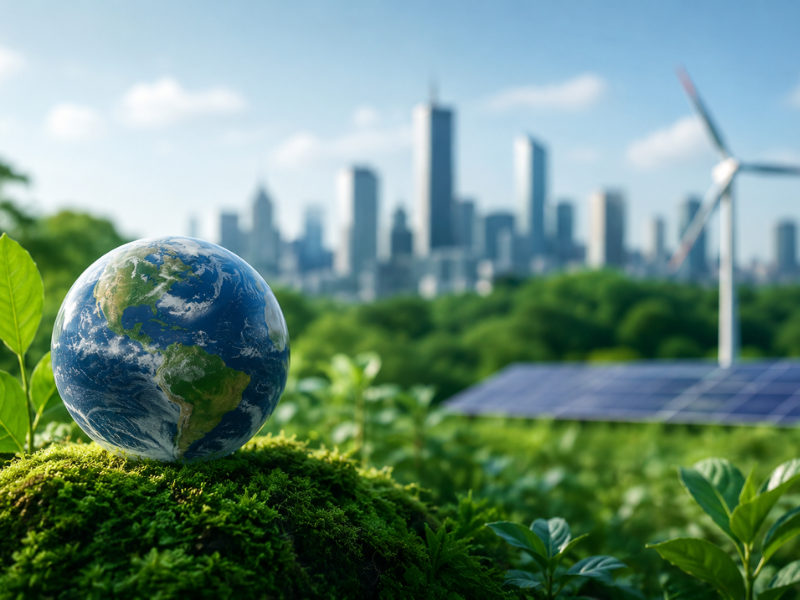
Top 5 Green Skills and Environment-Focused Vocational Courses for Future-Ready Careers
Sustainability is no longer limited to climate policy discussions or environmental science classrooms. Today, it is influencing infrastructure planning, investment priorities, food systems and even workforce strategies. As governments and industries accelerate climate adaptation efforts, universities worldwide are also rethinking how environmental education is delivered.
The workforce shift is already visible. According to the International Labour Organization, the transition towards greener economies could create nearly 100 million additional jobs globally by 2030 across sectors such as renewable energy, environmental governance and sustainable agriculture. At the same time, LinkedIn’s Global Green Skills Report has highlighted a widening gap between the demand for green talent and the availability of skilled professionals.
This is also reshaping student preferences. Learners are increasingly exploring interdisciplinary study pathways that connect sustainability with policy, infrastructure, business and technology, rather than studying environmental issues in isolation. In that conversation, New Zealand has gradually emerged as a destination recognised for sustainability-driven research and biodiversity-focused learning models.
1. Climate Resilience & Environmental Planning
Climate resilience has evolved from being a policy buzzword into a major infrastructure and economic priority. Rising sea levels, ecological disruptions and extreme weather events are forcing countries to rethink long-term environmental planning.
The United Nations Environment Programme estimates that annual climate adaptation costs for developing countries alone could reach nearly USD 340 billion per year by 2030. This is creating demand for professionals who understand resilience planning, sustainable land management and environmental systems.
Programmes related to Climate Change Studies and Environmental Planning at the University of Waikato reflect this broader shift by combining sustainability learning with environmental resilience and Māori ecological perspectives. Such interdisciplinary exposure helps students understand how climate adaptation increasingly intersects with governance, infrastructure and community-led planning.
2. Sustainable Food Systems & Climate-smart Agriculture
Agriculture is undergoing one of its biggest transitions in decades. Climate volatility, water stress and supply-chain disruptions are forcing countries to rethink how food systems are managed and sustained.
The Food and Agriculture Organization estimates that global food production may need to rise by nearly 60 percent by 2050 to meet future demand, even as farming systems face mounting environmental pressure.
This is accelerating interest in climate-smart agriculture, regenerative farming and agritech innovation. Sustainability is no longer viewed separately from food production; it is becoming closely tied to food security and resource efficiency.
Programmes linked to Sustainable Agriculture, Agribusiness and Food Systems at Massey University align with these changing conversations through sustainability-oriented agricultural learning and a systems-focused understanding of food production.
3. Sustainable Cities & Future Urban Infrastructure
The sustainability conversation is increasingly becoming an urban one. By 2050, nearly 70 percent of the world’s population is expected to live in cities, according to United Nations projections, intensifying pressure on governments and industries to rethink how urban infrastructure is designed.
The discussion today extends far beyond greener buildings. Climate-resilient housing, smart infrastructure and sustainable urban planning are becoming central to long-term development strategies globally.
This is also creating demand for expertise linked to environmental systems design, sustainable construction and urban resilience planning.
Study pathways related to Sustainable Built Environments and Future Urban Systems at Auckland University of Technology reflect how sustainability and infrastructure planning are becoming more interconnected, exposing students to future city development and resilient urban systems.
4. Sustainability Governance & Global Development
One of the biggest shifts in recent years is that sustainability has moved into boardrooms and policy frameworks on a much larger scale. ESG disclosures, climate reporting requirements and sustainability-linked regulations are increasingly influencing how organisations make long-term decisions.
According to PwC’s Global Investor Survey, investors are placing greater emphasis globally on sustainability governance, climate risk management and transparent ESG commitments. Yet many organisations continue to face shortages of professionals who can understand sustainability through both policy and business lenses.
At the University of Auckland, sustainability-linked study areas connected with Environmental Governance, Sustainability Studies and Global Development reflect this growing demand for interdisciplinary understanding and leadership-oriented sustainability learning.
5. Marine Conservation & Biodiversity Protection
With biodiversity loss and marine ecosystem degradation emerging as major global concerns, conservation and ecological restoration are gaining increasing policy and scientific importance worldwide. The United Nations has highlighted ocean sustainability as one of the defining environmental priorities of the coming decades, with nearly 3 billion people globally depending on marine and coastal biodiversity for their livelihoods and well-being.
Scientific assessments further underscore the urgency of conservation efforts. According to the Intergovernmental Science-Policy Platform on Biodiversity and Ecosystem Services (IPBES), up to one million species are at risk of extinction, while 66% of marine environments have been significantly altered by human activities, driving greater demand for expertise in marine ecosystems, biodiversity research and environmental monitoring.
This growing global focus on conservation is reflected in programmes related to Marine Science, Ecology and Coastal Ecosystems at the University of Otago, which align with increasing international efforts to protect biodiversity, strengthen ecosystem resilience and support long-term environmental sustainability. Such interdisciplinary study areas connect scientific research with conservation priorities and environmental stewardship, making them increasingly relevant in a world seeking sustainable solutions to ecological challenges.
The Future of Environmental Education Is Becoming More Interdisciplinary
What is becoming increasingly clear is that sustainability is no longer emerging as a separate sector. Instead, it is embedding itself into industries ranging from agriculture and infrastructure to governance and urban development.
That shift is also reshaping education.
For students exploring future-focused careers, environmental learning is becoming less about studying ecological systems independently and more about understanding how sustainability intersects with industries, economies and workforce transformation. Universities are responding by designing programmes that are increasingly interdisciplinary and connected with real-world environmental challenges.
As industries continue adapting to environmental realities, sustainability literacy is gradually moving from niche expertise to mainstream professional relevance, and that transition is likely to shape both future jobs and the future of higher education itself.
Also Read: 5 Must-Have Skills Students Should Build Today to Stay Relevant in an AI-Driven Workplace










Add comment