






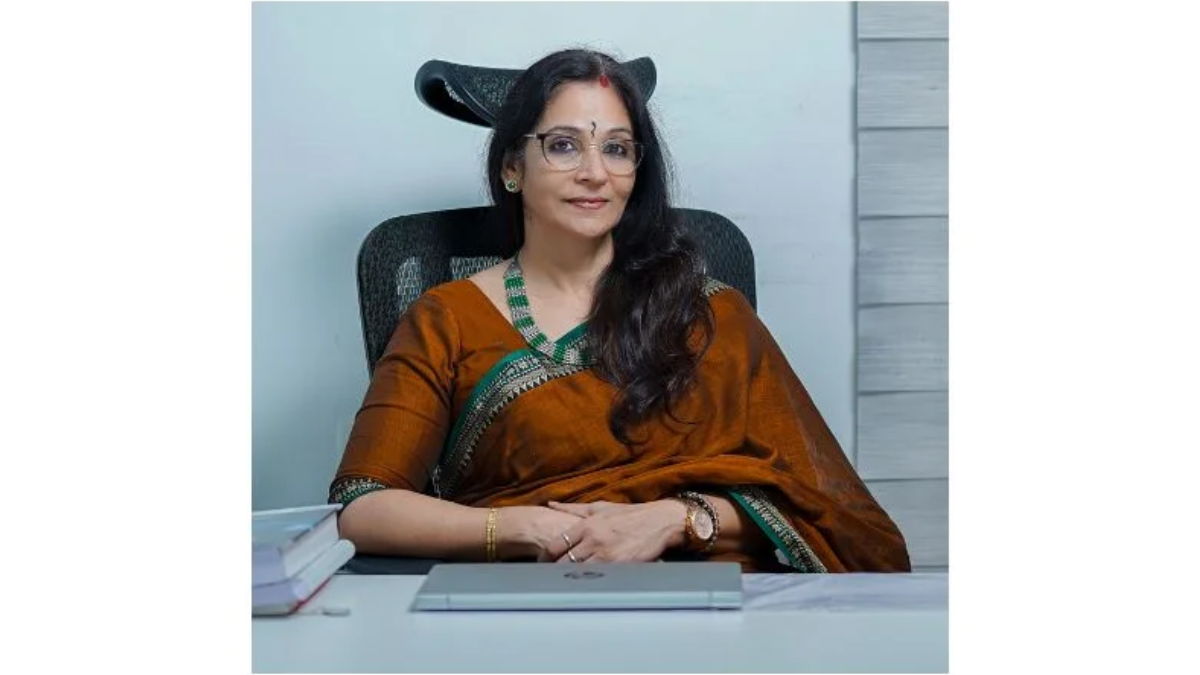
Sadhbhavana World School: Building the Future of Indian Education Through Everyday Classrooms
– Praseetha Sajan, Principal, Sadhbhavana World School
India’s education landscape is undergoing an important shift. Across policy discussions, academic forums, and leadership conversations, there is growing agreement that schooling must move beyond content accumulation to focus on competencies, character, and holistic development. The intent is clear. The challenge lies elsewhere.
The real question facing Indian education today is this: how do these aspirations translate into what children experience every single day in school?
Across the country, many schools continue to function within traditional structures—tight schedules, exam-centric priorities, and compliance-driven routines—while simultaneously speaking the language of innovation and future readiness. This gap between intent and implementation is where the future of schooling will be decided.
At Sadhbhavana World School, we have learned that transformation does not begin with programmes or reforms. It begins with daily practice.
The National Challenge: Alignment, Not Awareness
Most educators today understand the importance of critical thinking, collaboration, emotional intelligence, and adaptability. Yet these qualities cannot be developed through declarations or occasional activities. They emerge only when schools intentionally design environments where children are trusted, challenged, and consistently supported.
India’s schooling challenge is no longer about what we value. It is about whether we are willing to align our structures, classrooms, and behaviours with those values.
A School as a Working Model
At Sadhbhavana, our approach has been to redesign the lived experience of school so that competencies are developed through routine engagement. Classrooms are spaces where students talk, question, debate, and reflect. Teachers encourage learners to explain their thinking, work collaboratively, and make connections across ideas.
Learning is not treated as a one-way transaction. When students are actively involved in meaning-making, content becomes a tool rather than the goal.
Beyond classrooms, students are entrusted with real responsibility. They plan and lead assemblies, manage cultural programmes, participate in sports and house activities, and collaborate on large-scale school events. These are not peripheral experiences. They are central to how students learn leadership, resilience, cooperation, and accountability.
Children learn these capacities not because they are instructed to, but because they are required to practise them.
Teachers as Shapers of School Culture
No educational vision can succeed without teachers who understand their expanded role. At Sadhbhavana, teachers are viewed not merely as content experts, but as culture builders. Professional development focuses on reflective practice, learner engagement, and responsiveness to individual needs.
Teachers observe students holistically, paying attention to confidence, emotional wellbeing, peer relationships, and self-expression alongside academic progress. This ensures that learning remains inclusive and humane, and that no child is reduced to a score or rank.
Such work demands consistency and conviction. But it is precisely this daily adult presence that shapes the long-term outcomes of schooling.
Wellbeing as a Foundation, Not an Initiative
Indian students today navigate academic pressure, social comparison, and emotional complexity at an early age. Treating wellbeing as a separate programme is no longer sufficient. At our school, it is embedded into everyday life—through conversations, reflection time, counselling support, and strong student–teacher relationships.
When children feel emotionally safe, they engage more deeply, think more freely, and develop the confidence to take intellectual and social risks. Wellbeing is not the absence of challenge; it is the presence of support.
Rethinking Assessment to Reflect Values
Assessment practices send powerful messages about what a school truly values. While traditional assessments continue to have a role, they cannot be the sole measure of learning. At Sadhbhavana, students are assessed through projects, presentations, portfolios, and experiential tasks that require application, communication, and reflection.
These methods recognise diverse strengths and encourage ownership of learning. More importantly, they align assessment with the competencies we seek to develop.
Why This Matters for India’s Future
India’s future depends on citizens who can think independently, work collaboratively, act ethically, and adapt to change. These qualities cannot be cultivated through content-heavy, compliance-driven schooling.
The future of Indian education will be shaped by schools that are willing to align intention with action—where everyday practices reflect long-term purpose.
When schools move from instruction to intention, from performance to capability, they become living laboratories of the future. At Sadhbhavana World School, this alignment guides every decision we make—because education is not preparation for life. It is life, lived daily within school walls.
Also Read: Sunbeam Annapurna: A Legacy of Holistic Education aligned with the Panchakosha










Add comment