






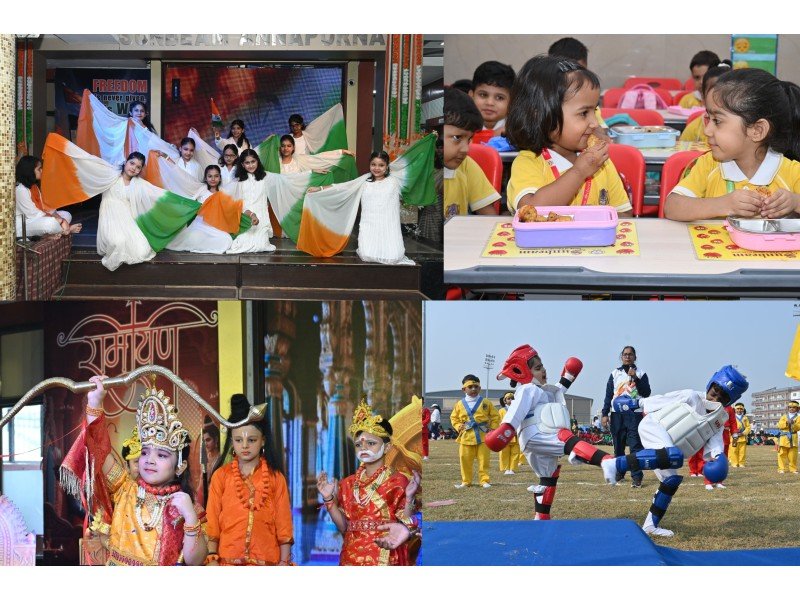
Sunbeam Annapurna: A Legacy of Holistic Education aligned with the Panchakosha
– Mamta Jaiswal, Principal, Sunbeam School Annapurna
At Sunbeam Annapurna, education is understood as a lifelong journey that extends well beyond textbooks and examinations. For over 28 years, the school has stood not only in the heart of Varanasi but also in the trust of generations of parents who have confidently placed their children in our care.
Deeply rooted in Indian knowledge systems and thoughtfully aligned with the vision of the National Education Policy (NEP), we believe that meaningful education must nurture the whole child through the Panchakosha framework—ensuring balanced development of the body, energy, mind, intellect, and inner joy. At Sunbeam Annapurna, this philosophy of holistic growth is not merely articulated as theory; it is lived daily through our culture, routines, and relationships.
Annamaya Kosha (Physical Well-being) at Sunbeam Annapurna
Holistic development begins with the body, recognising physical health as the foundation of all learning. Children engage in yoga, meditation, sports, focused activities, traditional games, nature walks, and learning expeditions that build strength, coordination, and vitality.
Mindful daily routines focusing on correct posture, personal hygiene, adequate hydration, and balanced nutrition promote overall health and well-being. Healthy eating habits are reinforced through the Menu of the Month, encouraging no sugar intake and minimal oil consumption.
The value of zero food wastage is actively instilled through initiatives such as the Warm Hearts – Zero Hunger Drive. Experiential learning opportunities like Kiddies’ Kitchenette further nurture independence, essential life skills, and a deep respect for food and the environment.
Pranamaya Kosha (Energy and Self-Regulation) at Sunbeam Annapurna
Balanced energy and emotional well-being are developed through well-planned daily classroom routines. Morning assemblies include breathing exercises, prayers, affirmations, and quiet moments that help children feel calm and focused.
Activities like yoga, music, dance, energisers, and group games help children use their energy in a positive way, both in the classroom and outdoors. Short moments of silence during transitions, along with soft classical music during recess and between periods, create a peaceful and calming atmosphere in the school. These practices help children settle down, stay attentive, and develop emotional strength.
Manomaya Kosha (Emotional and Social Development) at Sunbeam Annapurna
Every child’s emotions are understood and cared for with sensitivity. Through circle time, bubble time, object-to-speak activities, gratitude jars, buddy systems, pair work, Think–Pair–Share, and DEAR Time (Drop Everything and Read), children learn to express their feelings, listen to others, and build positive relationships.
Storytelling, art and craft, music sessions with Furtados, dance sessions with Agile Kids, gallery walks, and community service initiatives such as Warm Hearts – Zero Hunger, Eco Warriors – Save Paper, Gratitude in Action visits to old age homes, and pastoral counselling help children grow in compassion, confidence, and social responsibility.
Vijnanamaya Kosha (Intellectual and Ethical Growth) at Sunbeam Annapurna
In line with the NEP focus on learning by doing, children develop thinking and understanding through hands-on experiences and real-life connections. STEM activities, early engineering tasks, science experiments, interdisciplinary projects, and learning expeditions encourage curiosity, problem-solving, and practical use of knowledge.
Programmes in financial literacy and entrepreneurship, learning Mathematics with Jodo Gyan TLM, student portfolios, newsletters, and reflective presentations help children think ethically, make informed choices, and take responsibility for their own learning.
Anandamaya Kosha (Joy, Values, and Inner Fulfilment) at Sunbeam Annapurna
Joy and a sense of purpose are part of everyday life at school. Activities such as Sanskrit shloka recitation, etiquette club interactions, festival celebrations, the Joy of Giving, and the regular involvement of grandparents and parents make learning meaningful and joyful.
A strong culture of gratitude is nurtured by encouraging children to say “thank you” and acknowledge the efforts of others, helping them become appreciative and respectful. The practice of touching the feet of elders instils humility, reverence, and respect for wisdom and experience. Care for support staff, sustainability practices, CSR initiatives, and community engagement further help children develop a sense of belonging and strong values.
Recognised as one of the best junior and middle schools in the city, Sunbeam Annapurna offers a nurturing environment where children discover their strengths, face challenges with confidence, and truly enjoy the process of learning.
In essence, Sunbeam Annapurna does not merely speak of holistic education—it lives it every day. By consciously practising the Panchakosha framework and aligning with the National Education Policy, we prepare children not only for academic success but for life itself—healthy in body, balanced in energy, secure in emotions, thoughtful in intellect, and joyful at heart.
Also read: Leadership That Shapes Childhood, Not Just Classrooms









Add comment