






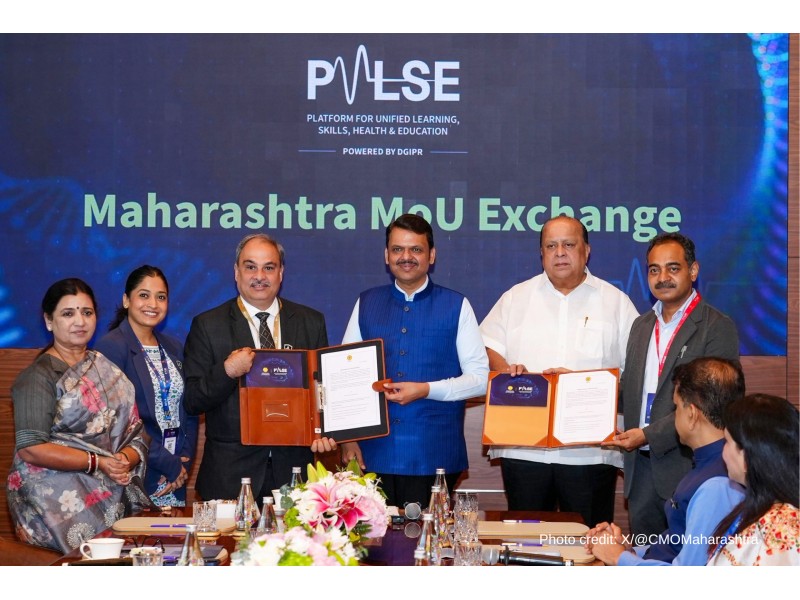
Integrated health system & changes in medical education mooted at PULSE 2026 conference
– Ronita Torcato
Experts highlighted the need to develop an integrated health system by coordinating Ayurveda and Allopathy and to go beyond traditional multiple choice question (MCQ) tests for assessing students during PULSE 2026, an international medical conference held in Mumbai.
PULSE is an acronym for Platform for Unified Learning, Skills, Health and Education.
Organised by the Maharashtra Government’s Department of Medical Education and Drugs, the conference saw the signing of 15 Memorandums of Understanding (MoUs) in the health sector with three major deals securing ₹720 crore in investments to bolster healthcare infrastructure.
“I think there is a very good scenario of investment in Maharashtra,” chief minister Devendra Fadnavis said on March 28, during the closing ceremony of the conference which was attended by about 2,900 representatives including minister of state for medical education Madhuri Misal, health leaders, researchers, and representatives from WHO and UNESCO.
Attendees included Dr Ajay H Randharwar, Dean of Grant Medical College & Sir JJ Group of Hospitals, Dr. Gautam Khanna CEO of PD Hinduja Hospital & Medical Research Center Dr. Duru Shah,Director, Gynaecworld Center and Founder President of the PCOS Society (India) Prof Abjeet Kaur, Dean of Nursing, King George’s Medical University (KGMU) Lucknow, and Prof. Dr. Prithvi Sukumar from the School of Medicine,Global Engagement and Education, University of Leeds, among others.
As many as 130 speakers discussed AI in medicine, digital platforms, skill development, research and innovation, rural and public health as well as emerging technologies in health, medical education, as well as the creation of a “Maharashtra Declaration for Global Health”.
A state government official described the conference as part of a sustained five-year charter to transform healthcare delivery in Maharashtra.
At the conference, experts said that tests based on theoretical knowledge alone are not enough and stressed the need to assess decision-making in real-life situations , communication skills, ability to work under stress and patient handling.
The discussions focused on increasing the use of simulation-based training, digital tools, and continuous assessment methods, which it was felt would better prepare students for real-world work.
It was also noted that although there have been some positive changes since the introduction of Competency Based Medical Education (CBME) in India, its implementation has not yet been fully effective. In particular, experts expressed the need to address the discrepancy between education and assessment.
It was suggested that a digital logbook , national level question sets, trained examiners and regional assessment centres should be set up. This would help in developing a uniform and reliable assessment system across the country.
The seminar stressed that comprehensive reforms in the evaluation system are needed to make medical education more practical, transparent, and patient-centred.
Various aspects of ethics in the medical field were discussed in yet another seminar organised on the topic of medical ethics in India.
Eminent medico-legal experts Dr. Gopinath Shenoy and Dr. Sugandhi Iyer participated in the discussion moderated by Dr Vinky Rudhwani, president of the Maharashtra Medical Council.
The discussion included issues such as display of fees charged by doctors at the hospital front desk, capping of fees, acceptance of cash from patients, and financial difficulties of patients during treatment.
The experts explained that it is necessary to clearly disclose the fees charged to patients as per medical ethics. However , it is not possible to limit the professional fees of doctors, which are determined by their experience and reputation. They also said that it is illegal and unethical to stop treatment or detain a patient if he does not have funds.
The seminar focused on transparency, proper record keeping and protection of patients’ rights in the medical sector.
The experts said that doctors are obliged to treat the patient in emergency situations and refusing treatment in such cases is against the law.
It is mandatory to maintain patient records for at least 3 years; experts suggested keeping records for 5 to 7 years. Consent is a very important element in medical treatment, and written consent is required for major treatment or surgery, they said.









Add comment