






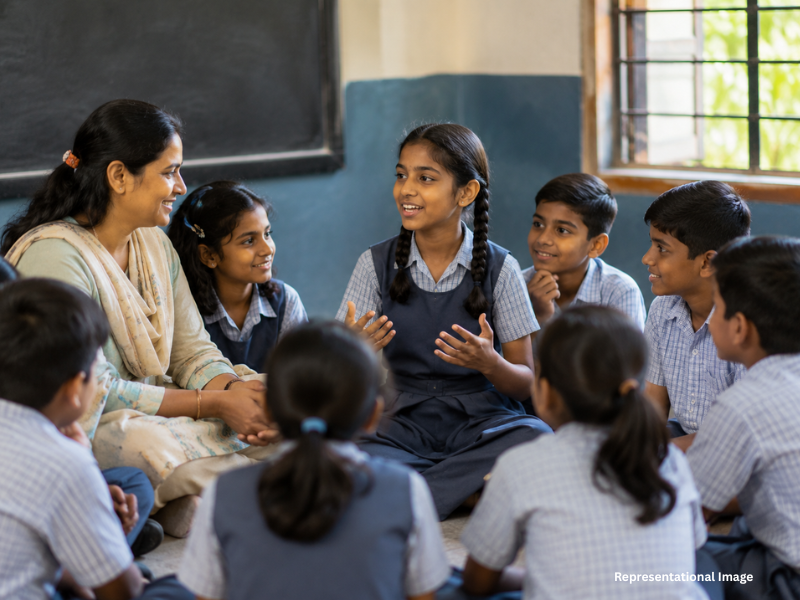
Beyond the Blackboard: Maharashtra Educators Put Heart into Homework
– Ronita Torcato
Walk into a typical classroom in Maharashtra, and you expect to hear “two one za two, two two za four, three three za…”—the rhythmic recitation of multiplication tables or the scraping of chalk on a blackboard. But something else has also begun to fill the air, particularly in rural areas: the sound of children speaking up with confidence.
This shift is the result of a deliberate move in the state’s education system—one that Devendra Fadnavis insists is no longer a luxury but “the need of the hour.”
Speaking at a review meeting attended by education officials, policymakers, and corporate partners at Sahyadri Guest House, Fadnavis gave the green light for the expansion of the state’s Value Enrichment Programme (2.0), an initiative designed to move beyond rote memorisation and help build a new generation of responsible citizens.
Among those present were Pankaj Bhoyar, Shantilal Muttha, Lokesh Chandra, Dr. Shrikant Pardeshi, Ranjit Singh Deol, Sachindra Pratap Singh, and Hemant Vasekar, along with representatives from SBI Bank, Bandhan Bank, Firodia Foundation, and Shantilal Muttha Foundation.
The consensus at the meeting was that, for decades, schooling has focused almost entirely on curricula, textbooks, and examination scores.
“In education, the curriculum is only half the battle,” Fadnavis noted. “What matters is how teachers connect, how they communicate, and how they inspire. The training under this programme will help students shed their fears and doubts, making the entire classroom come alive.”
The strategy relies heavily on empowering educators. By training teachers to focus on emotional intelligence, leadership, and communication skills, the programme is transforming classrooms from high-pressure testing environments into safe spaces for personal growth.
Evidence of the programme’s success came not from corporate donors such as SBI Bank or Bandhan Bank, but from the teachers themselves.
Joining via video conference from some of the state’s most remote districts—including Yavatmal, Nanded, Palghar, and Gadchiroli—educators shared encouraging results:
- Students who once remained silent in the background are now leading classroom discussions.
- Rote copying from the blackboard has increasingly been replaced by peer-to-peer dialogue.
- Teachers have observed a noticeable reduction in student anxiety.
The government is further strengthening the initiative by incorporating character-building activities directly into the school timetable. Education commissioner Sachindra Pratap Singh revealed that the department is working to allocate two dedicated hours each week exclusively for value-based education.
“Teachers in our Zilla Parishad schools are doing truly commendable work,” said Shantilal Muttha, whose foundation has been a key architect of the initiative. “The government’s support is giving this movement the wings it needs to grow.”
Joining the review meeting via video conference, Dadaji Bhuse noted that the initiative is extending beyond school campuses.
“We are now seeing greater parental involvement,” Bhuse said. “It is creating a positive shift in how entire communities view the role of schools.”
SCERT director Hemant Vasekar added that the programme is driving qualitative improvements in teaching methodologies, helping schools create more engaging, inclusive, and student-centric learning environments.
Also Read: Maharashtra Deputy CM presents blueprint for uplifting minorities through education









Add comment