






Letter from the Editor

As an individual committed to free enterprise and one who believes that the root cause of India’s also-ran status in the global development race is attributable to ill-advised adoption of socialist ideology after independence, I am unsurprised that the government-controlled, Delhi-based Central Board of Secondary Education (CBSE), the country’s largest national school-leaving – classes X and XII – examinations board, is immersed in a sea of troubles.
Established as a school-leaving exams board in the pre-independence era with the Agent of the Governor-General of Rajputana designated the “controlling authority” of the Board of High School and Intermediate Education which morphed into CBSE in 1962, the Secretary (School Education and Literacy) of the Union government continues to be the Controlling Authority of CBSE, officially an autonomous subsidiary of the education ministry. Little wonder this exam board has become the fiefdom of the neta-babu brotherhood which with its control-and-command mindset has ruined post-independence India’s high-potential economy and social sectors. For decades the Controlling Authority and Chairpersons of CBSE’s governing board have been generalist IAS bureaucrats rather than qualified reputable educationists. Hence the rot.
Moreover, given its proximity to the Union education ministry, CBSE has developed the authoritarian culture of government with minimal accountability for the spate of circulars and orders the board routinely issues to its 30,000 affiliated schools. Together with NCERT (National Council of Educational Research and Training), another ‘autonomous’ subsidiary of the education ministry, this unholy trinity has infused socialist and latterly hindutva propaganda into school textbooks to brainwash and confuse millions of children. And if a huge number of schools haven’t disaffiliated with this exam board, it’s for fear of incurring the wrath of the Central government. However, following the OSM scam and peremptory order to introduce three languages learning from class IX, not a few CBSE-affiliated schools are mustering courage to sign up with other Indian and offshore exam boards.
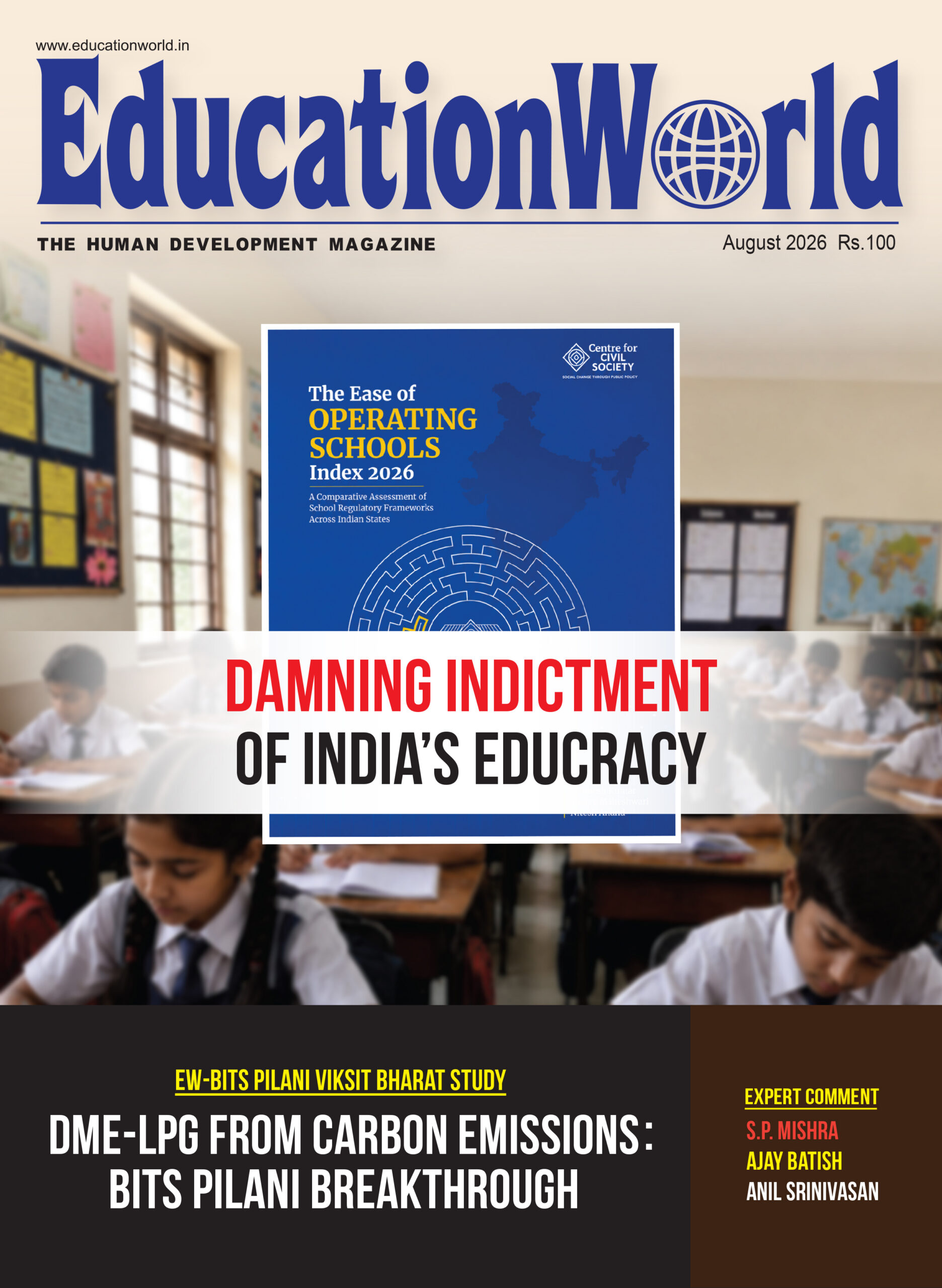
Inevitably there is rich other fare in this monsoon issue of EW. Check out our well-argued Special Report feature which explains why all schools and parents should adhere to the letter and spirit of the controversial s.12 (1) (c) of the RTE Act, 2009 that makes it mandatory for private independent schools to reserve 25 percent of capacity in class I for children from economically weaker sections and disadvantaged groups, and provide them free-of-charge (partially reimbursable by State) education until class VIII. Moreover, there are interesting People profiles and excellent Expert Comment columns.







Add comment