






Palestine: Rebuilding universities challenge
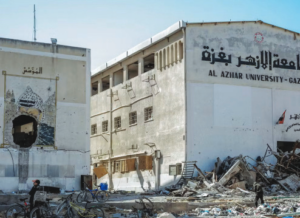
Al Azhar University, Gaza: “scholasticide” charge
In the 34 years Ahmed Abu Shaban has studied and worked at Gaza’s Al-Azhar University, his department has been destroyed four times — most recently, like much of the rest of Gazan higher education, in Israel’s bombardment of the strip following the October 7 attacks.
So, despite facing a long road to recovery, Abu Shaban, who studied his undergraduate degree at the university, before rising through the ranks to become dean of the Faculty of Agriculture and Veterinary Medicine, says the mood in the education sector is one of “resilience”. After all, they have managed to rebuild themselves many times before.
A new report by Friends of Palestinian Universities has attempted to draw together the extent of the physical damage, highlighting how Unesco has put the overall cost at $373 million (Rs.3,595 crore) since 2023. Of 206 university buildings assessed, 195 were destroyed or severely damaged.
The damage to life is far greater. More than 1,372 university students and more than 246 academics and university staff have been killed, the report, titled Scholasticide in Gaza, found, including three university presidents and nine college deans. These attacks are not “collateral damage”, it says, but form part of a “scholasticide”: “a deliberate strategy of systematic annihilation and erasure of education”, says the report.
Abu Shaban helped spearhead Gazan universities’ move to online education during the bombing. With a university population of 14,000 at Al-Azhar, he said he had hoped 1,000 students would sign up to continue their studies online. To his amazement, 10,000 did, reflecting that for Gaza’s youth, higher education is a “lifeline” and “something to give them a hope that a future is coming”.
Omar Melad, the president of Al-Azhar, says that while the reconstruction of some universities’ facilities has begun, the ceasefire which began last October has done “little” to alleviate conditions, and building materials are still not permitted into Gaza.
In 2024, a plan was put forward by a group of British, American and Middle Eastern business people and private equity firms to develop a ‘Technical University of Reconstruction’, which it described as “the first purpose-built institution of its kind” in “a new mixed-use quarter in a regenerated area of northern Gaza”. Concerns that Gaza’s future will be determined by foreign influence have been compounded by US president Donald Trump’s ‘New Gaza’ plan announced in February, which featured mock images of skyscrapers where towns, houses and schools once stood.
But Melad insists that Gaza’s future is for Palestinians to determine, and rejects the notion that new, foreign-built universities are needed in Gaza’s reconstruction. Melad says that the sector would “reject any attempt to restructure higher education in Gaza” by external agencies because “it has not been annihilated…It continues, and we are the people that are going rebuild it”.
Analysis in the report by Friends of Palestinian Universities found that little of the money supposedly donated to universities in Gaza makes it to them, instead remaining in donor countries.It found that in 2023, the latest year for which data is available, donors committed a total of $44.1 million in higher education aid to Palestine. However, less than one-fifth of this aid ($8 million) actually reached Palestinian higher education institutions, with a large proportion instead remaining in the donor country for scholarships.










Add comment