






GEMS Millennium School, Gurugram skill-first classrooms to build resilient leaders
– Mary Mahendri, Principal, GEMS Millennium School – Gurugram
Are we truly preparing our children for the future, or are we simply teaching them to pass tests designed in the past? In an era offering zero guarantees, survival depends on cultivating deep personal resilience and fluid creativity. Yet modern education faces a quiet crisis. A generation of students is trapped behind glowing screens, losing the vital ability to connect, create and communicate. If a community’s road to sustainable progress runs directly through the school gate, that gate must open to a radically different learning experience.
Are our educators ready for this change? They are willing and have the heart, but they need to learn how. It begins with empowering the New-Age Educator. Modern classrooms require teachers trained to adapt dynamically to the needs, thinking and language of today’s learners.
When teachers understand cognitive development, emotional regulation and adolescent neurobiology, they become facilitators rather than mere instructors. They learn how digital overstimulation alters attention spans, equipping them with strategies to chunk information, manage cognitive load and co-regulate emotional states. This fosters an inclusive environment where every child gets an equal opportunity to be understood and empowered.
Concurrently, reclaiming the physical world has become a pressing need. The pervasive grip of video games and algorithmic feeds has reduced children’s willingness to engage in hands-on activities. By replacing real-world friction with instant digital gratification, we are seeing a rise in attention difficulties, speech delays and developmental challenges. When a child’s world shrinks to a flat glass surface, they may struggle to communicate physically or voice their needs confidently.
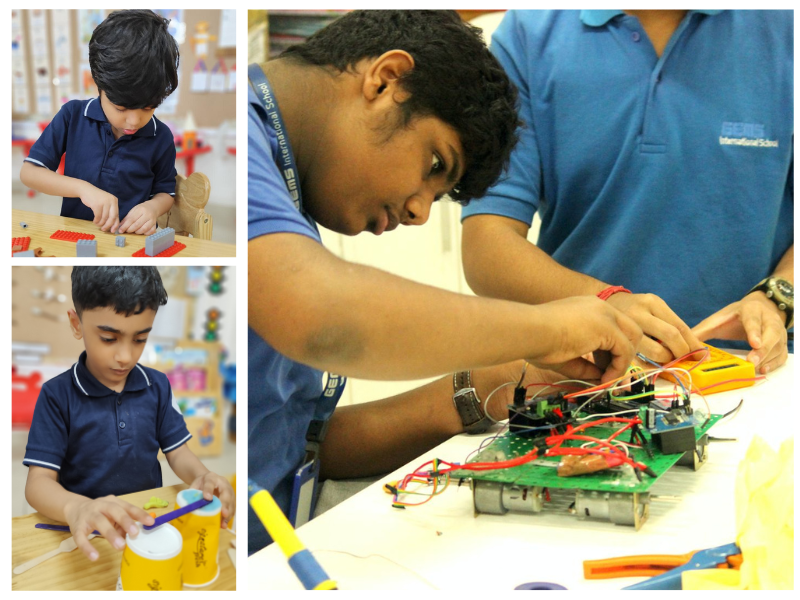
Schools must break this loop through “Makershalas” — hubs of tactile competency where abstract concepts meet physical reality. Whether it is soldering or culinary arts, demystifying these tasks teaches self-reliance, respect for labour and the cognitive flexibility that comes from hands-on problem-solving. This grounding helps students look up, navigate face-to-face social dynamics and build genuine emotional stamina.
When a school culture prioritises solution-oriented thinking over passive compliance, it builds visionary, capable leaders who can look 10, 20 or 30 years ahead to create sustainable systems across environmental, economic and social spheres. By reimagining our schools today, we give the next generation the tools, the heart and the vision to build a stable world tomorrow.
Also Read: GEMS Education: When Empathy Leaves the Room, Peace Leaves With It










Add comment