






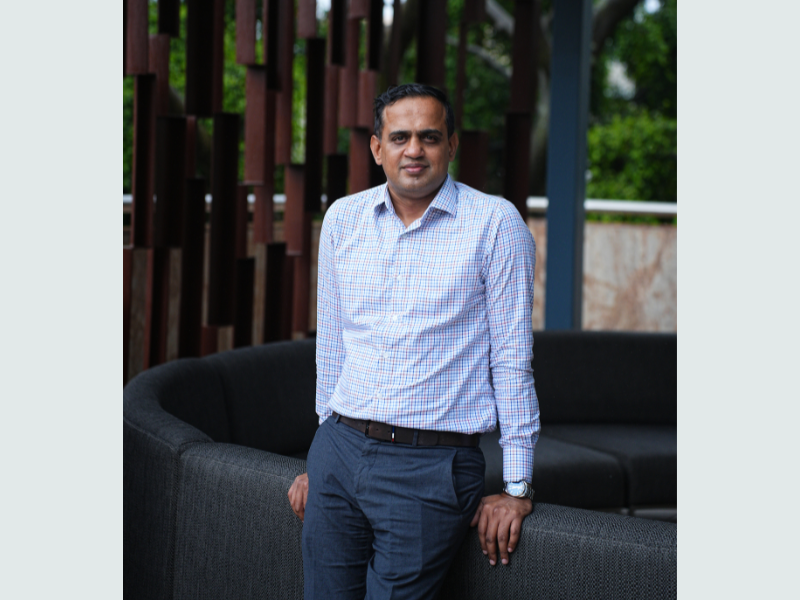
Beyond the Classroom: Why academic travel belongs in the curriculum
– Anand Joseph, Founding Partner, Immersion India
For too long, we have tended to equate education with instruction. Put students in a classroom, give them a syllabus, a lecturer, examinations, and perhaps a case study or two, and we assume that learning has taken place. That model is beginning to look increasingly incomplete. Across India, schools and universities are starting to recognise that the world beyond the campus is not a distraction from education, but an important part of it.
India now has around 4.5 crore students enrolled in higher education, up from 3.42 crore in 2014–15. The Gross Enrolment Ratio for the 18–23 age group has risen from 23.7% to 30% over the same period. Even if only a fraction of this vast education system begins to incorporate serious experiential learning, the implications are considerable.
Yet travel itself is not the innovation. Travel is simply the logistics. Exposure is the education.
There is an enormous difference between taking students somewhere and designing an experience that requires them to observe, question, interpret, and reconsider what they thought they knew. A heritage monument can become a photograph—or a conversation about politics, power, architecture, and memory. A village visit can become an excursion—or a challenge to assumptions about development and inequality. A company visit can be another presentation in another conference room—or an opportunity to see how strategy collides with regulation, culture, customers, and execution.
This matters because one of the traditional advantages of the classroom—access to information—is rapidly disappearing. Information is now abundant. A student can ask an AI tool to explain a business model, summarise an economic theory, or describe the history of a city within seconds. Education, therefore, has to deliver something beyond information. It has to build judgement: the ability to enter an unfamiliar situation, notice what matters, deal with ambiguity, and form a view when reality refuses to fit neatly into the framework taught in class.
Judgement is built through encounters. It develops when plans change, when somebody you meet contradicts what you have read, when an organisation works in ways the textbook did not anticipate, or when the elegant answer you arrived with proves inadequate for the messy reality in front of you. Adaptability, curiosity, cultural intelligence, and independent thinking are difficult to teach from a seat.
India’s education policy increasingly reflects this thinking. The National Education Policy 2020 places considerable emphasis on experiential and activity-based learning. The larger philosophical shift is important: experience is no longer being treated simply as an enjoyable supplement to education. It is increasingly being recognised as one of the ways in which education itself happens.
IIT Gandhinagar’s Explorer Fellowship offers an interesting example. The programme sends students travelling across India for six weeks, engaging with unfamiliar communities, terrains, and socioeconomic realities rather than following a conventional academic tour. In its 2026 edition, 63 student teams applied and 56 were selected. The uncertainty is part of the education. Students have to manage resources, navigate unfamiliar environments, and engage with people whose lives may be very different from their own.
That distinction matters because academic travel can easily become educational tourism. A packed itinerary, prestigious institutions, photographs at interesting locations, and a few impressive speakers do not automatically constitute immersion.
A strong immersion programme requires the same intellectual discipline as a strong course. Why are students going? What should they be looking for? Whom should they meet? What assumptions should they test? What should they know before they arrive? How will one experience connect with the next? And, most importantly, what should they see differently when they return?
When those questions drive the design, a city becomes a laboratory for understanding urbanisation. A factory becomes a lesson in productivity and supply chains. A roadside merchant accepting a digital payment becomes an entry point into financial inclusion. A conversation with an entrepreneur becomes a discussion about risk, regulation, and resilience.
India offers an unusually rich environment for such learning because multiple realities coexist here: sophisticated digital infrastructure alongside informal markets, global corporations alongside family enterprises, and centuries-old institutions beside businesses created only a few years ago. For a student, these contradictions are not inconveniences to be edited out of the lesson. They are the lesson.
The institutions getting this right will not treat travel as a break from the curriculum. They will design journeys with clear learning objectives, preparation, reflection, and intellectual continuity with what happens on campus before and after the journey. Done properly, academic travel does not sit outside the syllabus. It makes the syllabus tangible.
We have spent decades asking how much knowledge students can acquire. In an age when knowledge is available almost instantaneously, perhaps the more important question is how intelligently they can interpret what they encounter.
The future of education will certainly still have classrooms. It will simply recognise that some of the most important ones have no walls.
Also Read: Future-Proof Careers: Which Degrees Will Still Matter in 2035?









Add comment