






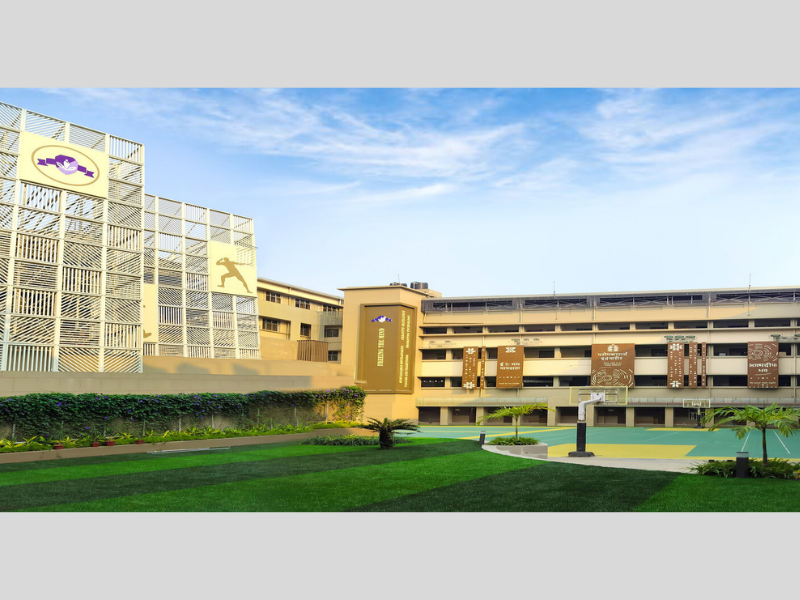
The Soul of Birla High Schooling : Screens, Scores, Smart — Yet Sensitive
– Sumita Acharya, Head, Department of English, Birla High School, Kolkata
There was a time when the definition of a “good school” seemed relatively simple. Strong board results, disciplined classrooms, strict routines, and academic consistency were considered sufficient indicators of educational excellence. Parents evaluated institutions largely through percentages, ranks, and reputations built around examination success. But somewhere over the years, the world around education changed first.
As Sir Ken Robinson once observed, “The fact is that given the challenges we face, education doesn’t need to be reformed — it needs to be transformed.” As someone who has spent more than two decades teaching at Birla High School, Kolkata, I have had the rare privilege of witnessing this transformation from close quarters. Classrooms evolved from chalkboards to smart boards, libraries expanded into digital learning spaces, and students transitioned from handwritten assignments to AI-assisted research and online collaboration.
Yet the most striking transformation has not been technological. It has been human. The questions parents ask today reveal this shift very clearly. Earlier, conversations revolved almost entirely around marks, streams, and examination preparation. Today, parents increasingly ask: Will my child feel emotionally secure here? Will he learn confidence and communication skills? Will the school help him become a good human being — not merely a successful student?
These questions matter because the world children are preparing for is more uncertain and complex than ever before. Artificial intelligence is reshaping industries. Social media influences identity and self-worth. Students face pressure not only to succeed academically but also to excel socially, creatively, and emotionally. In such an environment, education can no longer remain confined to textbooks and examinations alone.
One of the biggest realizations I have had as a teacher is that children rarely grow through academics alone.
Some of the most remarkable transformations I have witnessed happened entirely outside traditional classroom instruction. Students who struggled quietly within academic settings flourished once they discovered debates, dramatics, coding, sports, environmental initiatives, or leadership activities. Hesitant boys gradually became articulate speakers through assemblies. Students discovered confidence through robotics competitions and emotional resilience through creative expression.
Often, report cards never fully reveal a child’s true potential. This is precisely why holistic education matters so deeply today. At Birla High School, learning has gradually expanded beyond conventional academic boundaries. While academic rigor remains central, equal importance is now given to creativity, collaboration, communication, critical thinking, and experiential learning.
Classrooms themselves have changed significantly. When I first began teaching, education was largely teacher-centered — information flowed primarily in one direction. Today, classrooms have become more interactive and participative. Students engage in discussions, collaborative projects, research-based activities, and interdisciplinary learning experiences that prepare them for real-world complexity rather than examination formats alone.
Technology has naturally played a major role in this evolution — though not without early uncertainty.
Like many educators of my generation, I initially approached smart classrooms and digital tools with apprehension. Could technology truly improve learning? Would it distract students more than engage them? Over time, however, experience clarified something important: technology becomes meaningful only when it strengthens human learning rather than replacing human connection. At Birla High School, integration of technology has largely followed this philosophy. Smart boards, coding initiatives, robotics labs, blended learning systems, and AI awareness programmes have enriched classroom engagement considerably. Complex scientific concepts become easier to visualize through simulations. Coding and computational thinking develop logical reasoning. AI literacy introduces students to ethical and practical questions surrounding future technologies.
But the school has also recognized that digital fluency alone is not enough.
Today’s students are growing up amidst unprecedented digital exposure — struggling with reduced attention spans, constant online comparison, screen dependency, and emotional fatigue. As teachers, we observe these challenges regularly. This is why institutions must now teach balance alongside technology. At Birla High School, there has been a conscious effort to preserve the human dimensions of learning — reading habits, sports, outdoor activities, performing arts, mindfulness, and meaningful social interaction. Students continue to require spaces where they can disconnect from digital pressure and reconnect with themselves and their surroundings.
Perhaps nowhere has balance become more necessary than in the area of emotional well-being. If there is one major difference I notice between students today and students twenty years ago, it is the intensity of emotional pressure young people now carry. Academic competition begins early. Social media creates unrealistic standards of success and self-image. Many students feel pressured to excel simultaneously across academics, extracurriculars, social acceptance, and future planning.
As educators, we increasingly realize that emotional well-being is not separate from education. It is central to it. A child who feels anxious, isolated, or emotionally unsupported cannot learn meaningfully. Over the years, Birla High School has gradually strengthened counselling support, mentoring systems, mindfulness activities, and open communication as core aspects of school culture.
Students today do not merely need instruction. They need guidance, empathy, encouragement, and security. They need environments where mistakes are treated as part of learning rather than permanent failures. As teachers, too, we have had to evolve — functioning not only as instructors but as facilitators, mentors, and emotional anchors. After spending over two decades here, I have come to believe that the finest educational institutions are not those with the loudest claims or most impressive infrastructure alone. They are schools that quietly evolve with time while remaining deeply rooted in humanity. Schools that recognize emotional well-being matters as much as academic achievement. Schools that encourage children to discover not only careers, but also character. Because long after examination scores are forgotten, what ultimately remains is far deeper — the confidence developed, the values carried forward, the resilience built during difficult moments, and the school that helped each student discover who they could become.
Also Read: GEMS Education: Democracy needs more than leaders. It needs listeners.









Add comment