






Anguished memoir
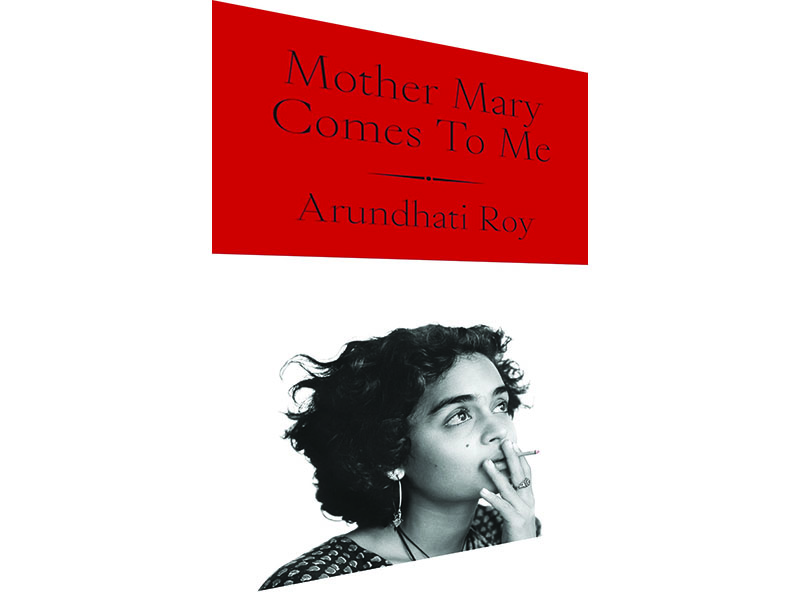
 mother mary comes to me
Arundhati Roy
hamish hamilton/ penguin
Rs.899
Pages 374
What provides the memoir its charge is the formidable presence of its subject: Mary Roy herself. Abusive, often cruel, and above all a survivor, she moves restlessly between catastrophe and its aftermath
“When I find myself in times of trouble, Mother Mary comes to me.” Paul McCartney’s iconic line from the song Let It Be hovers like a refrain over Arundhati Roy’s tour de force book, where the mother returns both “as shelter and storm”.
This doubleness animates the memoir and compels a set of difficult questions: are such narratives meant to resolve fraught affections, or simply to render them intelligible? Must the writer, and the one written about, conform to the sanctioned grammar of intimacy — the expected contours of maternal love? What forms of violence are made (un)speakable by the demand for maternal sanctity? Can a daughter write her mother truthfully without either absolution or indictment becoming the governing impulse? Mother Mary Comes to Me resists easy answers.
This personal memoir is set in motion by Roy’s grief at her mother’s death. The central presence in the first hundred pages is the formidable Mary Roy — an educator, institution builder, and fighter against patriarchy. Yet the memoir unsettles the promise of its own title, refusing the consolations of the conventional life-writing arc. “Puzzled and more than a little ashamed by the intensity of (her) response” to grief, Roy comes to mourn her mother not simply as “a daughter mourning the passing of her mother”, but as “a writer who has lost her most enthralling subject”.
This dual relationship makes the book more complex and nuanced. What follows is neither a saintly portrait nor a sentimental tribute, but a steady, unsparing account of a woman too forceful to be idealized. At the same time, this memoir reads as a record of what the author has made of her life — success, security, and meaning she has accumulated along the way. She animates a private archive she has long mined in fiction, now approached with the directness and vulnerability of memoir. Her first globally acclaimed novel The God of Small Things, awarded the Booker Prize (1997), is woven deeply into Mother Mary Comes to Me, looping back to the fractures of her life in Ayemenem and to the act of writing the novel itself. The abrasions of a deeply troubled bond sit alongside an account of arrival and authority, as if the mother’s story cannot be disentangled from the daughter’s rise to public eminence.
Whenever Mary comes into full focus, Roy’s prose tightens and sparks. What provides the memoir its charge is the formidable presence of its subject: Mary Roy herself. Abusive, often cruel, and above all a survivor, she moves restlessly between catastrophe and its aftermath. There are years of near-destitution — times when the family of three starved, squatting in a relative’s house, and eventually turned out — and then moments that would come to define her legacy. It was Mary who challenged the Travancore Christian Succession Act, which denied daughters the right to inherit paternal property, and carried the case all the way to the Supreme Court, where she won.
At every turn, Mary remains resistant to comprehension, most of all to her daughter. What holds the narrative in suspension is the volatile, shifting love between them — tender, hostile, intimate, and estranged by turn. Around this central relationship gathers a vivid cast of characters, from a blind grandmother who plays the violin to a Marxist uncle who owns a factory, enriching the emotional and social texture. And then the book moves from the fictionalized ‘Ayemenem’ to the chaotic expanse of Delhi, charting a turbulent childhood, a brief foray into architecture, a meteoric rise to literary fame, her relationship with filmmaker Pradip Kishen, and her emergence as one of India’s most acclaimed and fiercely politicized essayists.
Roy writes against the dangers of nuclear armament, rapacity of dam projects that displace entire indigenous communities, steady erosion of secularism under Hindutva, the occupation of Kashmir, and a host of other developments of “unmitigated wickedness”. The movement from the private to public is anything but seamless; what stands out is the way Roy gives her private hurt a public register, folding political violence into the language of personal injury. Even as the mother recedes from these pages, the childhood memory of the beating of her brother for an ‘average’ report card and the praise of her own “brilliant” scores still remain indelible, shaping her later years.
The academically lauded child grows into a woman who wears public acclaim uneasily, as though it still chafes against old bruises. “On the occasions when I am toasted or applauded,” she reflects, “I always feel that someone else, someone quiet, is being beaten in the other room.… If you pause to think about it, it’s true, someone is,” she writes.
This isolated incident reads as an early lesson in resistance, one that matures into opposition to authority that runs through her later work.
As I was reading the memoir, I could not help but notice how the later chapters do more than sketch the background to Roy’s work after the success of The God of Small Things. They also surface deep-seated anxieties, most notably her unease over negotiating the pull between her politics and her royalties. Much of the memoir circles Roy’s acute awareness of the privilege that enabled her to “wander through forests and river valleys, villages and border towns, to try to better understand (her) country”. It is perhaps this tension that compels Roy to return to the task of defending the radical promise of her writing — a gesture that, at times, feels somewhat overemphasized. When political reportage brackets the personal narrative, the joints begin to show, and the writing briefly loses its flow. In these moments, resistance appears less organic than staged.
The memoir leaves questions that quietly insist on being asked open: does Roy carry her mother’s fury within her, or did she learn early to defuse it? What did forgiveness exact from her, and did it demand a reckoning with resentment and other unlovely feelings? Mother Mary approaches this terrain but finally turns away, choosing grace over exposure.
Yet, the power of Roy’s voice remains undeniable — most vividly in the sections where she writes about her struggle with language as a way of speaking to herself. “I knew even then that language was outside me, not inside me,” she reflects. “I knew it would not come to me on its own. I needed to hunt it down like prey. Disembowel it, eat it”. This sentiment surfaces again in her defiant take on the personal and the political, and in the passages, which stand out for their quiet tenderness and depth of commitment. In the end, Mother Mary Comes to Me reads as both an intimate reckoning and a social document.
Dilip Thakore








Add comment