






Art Education Moves to the Centre: What CBSE’s New Direction Means for Schools
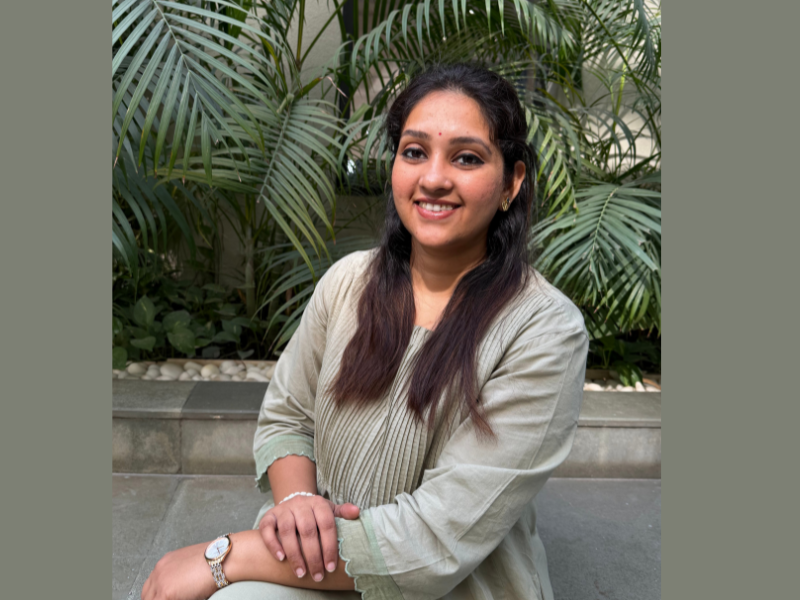
– Niharika Kasturi, Teacher Trainer in the Arts, Shiv Nadar School
In Indian schools, some of the most consequential reforms are not always the most visible. While public discourse continues to focus on board examinations, rankings, and global competitiveness, a quieter yet far-reaching shift is underway.
Art education, long positioned at the margins of the curriculum, is being redefined as a central component of school learning.
With the introduction of the National Curricular Framework 2023, reinforced by recent Central Board of Secondary Education circulars and the long-term vision articulated in the CBSE 2031 roadmap, a coherent direction is emerging: the arts are no longer supplementary; they are foundational.
From Co-Curricular to Core
For decades, art education in many schools has been confined to annual events, competitions, or occasional timetable slots. It has largely been associated with performance and talent rather than structured learning.
The current policy shift challenges this positioning.
The NCF places art education firmly within the curricular domain, recognising its role in developing cognitive flexibility, emotional awareness, and cultural literacy. CBSE’s directives further outline structured engagement with visual and performing arts at the secondary level, emphasising creative processes over mere outcomes.
This marks a shift away from viewing the arts as enrichment and towards recognising them as integral to how students learn and make meaning.
A Framework That Demands Interpretation
While the NCF references the presence of a textbook, recent circulars have largely avoided prescribing a rigid framework. Instead, they have laid out broad guiding principles, placing the responsibility of translating them into practice on schools.
This absence of prescription has created a dual reality.
On one hand, schools are navigating ambiguity around curriculum design, pedagogy, and assessment. On the other, this flexibility offers a rare opportunity to build context-specific programmes that reflect local cultures, student interests, and institutional strengths.
In effect, art education becomes one of the few areas where schools are not merely implementers of policy, but active designers of learning experiences.
Redefining Classroom Practice
At the heart of the reform is a shift in how learning in the arts is understood.
The framework foregrounds three interconnected processes: thinking, creating, and responding. Students are expected to interpret artistic forms, engage in sustained creation, and reflect on both their own work and that of others.
This has direct implications for classroom practice. Copy-based activities and template-driven outputs, still prevalent in many settings, are increasingly misaligned with policy intent. Instead, the emphasis is on exploration, experimentation, and meaning-making.
The role of the teacher correspondingly evolves from instructor to facilitator, guiding students through open-ended processes rather than directing fixed outcomes.
Process, Presentation, and Public Learning
Although CBSE documentation does not rigidly prescribe formats, it consistently highlights participation, presentation, and exhibition as essential components of art education.
In practice, this translates into:
- Showcasing student work through performances, displays, and portfolios
- Documenting learning journeys through reflections and process logs
- Engaging students in sustained creative inquiry rather than one-time production
Such approaches align closely with broader shifts toward experiential and project-based learning across the CBSE ecosystem.
The 2031 Roadmap: Aligning with a Larger Vision
The CBSE 2031 roadmap situates these changes within a broader transformation of schooling. It envisions classrooms that are interdisciplinary, competency-based, and responsive to an uncertain future.
Within this vision, art education is not an isolated subject. It functions as a critical medium through which skills such as communication, collaboration, empathy, and creative problem-solving are developed.
As education systems globally move away from rote memorisation toward deeper learning, the arts provide a natural pathway for this transition.
Implementation: The Real Test
Despite the clarity of direction, implementation remains the real challenge.
Many schools currently:
- Allocate limited instructional time to the arts
- Prioritise final outputs over learning processes
- Lack structured approaches to documentation and assessment
- Conflate art education with art integration
This gap between policy intent and classroom practice is where the success of the reform will ultimately be determined.
A Strategic Opportunity for Schools
The current moment offers schools more than a compliance requirement; it presents a strategic opportunity.
With no prescribed textbook, institutions have the autonomy to:
- Design contextually relevant curricula
- Integrate local artistic traditions and community expertise
- Develop meaningful assessment frameworks
- Create platforms for authentic student expression
Schools that engage thoughtfully with this shift are likely to see not only stronger student engagement, but also a more holistic learning culture.
Reframing the Question
The conversation around art education needs to move beyond implementation checklists.
The more pertinent question for schools today is:
What kind of learning experiences are we designing, and what role do the arts play in shaping them?
Looking Ahead
As CBSE moves towards its 2031 vision, art education stands at a critical intersection. It has the potential to redefine not just a subject area, but the very nature of schooling itself.
For educators and school leaders, this is not simply a curricular adjustment. It is an invitation to rethink how students engage with knowledge, culture, and themselves.
In that sense, the shift towards art education is not peripheral to educational reform; it may well be at its centre.
Also Read: Why Brand Identity Is the Real Foundation of New Schools








2 comments
K Shyam Sunder l
Excellent and thought provoking article. In this age of AI creative thinking can be imbibed in the students through arts. Keep going and take the early mover advantage.
Ritika
Reading this reminds me of the expansive opportunities that arts bring forth, both on its own and collectively. Thank you for decoding the circular and bringing it to the top of our inboxes.