






DRIVE Dialogues: The School of 2035: Are We Building It Today?
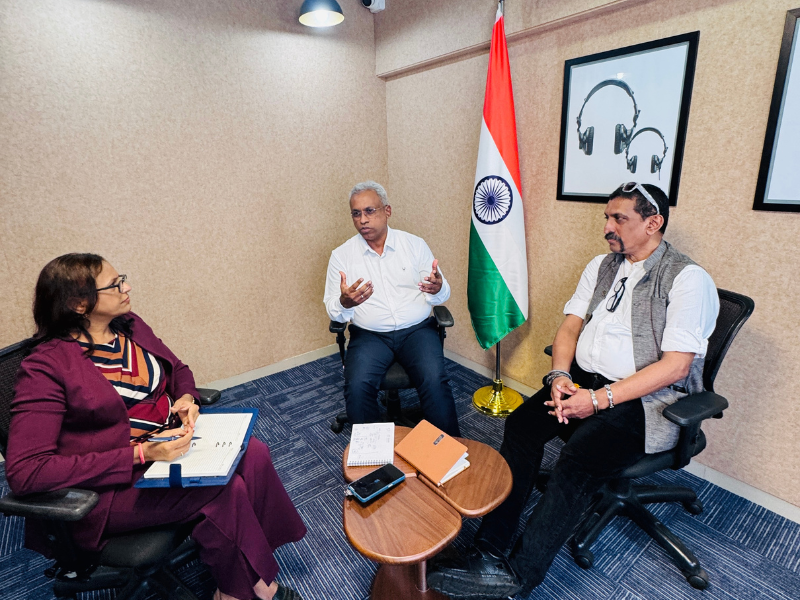
As part of EducationWorld’s DRIVE Dialogues (Dynamic Reformers Inspiring Vision and Excellence), Dipta Joshi speaks with Francis Joseph, India CEO, GEMS Education and Ajit Balan, governing council member, Cosmopolitan Education Society, on what Indian education could – and should – look like by 2035. Despite their differing perspectives, both agreed that schools must let go of the “one-size-fits-all” approach.
What would be the purpose of academics in schools in 2035? Would schools go beyond their traditional role of transferring knowledge to students?
Francis Joseph 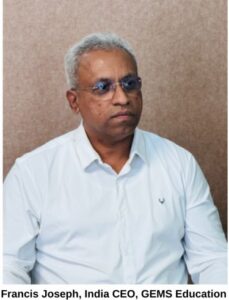 : We will definitely change for the better, but such positive change requires time, so we could be looking beyond 2035. I believe we would be moving from ‘knowledge acquisition’ to ‘knowledge application’. Secondly, personalisation has long been school education’s biggest challenge. The future of education lies in nurturing every learner’s needs and aspirations.
Today, the system is driven by teachers and parents. But in the future, students will drive the system—they will direct their own learning, seek their own resources and influence how teachers teach. If learners do not find value, they will leave the system, as lifelong learning will define the future of education.
Ajit Balan: Schools of the future — across all boards — will have to accept that students expect more and will have to deliver beyond those expectations. Speaking from the perspective of state board schools, which have the largest enrolments, students already have access to the latest information online. If they feel teachers are teaching outdated concepts, why would they stay in the system? If we are to change, we need to start preparing today.
AI tutors are capable of personalising learning at scale. How does this redefine the role of a teacher in 2035?
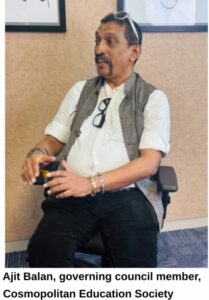 Ajit Balan: Teachers of 2035 will continue to be mentors but will have to be two steps ahead of their students. Their dependence on technology will also increase. That said, this shift won’t happen simply by dropping artificial intelligence into old structures; it needs systemic integration, including better teacher training in the use of AI tools. Right now, teachers’ engagement with new tech training programmes is low because increased workload and pressure leave them with little bandwidth to reinvent their role.
Francis Joseph: It’s not that there was no technology before but with AI, the difference is that it is helping everyone in the system, not just teachers. It’s supporting students, parents and schools. The learning environment is changing fast. Students will learn more from such environments at home, school and in the cloud. Schools will gradually adopt a model where AI integrates with human intelligence. This will shift the accountability of learning to the student and redefine the teacher’s role within the education system.
Educators have been talking about the need for interdisciplinary learning since long. What structural changes are required to make interdisciplinary learning a reality?
Ajit Balan: Interdisciplinary learning will remain an aspiration unless we redesign teacher training and assessment systems. Teachers need confidence and freedom to work across subjects, especially in state board schools where a rigid structure still dominates. Real change requires policy implementation, not just policy announcements. School and college management must stay forward-looking and aligned with real-world requirements.
Francis Joseph: State schools have inherited many challenges. But unless we challenge the status quo, nothing dynamic will happen. We should neither isolate ourselves nor surrender to comfort. The Maharashtra International Education Board (MIEB) was a breakthrough initiative by the Government of Maharashtra to align Marathi and public-school syllabi with global learning standards. However, change in governance halted this impactful reform.
Political interference led to the closure of the MIEB launched by the previous Maharashtra government. Do you believe government interference in the way schools and education systems are run will end or at least minimise?
Francis Joseph: Governments, be it state and/or central, will always be a part of the education system, always influence it because students are their pipeline to build the nation and set/sustain a culture. No government would like to see education sector work independently of it.
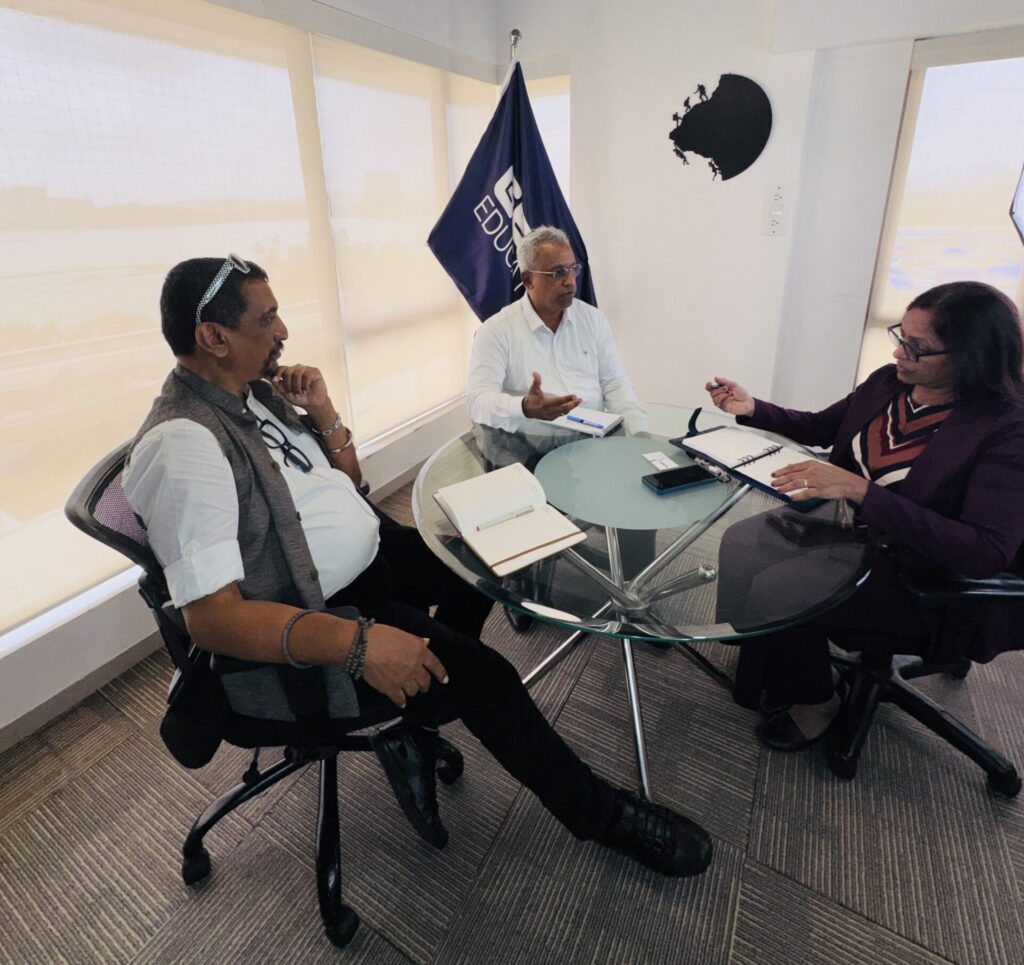
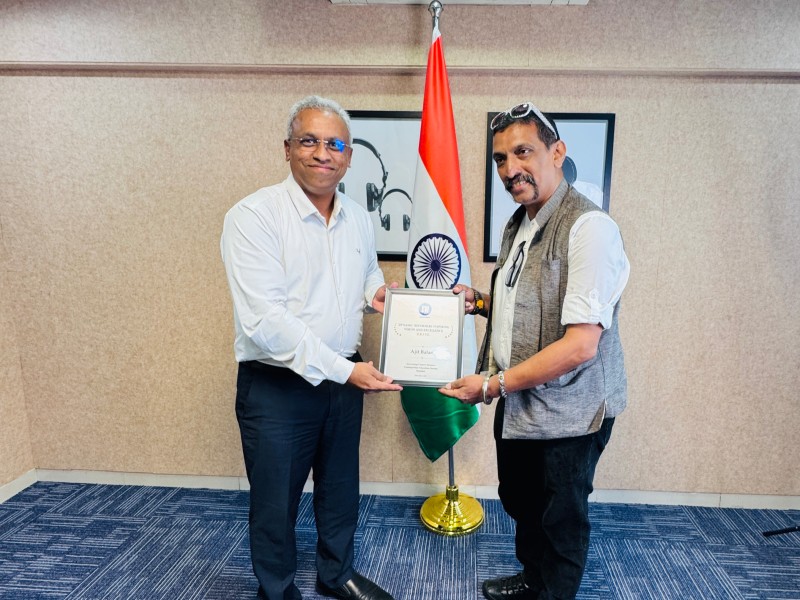
Dipta Joshi (right) in conversation with Francis Joseph (centre) and Ajit Balan (left)
Given the current situation, what can work to the advantage of Indian education if our schools want to make it to the top league globally?
Ajit Balan: India’s greatest strength has always been its respect for teachers and the resilience of its students. Our rich guru-shishya parampara (tradition), built on trust, mentorship and lifelong learning, can become a unique advantage for India. If we combine this tradition with modern pedagogy, technology and continuous teacher development, India can build an education system that is globally competitive and distinctly Indian..
Francis Joseph: Our diversity in the classrooms is our biggest competitive advantage. Few education systems bring together such linguistic, cultural and socio-economic diversity. Even Municipal schools in Mumbai offer education in eight mediums – Hindi, Marathi, English, Urdu, Gujarati, Tamil, Telugu, Kannada. We have built an inclusive education system. What we now need is greater trust, better governance, focus on capacity building of teachers and empowered schools to unlock that strength.
Students will be part of a much more globalised world in 2035. What kind of groundwork can schools provide through their curriculum?
Ajit Balan: A global citizen needs adaptability, cultural awareness and the ability to keep learning. Communication, collaboration and conflict resolution are essential skills. Schools and parents have to team up, with schools providing opportunities to practise these skills and parents reinforcing them at home. Schools need to promote learning experiences that encourage students to think beyond examination scores. We must prioritise curiosity and collaboration to prepare students for a global future.
Francis Joseph: Being a global citizen doesn’t mean losing your local identity. It means understanding different cultures, respecting diversity, appreciating different perspectives and working across boundaries. Children develop empathy through diversity. Schools should encourage dialogue, collaboration and reflection. We should realise that our students live in a ‘cloud’, so we need to equip them for it. Teachers should learn to be questioned by their students, while parents should partner in teaching and learning. Schools should inspire children to find solutions to real-life problems.
With new technology making traditional jobs obsolete, how can schools prepare children for careers that don’t exist right now? What subjects will become an absolute necessity in the schools then?
Ajit Balan: Educational institutions cannot ignore the ground reality and need to prepare students for employability, adaptability and lifelong learning. Success will come from the ability to evolve with changing opportunities. Careers will change, but the ability to learn and adapt will remain invaluable. Financial literacy, entrepreneurship, digital skills and design thinking should become mainstream alongside strong foundations in science, mathematics and languages. These are life skills, not optional extras. I believe sports will also be considered a serious academic discipline by 2035.
Francis Joseph: The future belongs to learners, not job seekers. Schools must help children become curious, resilient and comfortable with uncertainty so they can reinvent themselves throughout life. Schools should enable students to learn from failures. They should focus less on specific careers and more on critical thinking, creativity and problem-solving.
Portfolio careers and entrepreneurship are becoming the new normal. Students need to learn how money works, how ideas become businesses and technology creates value. I see mental wellbeing becoming part of everyday school culture.
What according to you will be the most noticeable changes in our schools in 2035?
Ajit Balan: I expect fewer lectures and more collaborative, project-based learning. Classrooms will be flexible, technology-enabled and centred on student inquiry rather than rote learning. Our textbook-based system constrains teachers to a fixed syllabus and students to memorise rather than genuinely understand. Rote learning works when information is hard to access, but not when AI can answer factual questions instantly. Schools will have to bring in digital discipline for the purposeful use of AI.
Francis Joseph: Schools of 2035 will feel more like learning communities than institutions. Students will have greater choice, interdisciplinary experiences and stronger connections with the real world. Students would seek to enter the world of work rather than spend years in higher education, and universities may need to reinvent themselves as lifelong learning becomes the norm.
I think it is only a matter of time before examinations as we know them are phased out. Students will be graded on what they create or invent. Life is interdisciplinary, but schools still teach in silos. If we want children to solve real-world problems, education must mirror that reality. Students should have greater freedom to learn across disciplines.
I agree with Ajit about tech in schools. Children need digital wisdom as much as digital skills, and schools of the future will help students balance their reliance on digital platforms.
What is the single high-leverage decision you want the school leader to take today so that he is ready for 2035?
Ajit Balan: I would say he needs to invest in the school’s teachers. Every meaningful educational reform succeeds or fails depending on the quality, confidence and continuous development of the teacher.
Francis Joseph: School leaders need to build a culture of trust and transparency. When teachers feel empowered, students engage, innovation flourishes and meaningful learning follows naturally.
Also read: Gen Z NEET Protests: Lessons for Educators











One comment
Dheeraj Mehrotra
Well shared, fully agreed upon the points. Children need digital wisdom as much as digital skills, and schools of the future will help students balance their reliance on digital platforms.