






Early Childhood Association launches Montessori-inspired books for young learners
– Dipta Joshi
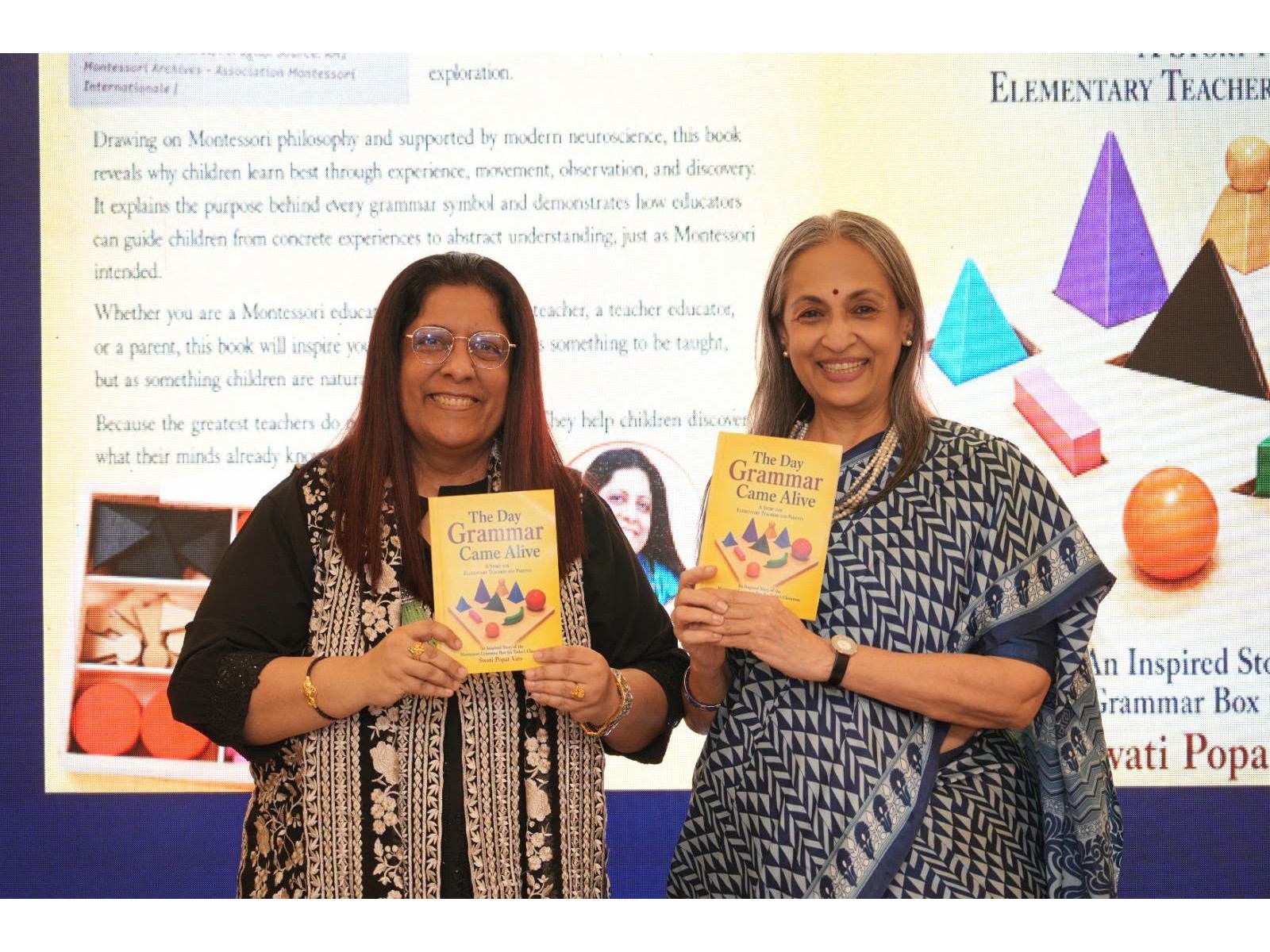
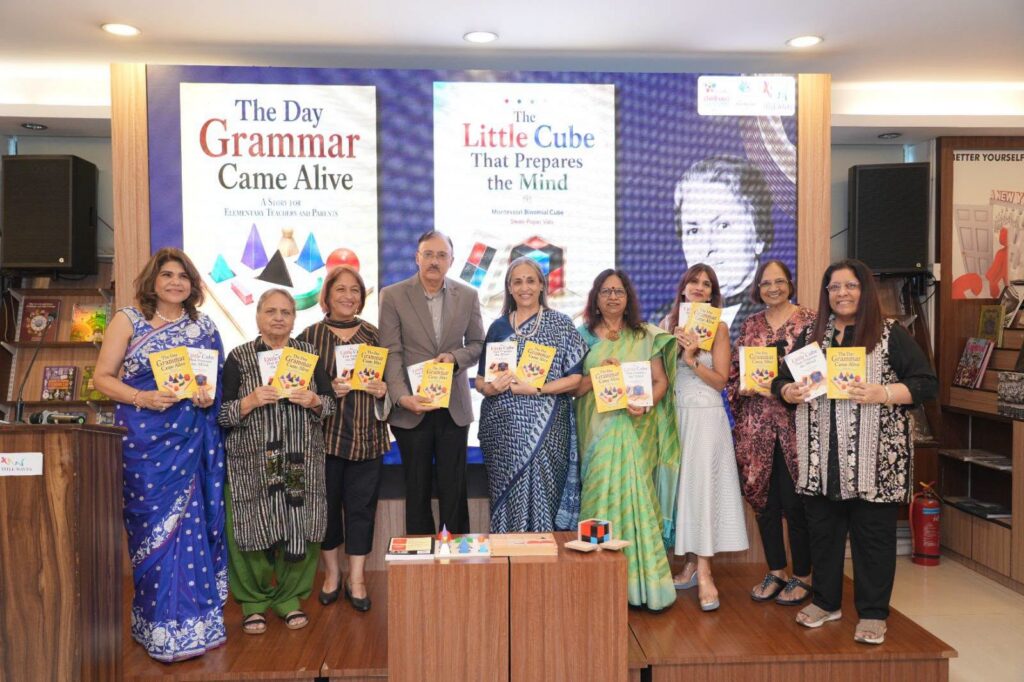
The Early Childhood Association (ECA) India released two new books — ‘The Little Cube That Prepares the Mind’ and ‘The Day Grammar Came Alive’ — at an event held in Mumbai on August 31 to mark the 156th birth anniversary of Dr Maria Montessori. Written by its founder and president, Swati Popat Vats, the books unravel the learning potential of two iconic Montessori materials – the Montessori Grammar Box and the Montessori Binomial Cube.
Maria Montessori (1870-1952) was an Italian physician who became an educator pioneering what is known as the Montessori method of education. Her deep understanding of child development believed children construct knowledge through independent experience, hands-on learning and self-discovery before they learn formal terminology. By designing learning materials, she transformed and influenced early childhood education across countries.
The books, inspired by Maria Montessori’s learning models are designed to help adults – teachers and parents, look beyond the materials at hand (the Cube and the Grammar Box) to understand the deeper processes of learning they stimulate. While the colourful Montessori Binomial Cube appears to be a puzzle that children assemble and return to its box, it is aimed at developing visual discrimination, sequencing, spatial awareness, concentration, problem-solving and logical reasoning etc.
A similarly child-centric approach makes language learning more inviting when children use the colour-coded geometric wooden shapes fitting into the multi-compartment Montessori grammar symbol box. Inspired by the grammar box, the book presents grammar as an integral and functional requirement for everyday communication rather than a collection of definitions that must be memorised by children and answered through worksheets.
Established in 2011 to improve the quality of care and education for children aged 0-6 years, the ECA champions developmentally appropriate and joyful learning experiences. According to Vats, the current question about the use of AI by children needs a different perspective. This is also what prompted Vats to study and write about two Montessori materials developed more than a century ago.
“Have we protected the child’s journey from concrete experience to abstract understanding? Because AI is, ultimately, an extraordinarily powerful abstract tool. And while we debate this new abstraction, we may be overlooking something that has already happened in education: we have made too much learning abstract, too early. As a student, I struggled with grammar and algebra. Not because I was incapable of understanding them, but because I am a hands-on, experiential learner. Had someone allowed me to touch grammar before asking me to analyse it on paper, perhaps grammar would have made more sense. Had someone allowed me to build algebra before asking me to manipulate symbols, perhaps algebra would not have seemed so distant. That is what drew me to the Montessori Grammar Box and the Binomial Cube. Today neuroscience has given us reason to value such experiences and this also aligns with the direction of NEP 2020 – experiential learning, discovery, activity, play and toy-based pedagogy,” says Vats.
Also read: Visa uncertainty, costs reshape Gen Z’s overseas education choices: Emeritus report








Add comment