






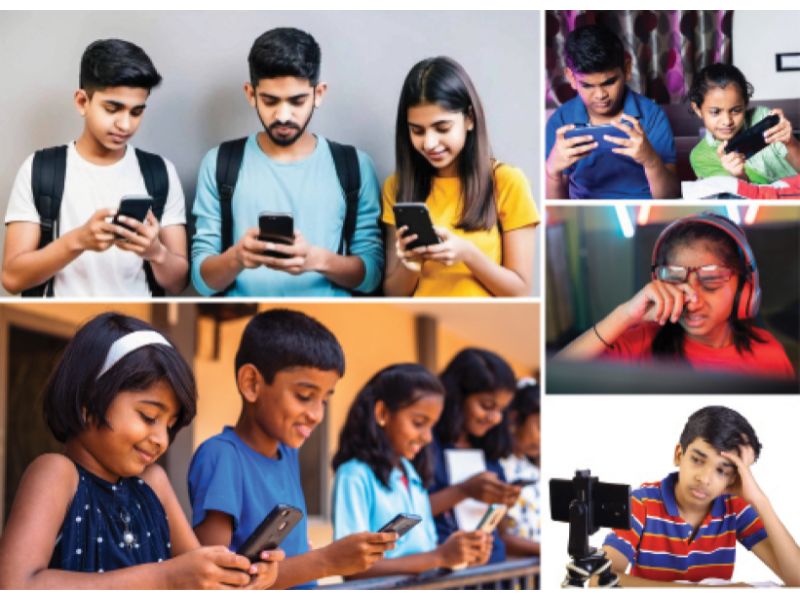
Emergency! Ban Big Tech Mind Blowing India’s Children & Youth
Australia’s Online Safety Amendment Act, which makes big tech companies accountable for registering children under 16 as social media subscribers, has received global encomiums. Several other countries are set to enact similar legislation. India needs to urgently follow suit
Dipta Joshi
On December 10, 2024, Australia’s Online Safety Amendment (Social Media Age) 28 Bill, tabled in the House of Representatives on November 28, received the assent of King Charles III in distant London and became an Act of Oz’s Parliament. As such, Australia became the 21st century’s first nation to impose a legal obligation on new genre multi-billion transnational social media corporations including Meta, Google, X (formerly Twitter), Snap Inc, Byte Dance among others, which own and operate Internet enabled instant connectivity social media platforms including Reddit, X, Facebook, Instagram, Snapchat, Kick, Threads, YouTube, Twitch and TikTok to ensure that children below age 16 are denied access to their social media platforms.
The rationale of the prohibition is a wealth of evidence indicating that distracting children and teens from academic studies apart, social media addiction is exposing children to risks such as cyberbullying, grooming/online predation, harassment, and harmful or age-inappropriate content adversely impacting their mental health and wellbeing, triggering anxiety, depression, sleep disruption, body image issues. “This is about protecting young people — not punishing or isolating them — and letting parents know we’re in their corner when it comes to supporting their children’s health and wellbeing,” said Michelle Rowlands, Australia’s Minister of Communications while moving the Bill in the House of Representatives in November 2024.
Under the Act, digital media companies that own and operate these platforms are directed to use robust latter-day technologies such as age estimation face scans, and ID checks before permitting individuals to sign up as subscribers. Companies that fail to prevent under-16s from starting accounts are liable for penalties of up to Australian $49.5 million (Rs.318 crore). This tough uncompromising legislation has had the desired outcome. A month after passage of the Act, corporations owning specified platforms and apps have shut down 4.7 million accounts of children under age 16 — a huge number given that the total population of Australia is 28 million.
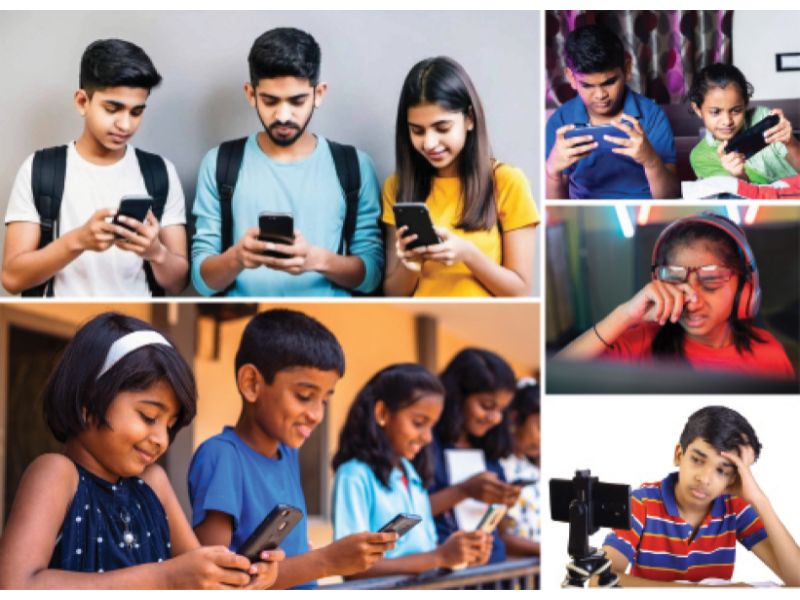
Young social media users mental health & well-being jeopardy
Following suit on January 27, France’s National Assembly approved legislation placing the onus on social media corporations to prevent children under-15 from accessing their social media programs and apps. “The brains of our children are not for sale — neither to American platforms nor Chinese networks,” said President Emmanuel Macron endorsing the legislation.
These countries’ unprecedented initiative targeting the small number of identifiable user-generated content sharing platforms — rather than placing the onus on parents as hitherto — marks an inflection point in the global conversation on how to protect children from the mind blowing socio-emotional ravages of seductive and addictive social media. It has drawn praise, criticism and intense debate globally and several countries — including the UK, Denmark, Spain, Malaysia, Germany, Italy and Greece — are contemplating similar bans on social media use by minors.
Awareness of the harmful impact of addictive social media apps and platforms has been swelling in India too. Several child rights organisations such as Child Rights & You (CRY), Child Fund India, and Freedom Foundation have been campaigning for stronger child online-safety regulation — age-gating/age assurance, safer defaults, and limits on data use for children. Moreover, several state governments, notably Andhra Pradesh and Karnataka, have constituted expert committees to advise them on the issue. ParentsWorld — EducationWorld’s affiliate magazine — has run several cover stories advising parents on ways and means to safeguard children and teens against excessive social media exposure and its harmful consequences.
However, the Aussie government’s initiative to strike at the root of the problem — to hold the handful of multi-billion dollar valuation American and Chinese corporations that have invented the technologies to ensnare hundreds of millions of children and youth to become addicted to their platforms (Meta’s Facebook and Instagram each have 3 billion monthly active subscribers globally) accountable — is a stroke of genius. It shifts the onus to these corporations to carefully scan subscribers/users to ensure that children and teens are denied access.
Urgency to enact similar legislation in India is imperative because contemporary India negligently hosts the world’s largest child and youth population under 18 years of age whose number aggregates 436.6 million.
Sub-optimally educated and inadequately mentored by illiterate and/or quasi-literate parents, this segment of the population is particularly vulnerable to the seductive appeal of social media platforms that provide 24×7 ‘entertainment’ in the form of personal connectivity, chat and dating sites, video reels with thin story lines and pornography. In January 2025, India reported 491 million social media users, of which Facebook recorded 378 million users, Snapchat over 208 million, Instagram 414 million and YouTube 491 million. While exact number of minors accessing these platforms aren’t available, pre-teens, teenagers and young adults (age 18-24) known to use multiple platforms are the largest social media users.
Admittedly there are positive aspects of social media. Numerous platforms enable learning and provide high-quality education when usage is structured, age-appropriate and supervised. For instance, reels with short-form educational videos, storytelling, explainers, language learning clips and creative tutorials in engaging formats can complement traditional classroom learning. Several educational platforms encourage learning participation, support creative expression and confidence-building. Navigating digital interfaces also helps in understanding the increasingly important skills of online etiquette and recognising safe vs. unsafe online behaviour.

Kochhar colonised minds danger
However, popular, mainstream social media is not designed for the learning needs of the huge global population of children and youth. The core architecture of social media platforms with its algorithmic feeds (analysing user behaviour), engagement metrics (quantifying digital interactions), infinite scrolling (jumps from one reel to the next), and social validation loops consisting of ‘likes’, ‘comments’ and ‘notifications’ is optimized for attention and user retention. Simply put, it means the platforms are deliberately designed to encourage continuous usage. Thus, the widespread penetration of social media into the lives of children and adolescents extracts a huge hidden cost that severely hinders academic learning and damages socio-emotional development.
This “invasion” of the minds — mindshare — of children and youth by Western tech megabucks corporations has alarmed serious monitors of the education sector. “Indian youth spend an average six hours per day on social media watching video reels featuring trivia that is random and meaningless, devoid of context or continuity, irrespective of whether they bring their phone with them to school or not. Neither parents, teachers or youth are sufficiently aware of this danger. We must realise that the minds of our children and youth are being hijacked, colonised by social media apps that are training their minds for neural switching ‘off’ and ‘on’ every three seconds. Two hundred years ago, the East India Company expropriated the land and property of Indians. Currently, American new tech majors are expropriating the minds of our youth to collect massive personal data to transform them into passive consumers of the advertising campaigns of American consumer products multinationals,” warns Yogesh Kochhar, the Dharamshala-based former Director of Microsoft India and founder-trustee of the YOL Happiness Foundation.
As an antidote, the foundation has designed and developed its YOL app approved by AICTE as a program that provides a ‘mind map’ for students from class VIII onwards. It enables social media users to assess the mind share lost to casual screen viewing — video reels and online trivia — on a daily basis through colour-coded signalling. “By making users aware of time spent on random and ambiguous viewing, this app enables people to rewire their brains and focus on more important things rather than random stuff such as the mating habits of amazonian spiders. Today, young people are lost in a dark rabbit hole where they suffer fear and anxiety that makes their minds brittle, random, anxious, non-linear and weak,” Kochhar said in an interview with EducationWorld last June (https://educationworld.in/our-minds-have-been-colonised-by-social-media-megacorps).
As mentioned in passim earlier, several social activists and child rights NGOs are campaigning for stricter control of American megacorps and content developers beaming distracting content to children and youth in India. Last year, in B.L Jain vs. Union of India and Zep Foundation vs. Union of India, the Supreme Court declined to admit writ petitions praying for a statutory ban and regulation of social media that made online pornography and other content easily accessible to, on the ground that the issue falls within the “policy domain” and as such requires government rather than judicial intervention.
Meanwhile, government has not been totally inactive on this issue. The Digital Personal Data Protection Act (DPDP Act) 2023 which obliges social media platforms to obtain verifiable parental consent for children and youth under-18 to register social media accounts has been practised more in the breach than observance. Moreover, full enforcement, including penalties for non-compliance, is scheduled only after May 2027, providing an 18-month period of transition for tech companies.
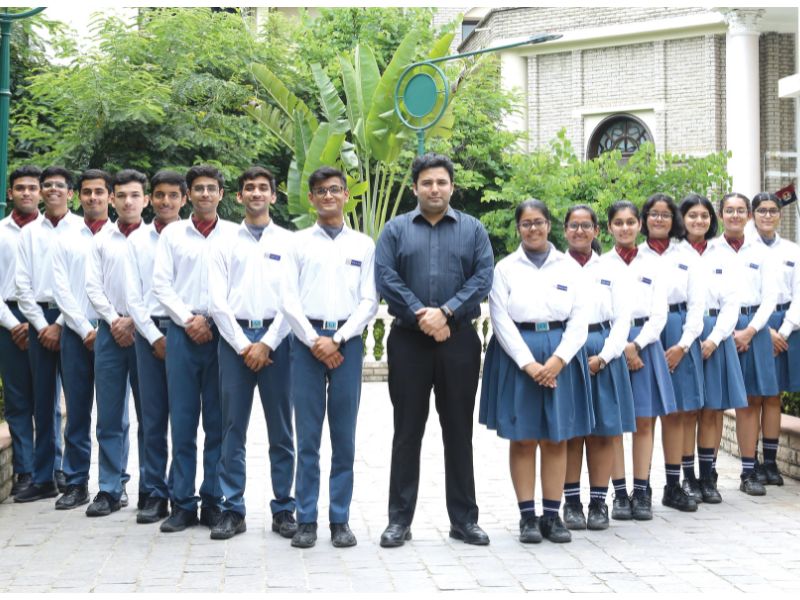
Siddharth Singh bombarded minds
This time window during which millions of children are likely to become addicted to social media programs is not acceptable to a growing number of knowledgeable educators who favour an immediate Australia-style ban on children below 18 years accessing non-academic social media apps and platforms. “Absence of conversation on the child destructive impact of proliferating social media is dispiriting. The DPDP Act seems to believe that an immediate ban on children below age 18 accessing social media is unenforceable. But the success of Australia’s Online Safety Amendment Act has proven otherwise and we must follow suit. The 18-month time window provided by the DPDP Act is too wide as tens of millions of children are suffering the ill-effects of social media addiction on a daily basis. In Emerald Heights, we have noticed that the grades of bright day scholars are falling while some of our boarders — who are totally denied smartphones — have emerged as state toppers. That’s because while cell phones are totally banned during school hours, day scholars are subject to only mild prohibition by parents after school hours. Therefore, day scholars are increasingly exhibiting symptoms of sleep-deprivation, depression, cyber-bullying and loss of interest in co-curricular and sports education. Targeting social media providers — rather than teachers and parents — for bombarding vulnerable children with distracting, nonsensical and harmful content is an urgent necessity,” says Siddharth Singh, an alum of Stonybrook University, USA and currently Director of the Emerald Heights International School, Indore (EHIS), which has over 4,000 students, including 800 boarders from seven countries on its muster rolls. Singh’s opinion merits high weightage because EHIS has been ranked India’s #1 co-ed day-cum-boarding school for the past four years in the comprehensive EW India School Rankings.
Social media glossary
Algorithm. A behind-the-scenes system that directs online content towards users based on likes, views, clicks, and pauses.
Algorithmic feed. A personalised stream of posts or videos selected by the platform — not the user — designed to maximise viewing time.
Engagement. Any interaction on an app, such as liking, commenting, sharing, saving, or watching content till the end.
Engagement metrics. Data points such as likes, views, shares, and follower counts that indicate how well content is appreciated.
Infinite scrolling. A design feature under which new content keeps loading continuously, making it hard to stop scrolling.
Notifications. Alerts or messages sent to a digital device to capture attention and draw users back to the app.
Social validation. Sentiment of approval, satisfaction experienced from likes, comments, positive reactions online.
Validation loop. A cycle in which posting content leads to feedback, creating emotional rewards that encourage repeated posting.
Screen time. Total time spent on digital devices for non-essential or recreational purposes.
Short-form content. Brief videos or posts created for quick viewing and instant reaction.
Doomscrolling. Endless, unintentional scrolling through content, often without enjoyment or benefit.
FOMO (Fear of Missing Out). Anxiety caused by belief that you have missed out on the rewarding experiences others are enjoying.
Digital footprint. Lasting online trail formed by posts, searches, likes, and comments.
Online etiquette. Respectful, responsible behaviour while interacting in digital spaces.
Passive consumption. Viewing content without reflection, interaction, or creation.
Privacy settings. Controls that determine who can view personal information and posts.
Content moderation. Processes used by platforms to limit or remove harmful, inappropriate material.
Digital under-parenting. Situations where children are given largely unrestricted access to social media without adequate parental guidance or supervision.

Fazal incredibly irresponsible
Nooraine Fazal, Managing Trustee and CEO of the Inventure Academy (IA), Bengaluru, ranked India’s #1 co-ed day school in the EW India School Rankings 2025-26, not only endorses Siddharth Singh’s call for an urgent, immediate ban by the Central government on social media platforms permitting minors from accessing these apps, she simultaneously advocates awareness campaigns by the Centre and states to educate parents and students about the negative effects of social media addiction.
Big tech has been incredibly irresponsible while enabling the spread of social media apps worldwide. The outcome is an entire generation of sleep-deprived, anxious, distracted and depressed children and youth in all countries in varying degrees. Although in our upper middle class school, parents tend to regulate their children’s social media usage, in government schools where parents are less aware and both working, the problem has assumed alarming proportions. Millions of children becoming addicted to social media, constantly scrolling and suffering attention disorder. The Central government needs to heavily penalise social media companies that use algorithms that promote addiction. Moreover, government and schools should launch awareness campaigns targeting parents and children about the harmful outcomes of constant scrolling and social media addiction,” says Fazal, an alumna of Bangalore and Boston universities who co-promoted the CISCE and Cambridge (UK) affiliated co-ed IA in 2003. In the EW India School Rankings 2025-26, IA is ranked India’s #1 co-ed day school.
The rising alarm of responsible educators about the impact of addictive social media platforms and apps is warranted because they are inimical to the learning needs of minors. The core architecture of social media platforms with algorithmic feeds that track user behaviour, provide engagement metrics (that quantify digital viewers), encourage continuous scrolling (jumping from one reel to the next), and social validation loops consisting of ‘likes’, ‘comments’ and ‘notifications’ is designed for attention retention. Simply stated, popular social media platforms are deliberately designed to encourage addiction. Their widespread penetration into the lives of children and adolescents comes at a hidden cost in terms of time lost for academic learning and healthy development. Indeed, it’s commonplace in urban India to witness groups of undergrad students and jobless youth endlessly scrolling on their mobile phones watching hastily produced, low-quality reels.
Social media platforms’ mild child-safety guardrails
Global social media companies claim to safeguard child safety by removing predatory content that targets minors, and running parental awareness initiatives focused on digital hygiene and online wellbeing. However, in the Indian context, many of these child-safety guardrails are weak and ineffective and children continue to access harmful or abusive content with relative ease.
Meta has introduced Teen Accounts with default safety features on Instagram, with plans to extend these safeguards to Facebook and Messenger. Under this framework subscribers below 16-18 years of age are automatically placed under stricter privacy and safety settings that include:
- Limited profiles, restricted messaging, limited interaction with unknown users, and reduced exposure to sensitive content besides offensive language filters, usage reminders and sleep mode.
- Parents/guardians can monitor recent contacts, set screen-time limits, and restrict app usage during specific hours. Users under 16 require parental consent to modify safety settings.
YouTube has prescribed stringent policies to protect minors from content that could harm their emotional or physical wellbeing, while allowing limited exceptions for educational, documentary, scientific, artistic and public-interest material.
- The platform prohibits pornographic content, graphic violence, and hate speech, removing violations and enforcing a three-strike rule for repeat offenders.
- Enforcement is supported by machine-learning systems and human reviewers.
“From a medical perspective, the adolescent brain is in a state of flux. Executive control centres are still under construction, even as reward and emotional systems are highly sensitive to stimuli and novelty. Social media platforms are uniquely designed to exploit these reward pathways, reinforcing patterns of intermittent positive feedback through likes, comments, and shares. For children whose prefrontal cortex is still maturing, the consequences can be significant not just mentally but socially as well,” wrote Dr. Chandrakant Lahariya, a health policy expert and specialist in parenting and child development in Times of India (February 1).

Lahariya significant consequences
More disturbingly, there is growing addiction within youth and middle-aged citizens to pornography beamed from the US where it is a major industry, and other dissolute Western countries where production of abusive pornographic videos is legally permissible as “freedom of expression”. Western women who self-righteously complain about sexual harassment in developing countries would do well to also complain against the flourishing porn industry which has ruined their collective image by projecting them as dissolute wantons who enjoy sexual exploitation and humiliation.
While Indian law criminalises production, publication and distribution of pornographic content, there is no law against watching pornography in private. However, data drawn from the Crimes Research Bureau indicates easy access to pornographic content has had the socially destabilisation effect of a sharp rise in people trafficking, rape and molestation of women and children.
For American megacorps that dominate the digital media ecosystem, India with its huge population of an estimated 600 million aged below 24 years is a lucrative market for transnational consumer products and services, whose advertising targets consumers from the data sold by social media platform providers. Currently in the absence of strong legislation prohibiting major platform providers such as Meta, Google and X from hosting distracting and harmful content on their proprietorial platforms, the onus is on educators and parents to guide children through addictive traps of the digital world.

Chauhan unambiguous call
“India must ban minors accessing social media because minors lack the cognitive and emotional maturity to distinguish between persuasion, performance and reality in online environments. Their senses of critical judgement, attention and self-regulation are in evolutionary stage. So the limited benefits of social media must be weighed against the downsides of reduced attention spans, exposure to adult content, anxiety, disturbed sleep patterns and addiction to social media platforms,” says Dr. Shunila Chauhan, an alumna of Mumbai University and Principal of the Universal School, Mumbai which has 1,800 day scholars on its muster rolls.
The response of most private and government schools to the social media tidal wave is to ban the use of smartphones during school hours. However, it is pertinent to note that boarding schools that can ban or severely restrict cell phones usage round the clock are a tiny minority of the country’s 1.10 million government and 450,000 private schools. Therefore, the great majority of school and college-going minors are subject to lax control over social media usage at home.
Consequently, teachers countrywide are witnessing discernible drops in learning outcomes, behaviour changes and deteriorating classroom discipline among children. Persistent usage of social media, even if only after school hours, has eroded children’s reading habits, concentration, resulting in shallow learning which adversely affects their academic outcomes. “Students now feel that academic learning is too slow compared to what they watch on their phones,” laments a despondent teacher of a top-ranked Mumbai day school.

Latha parent-child fissures
“Middle school children are most vulnerable to the impact of social media since they are in the age group where they want to test boundaries. By the time they are in high school, they are overwhelmed by the pressure to conform. However, one can’t put our children in silos because there is a domino effect to social media usage. Today, screens are being handed over as pacifiers even before children are trained to regulate their emotions or think critically. Many parents hand phones to children out of love, for safety, exhaustion from long working hours, nuclear family settings, or fewer safe spaces for play. Later, when screen use becomes difficult to negotiate, resentment sets in straining relationships with family members. In such cases, parents look for school support in disciplining their children’s behaviour. Although schools conduct ‘life skills’ and ‘value-based learning’ classes, it isn’t enough considering many of the disciplinary challenges stem from social media exposure and digital habits formed outside of school hours,” says Latha M, Director, Saandeepani Academy for Excellence, Bengaluru which has 750 children in this CBSE school.
The technical explanation provided by psychologists for this pernicious dependence is that rapid stimulation and instant rewards available in the form of ‘likes’ releases Dopamine — the hormone in the brain that generates pleasure and well-being sentiments. However, when adolescents and teens in particular, don’t receive the number of ‘likes’ they expect, they experience “dopamine toxicity”. As the brain becomes conditioned to quick rewards, it becomes harder to tolerate frustration and develop emotional regulation. Repeated exposure to carefully curated online lives also intensifies, as the fear of missing out (FOMO) takes over with low self-worth and negative self-comparisons taking a toll on children’s mental health.
Model school-student cell phone contract
To promote a focused, respectful, and safe learning environment, all students and their families should complete this contract regarding student cell phone use during school hours.
Does this student have a cell phone? Y/N
If yes phone number_______
Cell phone use Rules
- Phone must remain off or on silent mode during school hours unless specifically allowed by teacher for instructional purpose.
- Phone must be kept out of sight during class time (e.g, in backpack or locker) unless given express permission by a teacher.
- Phones can be used only during:
- Designated break (e.g. lunch or recess) as permitted by school policy.
- Emergency situation with staff approval.
- No photography, video or audio recording is allowed on school grounds without explicit permission from teacher or administrator.
- Texting, calling, or using social media is not allowed during class time.
- Phones, texting, social media platforms will not be used for cyber bullying.
- If a school/teacher/administrator has doubts about incorrect phone usage on restricted sites or topics, then the phone can be confiscated for inquiry.
- Smartwatches and other wearable devices with phone capabilities are subject to the same rules as phone.
Consequences for violation of cell phone rules
- First offense: Verbal warning and reminder of rules.
- Second offense: Phone is confiscated and returned at the end of day.
- Third offense: Phone is confiscated and returned only to a parent/guardian.
- Further offense: Additional disciplinary action, which may include loss of phone privilege at school for a set period of time.
I understand that using my cell phone responsibly is part of maintaining a positive learning environment for myself and others. I agree to follow the rules outlined in this contract and accept the consequences if I violate them.
Student signature:__________ Date:________
Parent/guardian signature:___________ Date:_______
Source: Early Childhood Association & Association for Preparatory Education & Research

Pathare target platform providers
“In school settings, I frequently encounter the negative consequences of excessive social media usage. They include emotional dependency on digital devices, heightened anxiety, sleep deprivation, and comparison with peers. Higher secondary — classes XI-XII — students, tend to panic when asked to submit their phones during school hours, and most are emotionally drained after spending hours scrolling. I believe the issue is not the smartphone itself, but unsupervised, excessive, and developmentally inappropriate use of it. Without guidance, young people are navigating platforms designed for adult brains. Until children are firmly denied access through legislation targeting platform providers and content generators, social media is likely to do more harm than good. When used positively, social media can offer students avenues for creativity, information, peer support, and a sense of belonging, especially for those who find offline social spaces challenging,” says Madhura Pathare, an alum of Mumbai and SNDT universities with professional experience in school counselling, organisational development, and mental health advocacy. She currently heads Drishti (estd.1994) which works closely with schools affiliated with the State, CBSE, ICSE, Cambridge & IB exam boards to support students’ social-emotional development.
India’s existing regulatory framework — anchored in the archaic Information Technology Act, 2000 and the IT Rules, 2021 — is being supplemented by the new Digital Personal Data Protection (DPDP) Act, 2023 which unfortunately will become fully enforceable only by May 2027.

Dr. Pavan Duggal
“I don’t think our laws are strict enough to adequately regulate social media. In fact, s.79 of the IT Act, 2000 allows online intermediaries (social media platforms, search engines, e-commerce sites, telecom networks and online marketplaces companies) to classify themselves as neutral intermediaries hosting ‘user-generated’ content. As such, they are obliged to remove harmful content only upon receiving a specific government order. This provides safe harbour to tech companies. The time has come for tech companies to be guided by stricter regulations,” says Delhi-based Dr. Pavan Duggal, an advocate of the Supreme Court of India specialising in cyber law, cybersecurity and emerging technology law, who has authored 201 books on cyber law and is advisor to key UN agencies including Unesco and UNCTAD.
Unsurprisingly, given the stakes involved — snowballing addiction of the world’s largest child and youth population to social media that facilitates data mining (“the new oil”) that consumer products multinationals love — offshore tech giants are fiercely resisting regulation. Especially Australia-type regulation that holds them accountable for harmful content uploaded on their platforms. ‘X’, formerly Twitter which has 25 million users in India, has twice within two years, moved the courts challenging the Union government’s powers to block, take down or censor content on its platform.
An indicator of the downsides of easy access to social media is that many, if not all, Big Tech moguls who invented these platforms strictly regulate access of their own progeny to them. Among them: Mark Zuckerberg of Meta that owns Facebook and Instagram; Bill Gates (Microsoft); Evan Spiegel (Snapchat). Former Facebook executive Chamath Palihapitiya has publicly expressed disapproval of the “addictive dopamine-driven feedback loop” that most social media platforms use.
Against this backdrop of offshore Big Tech titans cynically profiting from incrementally appropriating the mindshare of the world’s largest child and youth population and addicting them to gossip, narcissism and mindless scrolling of video reels, the May 2027 time window awarded by the DPDP Act to megabucks corporations to devise ways and means to install child protection safeguards in their programs is too wide and indefensible. Through quick legislation of its Online Safety Amendment (Social Media Age) Act, Australia has struck at the root of the problem and held Big Tech corporations accountable for the content they upload on their platforms. India’s BJP/NDA government at the Centre needs to urgently follow suit.











Add comment