






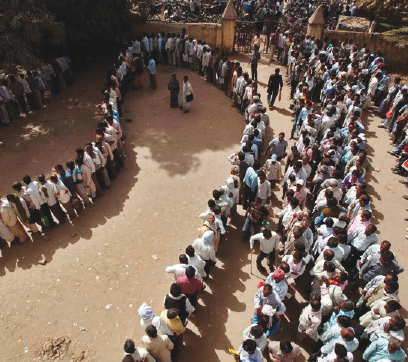
EWIHER Top 500 Arts, Science & Commerce Colleges Rankings 2026-27
Although several media publications publish annual college and university rankings, these are mostly politics-focused publications for whom education reporting and coverage is peripheral. Therefore it’s generally accepted that the annual EWIHER with its careful categorisation of HEIs — to eliminate apples with oranges comparisons — is the most reliable guide for school-leavers seeking admission into India’s Top 500 ASC colleges
– Dilip Thakore & Summiya Yasmeen
The most unkindest cut that post-independence India’s confused socialist neta-babu brotherhood inflicted upon the hapless public, which suffered almost two centuries of continuous loot and exploitation under the British Raj, was neglect of public education. As a result, to this day — 79 long years after the Indian tricolour was unfurled on the ramparts of the Red Fort, Delhi with high hopes and ringing rhetoric (“tryst with destiny”) — 23 percent of free India’s citizens (322 million) are unable to read and write a paragraph in any language, the official test of literacy. In addition, another estimated 30 percent (420 million) are quasi-literate, unable to fill up the hundreds of official forms and documents required by the socialist dispensation.
Although back in 1967, a high-powered committee chaired by D.S. Kothari, Chairman of the University Grants Commission, recommended a minimum 6 percent of GDP should be allocated for public education, that recommendation has never been honoured. The national allocation for public education (Centre plus states) has averaged 3.5-3.8 percent of GDP for almost eight decades.
As a result, the country’s 1 million government schools are in a shambles, the overwhelming majority bereft of labs, libraries and lavatories and plagued by chronic teacher absenteeism, routine corporal punishment and dismal learning outcomes. Most children routinely promoted to class VIII are unable to read class V texts or manage simple sums. Learning outcomes in the country’s estimated 400,000 BPS (budget private schools) where children of the upwardly mobile poor are fleeing in droves, are only marginally better. According to your editors, only 4,000 primary-secondary schools rated and ranked in the comprehensive annual EducationWorld India School Rankings (EWISR, estb.2007) — which has evolved into the world’s largest schools survey — provide schooling of global standard.
A higher education system built on this rickety foundation can’t be strong. The most recent confirmation of the poor quality of higher education is the State of Working India (SWI) 2026, a 254-page report published by Azim Premji University, Bengaluru, in March. According to the report sub-titled ‘Youth in the Labour Market: Pathways from Learning to Earning’ 40 percent of graduates of India’s higher education institutions (53,000 colleges and 1,338 universities) are unemployed for over 12 months. The report adds that the number of unemployed graduates (aged 20-29) has risen from a mere 5 million in 1983 to 63 million in 2023 — from 13 percent to 67 percent before declining to 40 percent after spiking during the Covid-19 lockdown. “Nevertheless, this report is a harsh indictment of India’s higher education system. In the UK and US, the percentage of unemployed grads is less than 4 percent and in China an estimated 16 percent,” observed our Delhi correspondent, Autar Nehru in a report on SWI 2026 last month (April).
The dismal conclusions of SWI 2026 are endorsed by the India Skills Report (ISR) 2025 published by Wheebox ETS, a Gurugram-based talent acquisition, retention, and upskilling company which administers its Global Employment Test to a sample 6.5 lakh final year college students and graduates. According to Wheebox, only 56.35 percent of graduates in India are globally employable, i.e, 44 percent are not.
This depressing report is supported by Mercer/Mettl, a New York-based firm with several offices in India that bills itself as the “world’s fastest, largest online assessment and certification company” with 6,000 corporate clients in 80 countries. Mercer/Mettl reports that only 46 percent of college graduates have “sufficient learning agility” and 50 percent the necessary soft skills for global employment. Against this backdrop, choosing the ‘right’ — most academically and aptitudinally suitable — undergrad college is a matter of critical importance for higher secondary school-leavers.
Allahabad job seekers: rickety foundation
Therefore since 2013, your editors have been publishing the EducationWorld India Higher Education Rankings to identify 500 best autonomous and non-autonomous undergrad Arts, Science and Commerce (ASC) colleges countrywide; 250 private engineering (excluding public heavily subsidised and difficult to enter IITs, NITs) from a total of 5,868 and 200 private B-schools out of a total of 3,900.
Although media publications and several government agencies notably NAAC (National Assessment and Accreditation Council), a subsidiary of the University Grants Commission (UGC), awards its A-E star ratings to colleges and universities that opt for assessment, NAAC doesn’t — and never did — inspire much confidence. Even though it was established in 1994, thus far only 9,000 colleges and universities have volunteered for NAAC accreditation. Unsurprising, because ab initio the NAAC institutional evaluation and rating system has been plagued with corruption and scandals.
Last year, the Central Bureau of Investigation (CBI) arrested three office-bearers of the Guntur-based Koneru Lakshmaiah Education Foundation (KLEF) together with seven members of a NAAC task force for conspiracy to provide KLEF University, Guntur a favourable stars rating report. On April 9, Dr. Anil Sahasrabudhe, chairman of NAAC, announced that following this contretemps, the Bengaluru-based NAAC has weeded out 20 percent of its approved academic assessors on the recommendation of a ten-member Special Committee.
The other official league table ranking HEIs is the Union education ministry’s NIRF (National Institutional Ranking Framework) introduced in 2015. Although it is often cited by some HEIs as proof of higher education excellence, right from the start NIRF has drawn criticism for arbitrary and patently incredible rankings.
In March last year, the Madurai Bench of the Madras high court issued a stay order on the ministry from publishing NIRF 2025 after a PIL (public interest litigation) writ alleged “data manipulation and lack of transparency in the NIRF ranking process”. Nor is it any wonder that the country’s top-ranked private universities — O.P. Jindal Global, Ashoka and Amity universities, Dhirubhai Ambani University, Gandhinagar among numerous others — don’t ‘participate’ (i.e, provide solicited data) in the annual NIRF, indicating fear of anti-private sector bias in NIRF rankings.
Although several media publications including India Today also publish annual college and university rankings, these are politics-focused publications for whom education reporting and coverage is peripheral. They lack the specialist domain knowledge and focus of EducationWorld. Therefore, it’s generally accepted that the annual EWIHER with its careful categorisation of HEIs — to eliminate apples with oranges comparisons — is the most reliable guide for school-leavers seeking admission into India’s Top 500 ASC colleges.
Against this backdrop, after presenting detailed league tables rating India’s 400 most respected government and private universities last month (April), in this issue, we present the Part-II edition of EWIHER 2026-27 rating India’s 500 most respected Arts, Science and Commerce (ASC) colleges under six parameters of undergrad education excellence and ranking them inter se nationally, in the states and 230 cities. Also presented in this issue are league tables ranking 250 Private Engineering institutions and 200 Private B-schools. For reasons of accuracy, we have categorised ASC colleges into Government and Private autonomous and non-autonomous institutions.
This segregation is important because in general, parents/students prefer ASC colleges with academic and administrative autonomy, untethered to the apron strings of large parent universities which often affiliate 500-700 colleges. Autonomous colleges empowered to design their own syllabuses and curriculums, tend to offer higher quality education than non-autonomous ASC colleges that offer standardised syllabuses designed by affiliating universities. It’s also noteworthy that autonomous colleges are conferred this status after careful evaluation by the apex-level UGC. As such, they are generally regarded a cut above non-autonomous colleges, although there are exceptions to this general rule.
For instance St. Stephen’s College, Delhi, routinely ranked the country’s #1 non-autonomous ASC college into which admission (for merit category, i.e, non-Christian students) is as difficult as it is for IITs. Despite repeated pleas for autonomous status stretching over several years, it hasn’t been awarded independent status. Therefore, school-leavers seeking admission into best undergrad ASC colleges should also check out the non-autonomous colleges league tables carefully.

Mishra: one-on-one interviews
Another distinguishing feature of the annual EWIHER is that for engineering colleges, we restrict our league table to the Top 250 private institutions. The rationale for excluding government engineering colleges is that all league tables are dominated by the country’s 23 IITs (Indian Institutes of Technology) and 31 NITs (National Institutes of Technology). Undoubtedly these pampered, heavily subsidised Central government HEIs provide good quality engineering and technology education. But because they are highly subsidised, they are the first preference of school-leavers and tediously dominate all league tables. Moreover of the record 1.4 million school-leavers who write the IIT-JEE (joint entrance examination), the annual intake of these 23 institutes is a mere 18,000. And NITs 24,000.
In the circumstances with a minuscule number of the 1.4 million school-leavers who write the gruelling annual IIT-JEE admitted into these high-quality engineering institutes, your editors resolved to exclude them — and all government engineering colleges — to highlight the next best option: the country’s Top 250 private engineering institutions.
To compile EWIHER 2026-27, we again persuaded the Bangalore-based AZ Research Partners Pvt. Ltd, whose clientele includes blue-chip companies such as Mars (USA), Tata ClassEdge, NIIS Fund among others to undertake this arduous exercise.
“For this year’s survey, we constituted a sample base of 2,175, comprising 1,245 students and 830 faculty in higher education institutions and 100 industry leaders in 22 states countrywide. In face-to-face, telephonic and online interviews — as against cluster interviews favoured by some market research companies — sample respondents were requested to rate ASC colleges they were familiar with on six parameters of higher education excellence viz, competence of faculty, faculty welfare and development, curriculum & pedagogy (digital readiness), placements, infrastructure and facilities and leadership/governance.
“Engineering colleges were assessed on nine parameters including research and innovation capability and value for money. And private B-schools were evaluated on 12 parameters of business management excellence. The interviews with target respondents were conducted over a period of three months by our market research personnel. Thanks to EducationWorld’s excellent reputation built over the past 26 years, we didn’t experience any problems of access and response,” says Shubra Misra, promoter-director of AZ Research. An alumna of IIM-Lucknow, Misra is a highly experienced market research and industry professional having served with the pioneer ORG-MARG (now A.C. Nielsen), Blackstone MR (now Synovate) and Tata Global Beverages for an aggregate 25 years before co-promoting AZ Partners two decades ago.
In the pages following, we present league tables rating the country’s Top 500 Arts, Science and Commerce private and government (which tend to be omitted from the league tables of other publications) colleges under six parameters of higher education excellence, Top 250 private engineering institutions, and Top 200 private B-schools.










Add comment