






India’s top private autonomous ASC colleges 2026-27
A mere 1,788 of the 53,000 undergraduate colleges countrywide which have cleared the stringent quality norms prescribed by the apex Delhi-based University Grants Commission have been conferred autonomy by UGC in almost eight decades
MCC, Bengaluru’s Dr. Lekha George (centre left): excellent placement record
India’s 1,554 private autonomous Arts, Science and Commerce (ASC) colleges are a cut above the rest. Because these colleges have been conferred autonomous status for having cleared the stringent quality norms prescribed by the apex Delhi-based University Grants Commission (UGC). Under s.3 of the University Grants Commission Act, 1956, UGC has discretionary power to confer academic and administrative autonomy on higher education institutions (HEIs) awarded top A grading by the National Assessment & Accreditation Council of India (NAAC), and which in the commission’s opinion have an excellent track record of higher education delivery. Accordingly, a mere 1,788 of the 53,000 undergraduate colleges countrywide have been conferred autonomy by UGC in almost eight decades.
Unlike non-autonomous colleges which are fully supervised by their affiliating universities, autonomous colleges have the freedom to design their own syllabuses and curricula, introduce new study programmes, conduct examinations and prescribe rules for admission in consonance with government quotas reservation policy (for scheduled castes & tribes and OBCs). Moreover, they can independently set tuition fees. They can also constitute their own academic councils, board of studies and finance committees, and have “complete administrative autonomy and the privilege of appointing their own administrative staff and teaching faculty including principal”. These are important freedoms and set graduates a cut above graduates of non-autonomous colleges.
However, while autonomous status is a definitive marker of superior quality higher education provision, there are exceptions to the rule. For instance, the top-ranked St. Stephen’s College, Delhi and several colleges affiliated with Delhi University although classified as non-autonomous, enjoy excellent reputation on a par with best autonomous colleges for providing high-quality undergrad education. They are highly prized with their admission cut-offs hitting 98-100 percent.
For mysterious reasons, even though they have the required top NAAC rating, UGC has declined to confer autonomy upon them, and they remain tied to the apron strings of Delhi University. It’s noteworthy that in this year’s EW India Higher Education Rankings 2026-27, the total score awarded to the private non-autonomous Shri Ram College of Commerce, Delhi is comfortably higher than the private autonomous Mount Carmel College, Bengaluru.
In view of the glaring contradictions within the country’s higher education system, the Viksit Bharat Shiksha Adhishthan Bill, 2025, tabled in Parliament last December, proposes a “graded autonomy” framework, enabling high-performing higher education institutions (HEIs) to acquire greater academic, administrative, and financial independence based on NAAC accreditation. It also proposes the dismantling of the affiliated college model, encouraging HEIs to “become autonomous, self-governing degree-granting entities or form university clusters”.
Since 2021, to enable school-leaving students to choose most academically and aptitudinally suitable undergrad colleges, autonomous and non-autonomous institutions have been assessed and ranked separately in our annual EducationWorld HEIs rankings league tables.
The 2026-27 league tables of India’s most respected private autonomous colleges reflect a seismic change in top table seating order. The five-year reign of St. Xavier’s College, Mumbai (estb.1869) has ended. This year, 2,175 knowledgeable sample respondents interviewed by the Bengaluru-based market research company AZ Research Partners Pvt. Ltd have voted Mount Carmel College, Bengaluru (MCC, estb.1948) India’s #1 private autonomous college with top scores under three of the six parameters of higher education excellence — curriculum and pedagogy, faculty welfare and development and leadership/governance quality.
Mithibai College, Mumbai’s Prof. Krutika Desai (left): autonomous status benefits
Dr. Lekha George, Principal of MCC, ranked #3 in 2024-25 and #2 last year, is delighted that this hitherto exclusive all-women private autonomous college, which went co-ed in 2024, has received its due.
“We are ecstatic that EW’s knowledgeable sample respondents have adjudged MCC India’s #1 private autonomous college. Over the past 78 years, MCC has built a national reputation for providing academically rigorous and industry-driven undergrad and postgraduate programmes. After we were granted autonomous status in 2005, we have been in the vanguard of HEIs introducing new-age study programmes. Currently, our four schools offer over 80 undergrad, postgraduate and Ph D programmes. Therefore, I am very pleased that your respondents have awarded MCC the highest score under the parameters of curriculum and pedagogy and faculty welfare and development. Our highly qualified faculty has been continuously upgrading the curriculum every semester in close consultation with industry leaders. This explains our excellent placement record. Last year, 393 companies visited our campus and recruited our graduates at an average starting salary of Rs.4.6 lakh per year. Now, we are preparing for the next stage of our institutional evolution and have applied for university status, which we expect to receive soon,” says Dr. George, an alumna of Madras University who, in a three-decades career with MCC, served in various teaching and administrative positions before being appointed as Principal in 2023.
Though St. Xavier’s College, Mumbai — which recently witnessed a leadership change with Prof. (Dr.) Karuna Gokarn appointed the first-ever woman principal of the college last October — is ranked #2 nationally, it has been awarded highest score under the critical parameters of faculty competence and career readiness/placements. Following St. Xavier’s is Mithibai College, Mumbai which has inched up to #3 (#4 in 2025-26) and Narsee Monjee College of Commerce & Economics, Mumbai, ranked #4 (3) jointly with Loyola College, Chennai (6).
Prof. Krutika Desai, Principal of Mithibai College (Autonomous), Mumbai, is happy about this 65-year-old college’s steady ascent up the EW league table of India’s most admired autonomous colleges with high scores under the parameters of faculty competence, faculty welfare and development and curriculum and pedagogy.
“I believe award of autonomous status to Mithibai in 2018 marked the beginning of our transition into a top-ranked college. Autonomy has enabled us to contemporise our curriculum, integrate technology, introduce new-age study programmes and innovate pedagogies to improve classroom engagement and learning outcomes. Moreover in 2023, we commenced implementation of NEP 2020. This has enabled us to offer several credit-based co-curricular courses in dance, music, theatre, yoga etc. We take special pride in providing continuous professional development opportunities to our 169 faculty. The result is that our students receive well-rounded education grounded in experiential pedagogies and life skills development which ensures they are well-prepared for their workplaces. Our high scores under the parameters of faculty competence, faculty welfare and development and curriculum and pedagogy are indicative of our consistent focus on curriculum upgradation and faculty professional development,” says Dr. Desai, an alumna of Savitribai Phule Pune University who signed up with Mithibai in 1989 as associate professor, rising to the principal’s position in 2000. Currently, Mithibai has an enrolment of 5,569 students and 169 faculty.
Loyola College’s Dr. Arockiaraj: skill-based curricula
Likewise, Rev. Dr. A. Louis Arockiaraj S.J, is pleased that Loyola College, Chennai (estb.1925) has improved its ranking to India #4 (6) with above-rank scores under the parameters of faculty competence, faculty welfare and development, curriculum and pedagogy and leadership/governance quality.
“Our improved ranking from #6 to #4 this year reflects the college’s steady progress and capability to adapt to the evolving educational landscape. Our commitment to forming “men and women for and with others,” with strong emphasis on holistic development, has driven continuous curriculum and pedagogy reforms and upgradation across academic and co-curricular domains. Strategic investments in infrastructure, needs-driven faculty development programmes, active stakeholder engagement and participatory decision-making have contributed to maintaining high academic standards. Therefore, it’s not surprising that we have been awarded high scores on all six parameters of collegiate education excellence. However, I am especially satisfied with our above-rank score under the parameter of curriculum and pedagogy. Strong emphasis on multi-disciplinary and skill-based curricula, pedagogical innovation and research and innovation have enhanced teaching and student learning outcomes. Last year, we established an Lcube Busa Incubation Centre to support innovation and early-stage start-ups,” says Dr. Arockiaraj, an alum of Loyola College and Madras University and principal of the college since 2023.
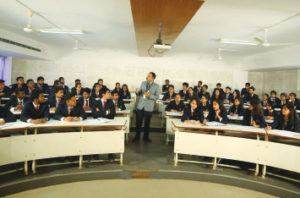
Presidency College, Bengaluru classroom: Karnataka #2
Beyond top table, BK Birla College of Arts, Science & Commerce, Kalyan, Mumbai and R.A. Podar College of Commerce & Economics, Mumbai have retained their last year’s ranking and are tied at #6. Presidency College, Bengaluru has sharply improved its ranking to #7 (10) to be jointly ranked with Madras Christian College, Chennai (8). St. Xavier’s College, Kolkata, ranked #8 (5), KJ Somaiya College of Arts and Commerce, Mumbai at #9 (7) and KPB Hinduja College of Commerce, Mumbai at #10 (9) complete the Top 10 table.
In this year’s 248-strong league table of India’s best private autonomous colleges, it’s important to bear in mind that although some autonomous colleges are ranked modestly nationally, they all are national assets and highly ranked in their host states. For instance, Sunbeam College for Women, Bhagwanpur, Varanasi ranked #20 nationally is the #1 private autonomous college of Uttar Pradesh (pop.215 million), Kendrapara Autonomous College, India #79 is Odisha (46 million) #1 and St. Xavier’s College of Education, Patna, India #83 is #1 in Bihar (pop.134 million).








Add comment