






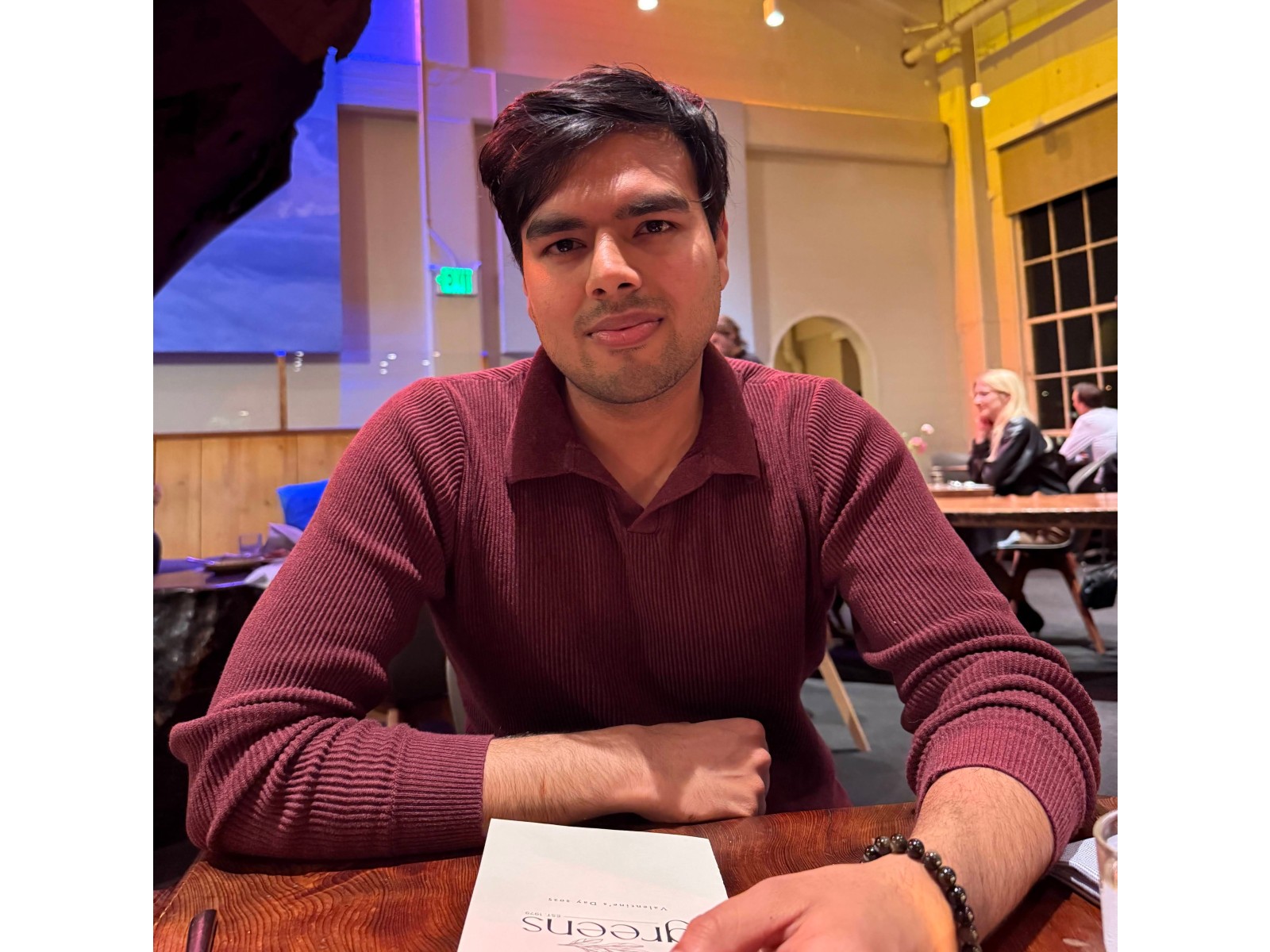
Exclusive Interview: Deepanker Seth, Founder-CEO, Libration, Inc.
Deepanker Seth is the 24-year-old founder and CEO of Libration, Inc., a US-based startup incorporated in Delaware in June 2026. Libration develops software that tracks non-emergency campus issues, particularly issues involving facilities, accessibility and student communication, from the time they are reported through to their resolution, while keeping the people affected informed. With Joseph Pierson as its co-founder and chief business officer, the company is preparing to launch its first pilot campuses.
Hailing from Kaithal in Haryana, Seth holds a bachelor’s degree in computer science from California State University, Los Angeles, which he completed in 2023 with support from an Edison Scholars award. He previously co-founded Pilea, where he served as chief technology officer. Pilea used AI to monitor and assess the websites of online shops and was selected for the Summer 2025 cohort of the Entrepreneurs Roundtable Accelerator in New York.
In an exclusive interview with EducationWorld, Deepankar Seth talks about Libration’s technology and its approach to managing campus incidents, his entrepreneurial journey, the challenges of building a startup at 24 and much more.
What motivated you to conceptualize/create Libration?
In the autumn of 2023, when the war in Israel and Gaza began, I kept thinking about the ordinary families on both sides. Somebody nearby, such as a neighbour or a guard, usually learns of a danger before everyone else. That knowledge rarely reaches the people who need it. I wanted to build a way for it to reach them, because your safety should never depend on how powerful you are.
In the summer of 2024, I built a prototype called commUnity. It was not yet a business, so I put it away and spent most of 2025 building another company, Pilea.
In the spring of 2026, I came back to the idea and went first to police departments. They told me they were not ready to let AI handle an emergency. The people who run university buildings described a smaller problem that they know well. A lift stops, or a ramp is blocked. So that is where Libration begins. In April I began visiting universities, and in June I registered the company.
In astronomy, Libration is the slight rocking of the Moon, which lets us see a little more than half of it. It is not a misspelling of liberation, though I like the echo.
You describe Libration as an “intelligence layer” connecting campus incidents, repairs and communication. In simple terms, how does it work from the moment a problem is reported to its resolution?
Here is an example, built from what university staff described to me. I have not watched it happen myself.
At 8:42 am on a Monday, a student who uses a wheelchair finds the lift in the science block out of order. Her exam is on the second floor at 9:30 am. She sends a one line text message. She does not need to know which office looks after the lift.
By 8:44 am, Libration has understood which lift it is, informed everyone responsible for it and logged the repair. A technician says the lift will work again at about 2 pm.
That is too late for her. So Libration also works out who is stuck and informs the disability office and the examinations office, who decide what happens next. They seat her in a ground-floor room and approve a message to her. By 9:02 am she knows where to go and who will meet her, and she writes her exam on time. The lift works again at 2:05 pm, and she is told.
You can watch it run at demo.libration.ai.
How do you ensure that an AI system making decisions about campus incidents operates within clearly defined institutional authority rather than making decisions independently?
The campus writes the rules: who is responsible for each building, and who must be told about what. Libration works inside them, and only the campus can change them.
Think of a good clerk in any office. The clerk reads the letter, finds the right file and prepares the note. The officer signs. Libration is the clerk. It can suggest which technician to send. A named person approves anything that changes what a student or a member of staff must do, and that person’s name stays on the decision.
Libration reports problems with things, such as a broken water cooler. It does not judge people.
You emphasise tamper-evident logs and accountability. How can such a system help universities understand not just whether an issue was resolved, but whether it was addressed in time and communicated to affected students?
A complaint marked “closed” tells you that the repair was finished. A parent or a vice-chancellor wants to know more. When did the college first hear of the problem? When were the affected students told, and did the message reach them?
Libration logs those times on one page. It works like the ticks on WhatsApp. You know when a message was sent, when it reached the phone and when the student opened it. If she does not open it, a person is asked to find her.
If anyone removes or changes an entry, the record shows it. The college cannot edit it, and neither can we. NAAC and AICTE already ask institutions how many grievances they received and what was done about them.
Accessibility is an important part of Libration’s proposition. How do you see technology helping universities respond more effectively to students with disabilities when physical infrastructure fails?
When something fails, the repairman gets a job card and the student who depends on it gets nothing. This matters most for students with disabilities, so I began there.
Libration treats telling the student as a job that must be done, just like the repair. Only the students affected get a message, and it says what to do next. A student can record in advance that she depends on a certain lift or ramp, and nobody asks her why.
The UGC’s accessibility guidelines of 2022 give a college fifteen days to resolve a grievance. That is reasonable for a grievance. If a pile of sand blocks the ramp, a student has ten minutes before her next lecture. Technology cannot clear the sand. It can make sure she is not the last to know.
At 24, what has been the biggest challenge of building a technology company and engaging with university administrators, facilities teams and other institutional decision-makers?
The hardest part is being trusted. The question I find hardest is how anyone can trust AI to decide who is told about a problem. That trust has to be earned slowly, with testing and with a check of every case where the AI was involved. A university is right to doubt a 24-year-old who arrives with software that affects its students. I am told it takes about nine months to go from a first meeting to a long-term partnership.
It helps that this is not my first company. At 23, I co-founded Pilea and, as its chief technology officer, wrote its product from scratch. It was one of thirteen companies chosen from more than a thousand applicants by a New York accelerator, and four companies (Tikamoon, Puissante, Greenweez and Delsey) ran its product on their live websites.
My co-founder at Libration, Joseph Pierson, our chief business officer and a law student at Columbia University, leads our work with colleges and universities, though we both meet them.
Why have you chosen to launch Libration in the US, and what have your conversations with university and facilities leaders revealed about the problem?
I started in the US because I lived there and because I feel people in the US are more open to experimenting with new things and challenging the status quo if something improves their quality of life. Also when a product is this new, you go where you can sit across the table from the people who will use it.
What I heard was consistent. On most campuses nobody is given the job of telling the students who are affected, and often the facilities office learns that a student was stuck only when she complains. I learned this by speaking to the facilities offices of seven universities, among them UCLA, USC, Columbia and CUNY.
I am from Kaithal, in Haryana, and I want Libration on Indian campuses also. We are beginning to approach Indian institutions. A report can come as a voice note, or as a phone call from the guard. India has every kind of campus there is, so if Libration works there it will work anywhere. If you run a school or a college in India, please write to me and tell me how it would have to work on your campus.
Libration is initially focused on non-emergency campus incidents. What determines whether an incident should be handled automatically, escalated or referred to a human decision-maker?
If there is any danger to life, such as a fire or a smell of gas, Libration’s only job is to pass the report on at once. It tells the person to call the emergency number, 112 in India and 911 in the US, and it informs campus security. If it cannot tell whether there is danger, it treats the report as an emergency.
If the report is clear and routine, Libration does the paperwork itself. If the report is unclear, or the next step would change what someone must do, it goes to a person.
If an office does not reply within its fixed time, the report moves up. When the hostel warden is silent, it goes to the chief warden.
As an Indian founder who moved to the US for higher education and is now building a technology company there, what lessons from your journey would you share with young Indian students aspiring to become entrepreneurs?
I can only tell you what happened to me.
I left Kaithal in August 2019, when I was 17. I wanted to study on the West Coast of the US because of the technology videos I grew up watching. I was accepted to multiple places and California State University, Los Angeles, was the one we could afford. My parents, who are both pharmacists, paid one third of the fees. Scholarships, including an Edison Scholars award, and financial aid paid one third, and I took a loan for the rest. I was a quiet student, and my ambition came later, after I had graduated.
At Pilea I learnt by making mistakes a first-time founder makes, in how we spoke to customers and how we pitched. My lowest point came in September 2025. I had left the company I had co-founded, and my closest relationships were suffering at the same time. In the months that followed I learned how I behave when things go wrong, and what my priorities should be.
There have been months, last summer and this one, when I worked fourteen to eighteen hours a day with nothing to show for it. When people tell me bigger companies will build this first, I hear that the need is real.
I am an optimist. A student with a phone in a small town can now use the same AI as the largest company in the world, and that changes who gets to build things. My advice is to find the hardest problem you can actually solve, and begin.
How do you see Libration evolving over the next three to five years?
Right now, we are working towards our first pilots, including with a non-profit in New York that runs schools. The first goal is to run on a real campus through one difficult week. After that come more campuses, and buildings that report their own faults through the sensors they already have.
Libration is deliberately made to refuse any request to watch people.
In the long run, I still want Libration to help in emergencies. We will get there only by getting the small things right, thousands of times. One day, I want every institution and every city to have help that works at three in the morning, in the rain, for a stranger. I want Libration to become a large company, and to last a hundred years. What I am really waiting for is the day someone tells me that Libration helped save a life.
Deepankar Seth can be contacted at: [email protected] | libration.ai | demo.libration.ai
Also read: Eduleader In-Focus: Russell Mehta, MD, Rosy Blue (India) Pvt. Ltd. | Director, Rosy Blue Foundation










Add comment