






Joys & timeless wisdom of indian board games
COMBATING SOCIAL MEDIA ADDICTION
A nascent national movement to reintroduce children to the joys and timeless wisdom of traditional Indian board games is fast gaining acceptance and popularity within the parents’ community for encouraging children to rediscover mindful play, develop critical thinking skills, and engage in meaningful social interaction without digital media screens usage
Punita Malhotra
Ten-year-old Ayaan Sharma rarely glances at colourful toys in his room. His fingers are glued to the mouse/smartphone as he navigates another complexity of an online game, while notifications from friends ping incessantly. His 13-year-old sister Meera scrolls through social media, her attention flicking between Instagram reels and Snapchat. This is a familiar scene in most middle-class Indian households, where digital devices are preoccupying children’s time and lives. According to a 2022 report of the Internet and Mobile Association of India, 90 percent of children aged 8-18 use the internet, with nearly 70 percent engaging in online gaming and 60 percent active on social media platforms.
Even as educators and parents clamour for an Australia-like ban on social media for children under 16 years, simultaneously, they are ideating and exploring constructive and sustainable ways to wean children away from growing dependence on digital devices. A new emerging option is a nascent national movement to revive, reintroduce, and reconnect children to the joys and timeless wisdom of traditional Indian board games. Led by a new genre of culturally rooted edupreneurs, this movement is fast gaining acceptance and popularity within the parents’ community for encouraging children to rediscover mindful play, develop critical thinking skills, and engage in meaningful social interaction without digital media screens usage.
“With the number of nuclear households growing and neighbourhood play spaces shrinking, children’s over-dependence on digital devices has become widespread. It is time for parents to take charge of their children’s lives and reconnect them with the simple joys of childhood — real play, and non-digital experiences. A good way to start is to introduce children to traditional Indian board games. For centuries, these games have delighted and entertained children while nurturing life skills such as critical thinking, patience, strategy and social interaction,” says Vinita Sidhartha, founder of Kreeda, a Chennai-based company researching, developing and reviving traditional games of India. In 2002, long before conversations around ‘bringing back’ traditional Indian games entered mainstream parenting discourse, Sidhartha, a journalism and communications alum of the University of Texas at Austin and a mother of two, began documenting traditional Indian games. Over the past 24 years, Kreeda has reintroduced over 28 Indian board games including Aadu Puli Aatam (Bagh aur Bantu), Pallanguzhi (Vamanaguntulu) and Bambaram (Lattu) to children..
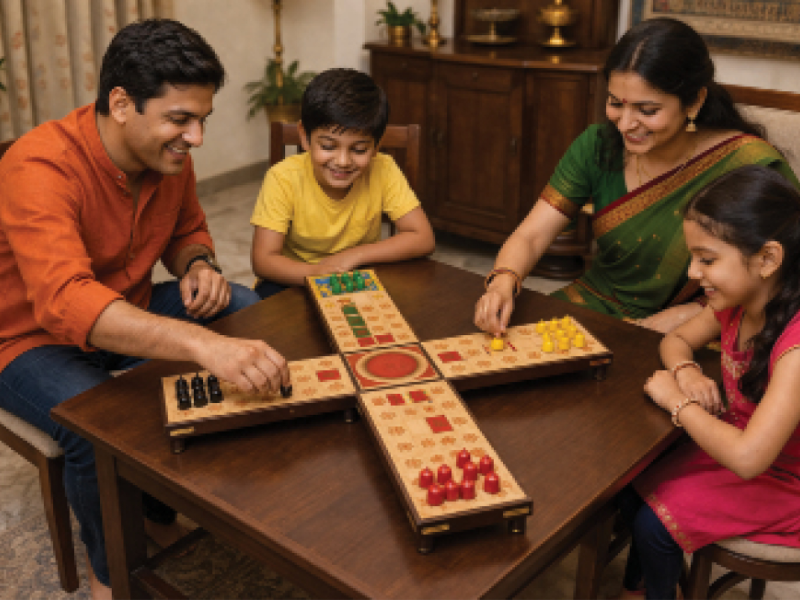 According to Sidhartha, traditional Indian board games were created by generations of “wise educators, thinkers, and storytellers”, embedding deep cultural wisdom to teach children the art of negotiation, quick thinking, resilience, strategic thinking and social intelligence. “Indian board games are real-life simulations — contained environments in which children encounter challenges, consequences, uncertainty, and recovery without real-world risk. They are training grounds for navigating the world and learning all-important life skills. At the heart of such learning is decision-making. Every move requires children to weigh risks, think strategically, respond to changing situations and make thoughtful decisions. Setbacks are frequent, but children learn to restart, recalibrate, and keep going — teaching them resilience. Moreover, they teach children emotions regulation — how to accept victory and defeat with composure and develop social skills such as patience, negotiation, and reading people’s minds,” says Sidhartha.
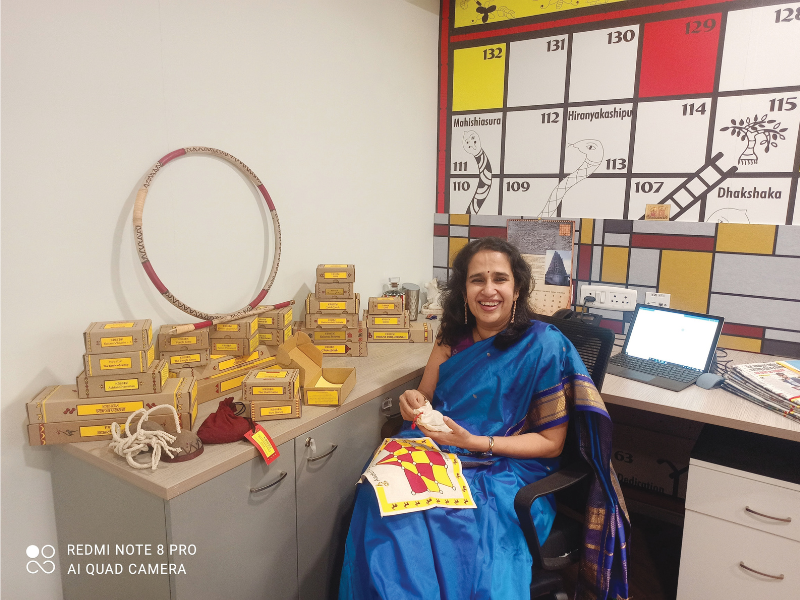
Vinita Sidhartha
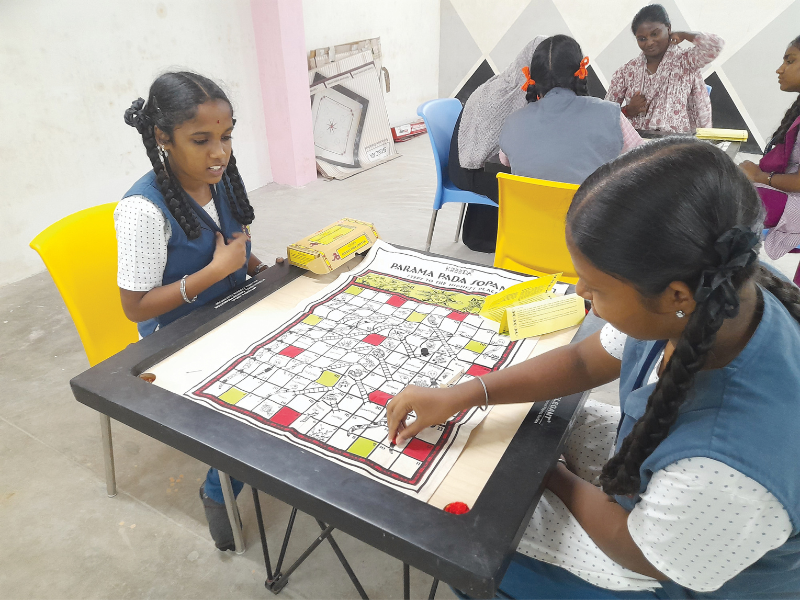
Historically, play in India was never dismissed as trivial, but valued as intrinsic, meaningful part of learning and growth. This deeper purpose and philosophy are evident in the way traditional games were conceptualised and played. Explains Dr. Anuradha Choudry, psychologist and multilingual Sanskritist at IIT-Kharagpur: “In ancient India, every aspect of life, including play was aligned with larger life goals. Games like Moksha Pattam, the indigenous precursor of Snakes and Ladders, reflected universal possibilities. Children experienced cause and effect, hope and disappointments, without anyone lecturing them. Rising up the ladder represented growth; the fall along a snake taught resilience,” says Choudry.
Contrastingly, online/video games, popular with Gen Z and Alpha such as Overwatch 2, Valorant an PUBG: Battlegrounds, reward material gain, action, and aggression, and prime children to believe that winning is everything. “While traditional Indian board games are also designed to outwit and out-strategise opponents, they focus on navigating challenges and making choices after deliberation. Unlike online games, they emphasise process over outcome, cooperation over competition, and inner growth over external rewards,” adds Choudry.
Indian board games
Myths vs. Truths
Sangeeta Goswami, a Ahmedabad-based counselling psychologist and Ambassador of the Bharatiya Khel program, busts six myths about traditional indigenous games.
| Myth | Fact |
|---|---|
| Too simple | Require deep strategic thinking |
| Not educational | Build math, logic, teamwork, resilience, strategy, and pattern recognition skills |
| Children won’t like playing them | Engaging and challenging |
| Less stimulating than online games | Exciting; encourage patience and careful planning |
| Difficult to learn | Easy to learn, with depth unfolding over time |
| Irrelevant to contemporary education system | Develop critical thinking and creativity skills |

Dr. Anuradha Choudry
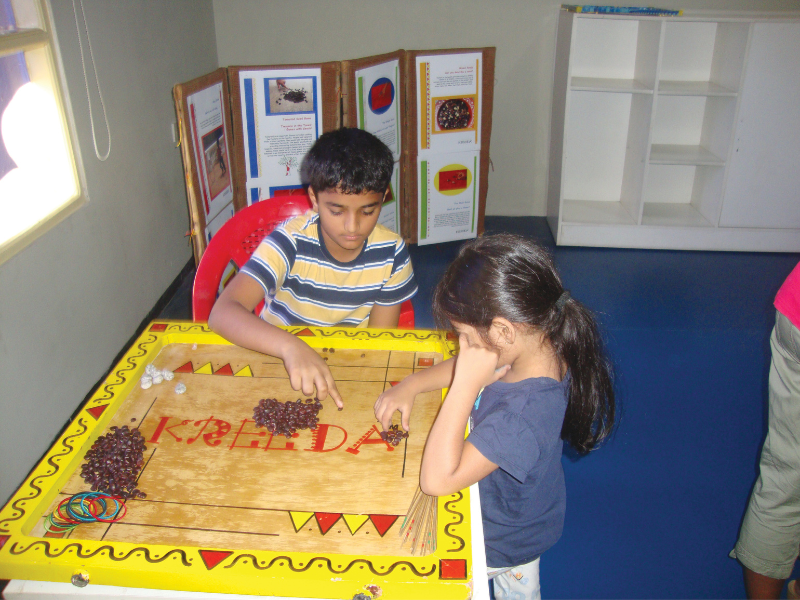
Moreover, Indian board games differ from online/video gaming inasmuch as they require children to physically use/handle materials such as wood, brass and cloth. For instance, in the game of Pallanguzhi, a South Indian Mancala board game, children have to pick up, count, and strategically distribute small seeds or shells across carved pits, engaging their tactile senses and mental agility. Comments Aman Gopal Sureka, founder of Khel Khol (www.kholkhel.com), a Jaipur-based social enterprise, who contributed to developing the ‘playful pedagogy’ prescribed by the NEP 2020 framework: “Handling game materials such as wood, brass, cloth, and bone, strengthens hand-brain connection. It helps children focus, plan, and adapt. Neurons that fire together wire together and make children relaxed and attentive. This tactile engagement sharpens cognitive abilities and encourages deep learning and sustained concentration.”

Tanushri S.N.
Beyond cognitive benefits, indigenous board games develop children’s social and emotional intelligences and provide an important opportunity for social interaction. This is especially valuable in the new digital world, where face-to-face interaction is becoming rare and children have fewer opportunities to develop valuable skills such as communication, empathy and build interpersonal relationships.
Tanushri S.N, founder of Roll the Dice (www.rollthedice.in), a Bengaluru-based company focused on reviving traditional Indian games, believes introducing Gen Alpha to them develops their communication and social skills and promotes family bonding. In her workshops, five-year-old children congregate with grandparents, parents and peers. As pieces move across boards, conversation flows. Stories are shared, instructions explained, and cheerful banter flows. “Traditional board games also prompt conversation and much learning happens for children. Unlike modern structured activities that usually separate participants by age, skill, ability, traditional games collapse boundaries. In the contemporary fast-paced hyper-scheduled era, playing traditional Indian board games provide quality family time for meaningful interaction and enriching multi-generational connection. Children learn to develop valuable interpersonal skills. Without elaborate planning and resources, these games provide opportunity for families to bond and children to discover the simple and pure joys of play,” says Tanushri.
Must-play Indian
Board Games
Tanushri S.N, founder of ‘Roll the Dice’, a Bengaluru-based company focused on reviving traditional Indian games, shares a curated list of traditional indigenous board games that every child should play and experience.
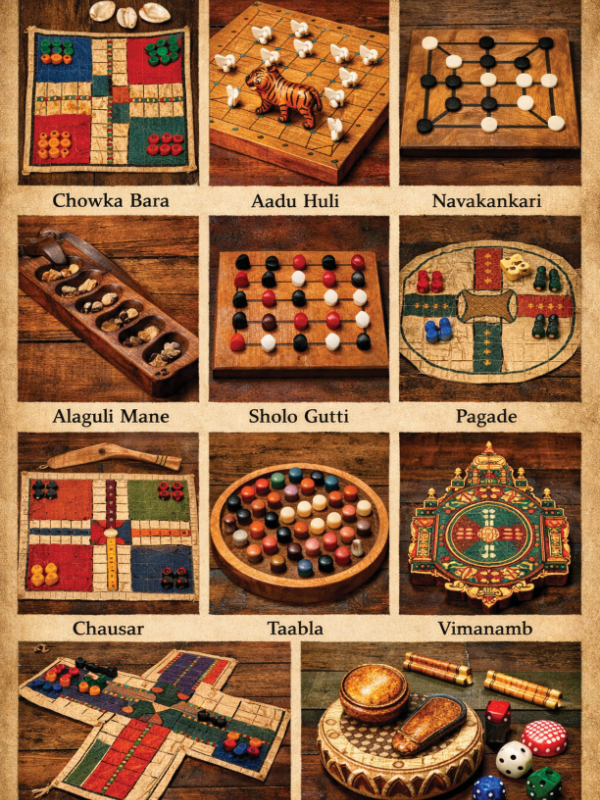 Chowka Bara. A race game blending luck and strategy. Builds children’s numeracy, planning skills and patience.
Aadu Huli (Goats & Tigers). A classic predator-prey game that sharpens children’s strategy, foresight and teamwork capabilities.
Navakankari (Nine Men’s Morris). An ancient alignment game that develops focus, pattern recognition, and tactical thinking skills.
Alaguli Mane (Channe Mane). A mancala-style seed game that builds children’s memory, numeracy and resource planning capabilities.
Sholo Gutti (Sixteen Soldiers). A fast-paced strategy game that enhances pattern recognition and adaptability skills.
Pagade. A Pachisi variant that develops children’s teamwork, probability thinking, and strategic thinking skills.
Chausar. An ancient race game exploring risk and chance, it enables decision-making and emotions control.
Taabla. A dice-based game that develops analytical thinking and adaptability skills.
Vimanam. An imaginative race game that stimulates creative thinking, planning, and sequencing skills.
Among millennial parents and Gen Alpha, knowledge of traditional Indian games is limited, with most familiar with perhaps only Snakes and Ladders, Chess, Ludo — games that gained global recognition because they were simplified, standardised, and popularised internationally before being reintroduced to India in their modern avatars. But they represent a fraction of India’s rich gaming heritage.
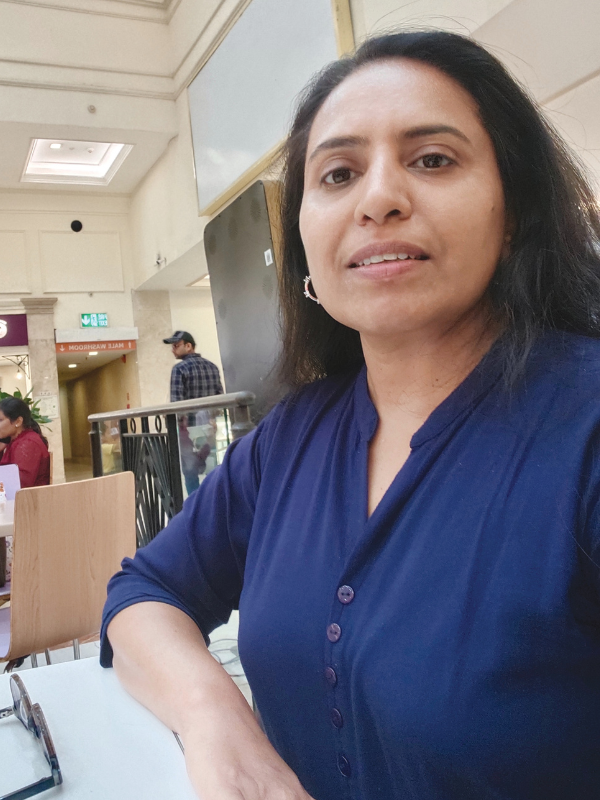
Sangeeta Goswami
Sangeeta Goswami, a Ahmedabad-based counselling psychologist and Ambassador of the Bharatiya Khel program, has researched over 30 games played on geometric patterns drawn on the ground, on cloth boards, using simple material such as stones, shells, seeds as playing pieces. Among them: Chaturanga, Pachisi, Sola guti, and Adu Puli Attam. Some games are played on specially crafted wooden boards with pits or compartments, such as Pallanguzhi, Carrom, and Backgammon.
“India’s remarkable board games diversity is not accidental; it emerged from cultural traditions about learning, philosophy, mathematics, and social life. Even as latter-day parents search for activities that enhance children’s cognitive development, ancient Indian board games contain many elements that neuroscience identifies as beneficial for children’s brain development. They combine strategy, mathematics, emotional learning and social interaction, all within simple, engaging formats. Long before neuroscience explained how the brain learns through play, traditional Indian culture had embedded these principles into games,” says Goswami.
Encouragingly, the movement to popularise traditional indigenous games among children is gathering momentum with a growing number of committed educationists and edupreneurs promoting indigenous gaming initiatives. A case in point is Dr. Souvik Mukherjee, professor at the Centre for Studies in Social Sciences, Kolkata, who has established a unique Gautam Sen Memorial Boardgame Museum in Kolkata to showcase ancient Indian board games. From the Royal Game of Ur — one of the oldest known board games — to classics like Go, Senet, Chaturanga, Mancala variants, and Baghchal (‘tigers and goats’), the museum boasts a varied collection. The museum also organises regular interactive sessions for parents and children to spread awareness about the societal, philosophical, and historical significance of these ancient games.
“During the colonial era, Indian board games travelled to Europe and North America, became popular pastimes, and returned repackaged as ‘children’s games’, losing much of their original history. The advent of digital/online games and neglect of traditional play has left a void in our cultural memory. Through this museum, I want to familiarise parents and children with our rich games history and reignite an appreciation for the cultural wisdom and life lessons embedded within them,” says Mukherjee.
Getting started:
A Parent’s Guide
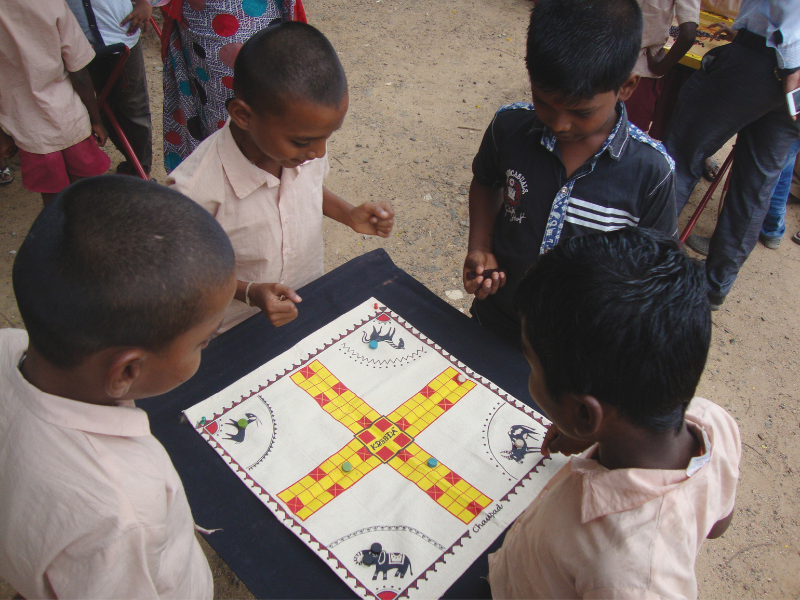
 Start with games such as Chapaur / Pachisi, which are easy to learn and engaging.
- Kreeda, Roll the Dice, and Khol Khel offer a good choice of traditional board games. Or you can simply draw the board at home and download rules from the internet.
- Start with a trial round. Most games reveal their logic through play rather than instruction.
- Indian board games are inherently multi-generational — children, parents, and grandparents can all play together.
- 20-30 minutes, a few times a week, will build familiarity and interest.
Recommended reading
- The Games India Plays by Sangeeta Goswami and Amitabh Satyam (2022)
- India’s Legacy — A Compendium of 75 Traditional Games of India by Sangeeta Goswami & Amitabh Satyam (2025)

Dnyaneshwari Kamath
Likewise, Dnyaneshwari Kamath, Mumbai-based trustee of the INSTUCEN Trust, which has funded and initiated Project Kheliya, is pulling out all stops to popularise traditional games in schools and local communities. Under Project Kheliya, workshops are conducted for students, teachers, parents, and community members, to understand the evolution and rules of traditional indigenous board games.
“We provide a basic board and rules set in our workshops. Children are encouraged to play, question, adapt, and experiment. In the process, they learn about negotiation and creativity. Using minimal resources like a draw board, small stones, shells, these games are very affordable, adaptable, and easy to play at home. In a world dominated by screens and schedules, traditional board games provide children opportunity to play and learn joyfully,” says Kamath.
With Gen Alpha increasingly becoming addicted to digital screens and social media, this nascent but growing movement to revive traditional indigenous board games and in particular, introduce them to children requires the support and encouragement of the parents’ community. Apart from connecting children with their cultural roots, they develop their cognitive and social skills, invaluable in an era when digital screens and media are becoming increasingly dangerous and isolationist. Time to roll the dice….










Add comment