






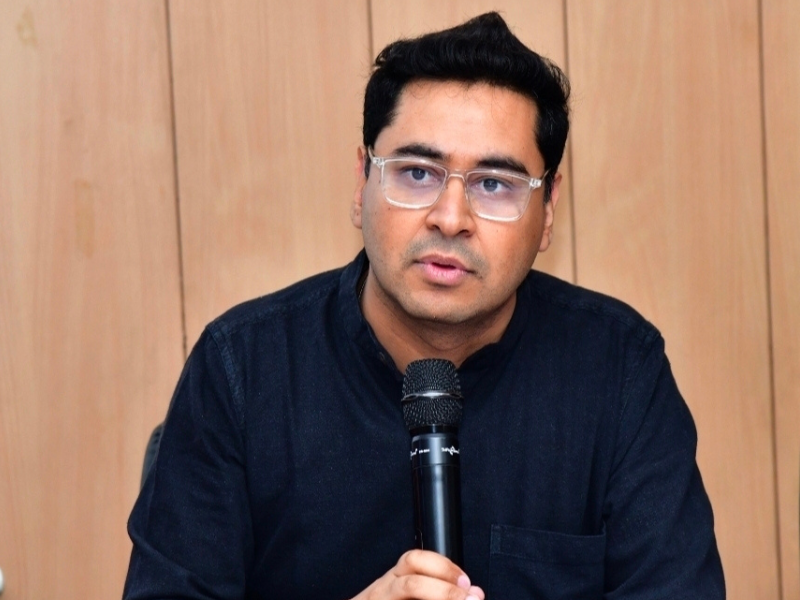
Let teachers teach
– Dr. Rahul Kapoor, Assistant Professor, Department of Social Work, School of Humanities and Social Sciences, Gautam Buddha University
India’s higher education system has borrowed three fancy terms from the west to classify teachers at the university level. The Assistant Professor, the Associate Professor and the mighty ‘Professor,’ a term which has Latin origins and literally means a person who professes to be an expert in a subject or an area of arts or science.
This curious classification of teachers have paved way for the higher education system in India to make them everything else except for what they are actually supposed to be and that is ‘teachers’ a term conferred upon them by our very own ‘Indian Knowledge System’, a system which currently the entire Indian academy is trying to decode through numerous seminars and conferences for the past five years. Simultaneously, there is widespread skepticism putting into practice basic concepts of having ‘gurus’ and ‘acharyas’ like in the gurukul system of education with ‘teachers’ or more precisely ‘educators’ teaching students not just subjects but also the ethical ways of navigating the world and helping them become better human beings ready for the challenge called, ‘Life’.
The problem arises because the Indian academic ecosystem often forgets that the primary role of a teacher is to teach students while also guiding and mentoring them to become responsible and ethical human beings. Assistant Professors, Associate Professors and Professors are expected to churn out multiple research papers, get research projects and grants, engage in administrative work and fill numerous illogical excel sheets trying to prove how good they are at teaching students while in reality they are hardly left with any time to teach students and their teaching is hugely compromised leaving both students and teachers disillusioned and unsatisfied with the higher education ecosystem. I have broadly categorised the challenges confronted by teachers in the academic ecosystem which hamper their teaching.
Challenges faced by teachers in private universities. Honestly speaking, private universities should evolve more and change the designation of their teachers from Assistant Professor, Associate Professor and Professor to Assistant Robots, Associate Robots and the mighty Robot because that is what their teachers are. They have targets to publish at least 3-4 Scopus indexed research articles every year and their increments are directly linked to their publications. They are robots continuously entering one data or the other in excel sheets so that some outsourcing agency can churn this data and enhance the NAAC and global rankings of the university. Teachers are also expected to upload lesson plans of the entire semester on ‘LMS’ — learning management system where no learning is happening because with the little time that teachers have left after filling the daily excel sheets, the best they can do is give Chatgpt the prompts for generating their lesson plans and uploading them on the portal as is. Finally, teachers are also wearing the hats of sales and marketing executives in private institutions trying to increase admissions and making cold calls to students and their parents. The basic question remains the same, ‘Who loses in such a paranoid system of education?’ The answer is students because they will never get access to a teacher who has the breathing space to give them priority and teach them, despite it being their primary role over everything else.
Challenges faced by teachers in government universities. The state of education and teaching space is definitely better in government institutions but it is far from ideal. The rat race to publish in Scopus indexed journals is identical and some universities have made these articles mandatory for teachers to get Ph D supervision, thereby hampering another significant role of a teacher at university level which is research supervision. Promotion and prestige of teachers in government institutes is also linked with publications and research projects. Apart from this, teachers in government higher education institutions (HEIs) are given numerous administrative roles as members of various university committees that take up their time significantly and hinder regular teaching assignments.
A harmful trend of teachers finding it appropriate and prestigious to take up these administrative positions while compromising on their teaching roles is also emerging in government institutes which eventually degrades and neglects the teaching practices in a university. Government teachers are also assigned additional tasks like election duties and invigilation duties of government examinations eating up a good chunk of their time every now and then. Positions like the Proctor, Assistant Registrar, Deputy Controller, Research Coordinator, Cultural Coordinator and numerous others crop up every day and in time teachers lose the habit of taking a 30-40 minute class and find it more convenient to attend university meetings as if they are working in a corporate or IT company and not an educational institution.
Rise in predatory journals and APCs. The phenomena of the worth of teachers in HEIs being determined by the number of publications they publish have given birth to predatory journals and exuberantly high Article Processing Charges (APCs). I remember that I published my first research article in the year 2016 when I was a first year MSW student and did not pay a single penny for publishing that article. Back then the journals which didn’t charge for publishing articles were considered to be the ideal journals to publish a good quality article. Journals which demanded APCs were considered infra dig.
That scenario has completely changed now as there are a lot of journals who openely advertise their high APCs as well as their indexing and impact factors to attract their prospective article contributors who are mostly teachers and academics. Teachers are forced to pay high APCs to journals since the publication of articles directly impacts their recruitment and promotion prospects in higher education institutions. Therefore, the phenomenon of predatory journal has risen sharply. These fake/cloned journals charge less APCs than actual Scopus indexed journals and provide a quick fix to teachers who have to apply for promotion or have to submit their annual performance reports in which they have to project at least 4-5 publications to their names. A good quality research article in a reputed journal takes at least 8-12 months to get published considering the article goes through blind peer review and revisions but in predatory journal articles get published in a matter of 4-5 days and many a times these journals charge extra for publishing back dated articles. This has given rise to an unholy nexus of publishing in the higher education system which is affecting the quality of teaching adversely as teachers get recruited on the number of articles they have instead of their teaching and mentorship skills.
Consequently, teachers are not able to focus on their primary role of teaching and mentoring students because of additional tasks they perform and students end up suffering the most. This hampers the overall ecosystem of higher education in India and produces graduates and postgrads who do not possess sufficient knowledge and wisdom to face real world challenges and make a life for themselves.
The solution is simple, ‘Let teachers be teachers and make it clear to them that their primary role is to teach and mentor students’. Instead of hiring them based on the number of publications they possess, recruitment should be based on their knowledge, wisdom, teaching and mentoring skills. The interview process should have an additional round of micro-teaching in which a teacher will have to demonstrate teaching skills by summarising a topic in ‘5-10 mins’ before the interview panel. It is high time that the entire academic community takes the onus of putting the word ‘noble’ back in this noble profession.
Also Read: Beyond the Classroom: Why academic travel belongs in the curriculum









Add comment