






Letter from Managing Editor

Artificial intelligence (AI) is arguably the most disruptive technology in human evolution history. This marvellous invention — defined as technology that enables computers and machines to simulate human intelligence and problem-solving capabilities — is changing every facet of life and living — from the way we work, communicate, learn, shop, mate and increasingly parenting. In particular, generative AI chatbots such as ChatGPT, Gemini, Copilot, Perplexity, among others are providing parents never-before information and advice on a wide range of child rearing issues starting from coping with pregnancy to expert guidance on child health and development, learning resources and tracking children’s progress through the education continuum. AI is emerging as a new guide and intelligent assistant for parents to navigate everyday parenting challenges.
According to recent global surveys, India is among the fastest adopters of generative AI technologies. Microsoft’s 9th Global Online Safety Survey (2025) estimates that over 65 percent of (middle class) people in India use generative AI such as ChatGPT, Gemini, Copilot, Perplexity among others, more than double the global average of 31 percent. Another survey (GIPSI inSIGHT 2026) highlights that 52 percent of parents in India have switched to using generative AI instead of traditional internet search engines such as Google for advice and decision-making. Given India’s demographic profile — with nearly half the population (600 million) under age 25 — the way families integrate AI into children’s lives will have long-term implications for the future of Indian society.
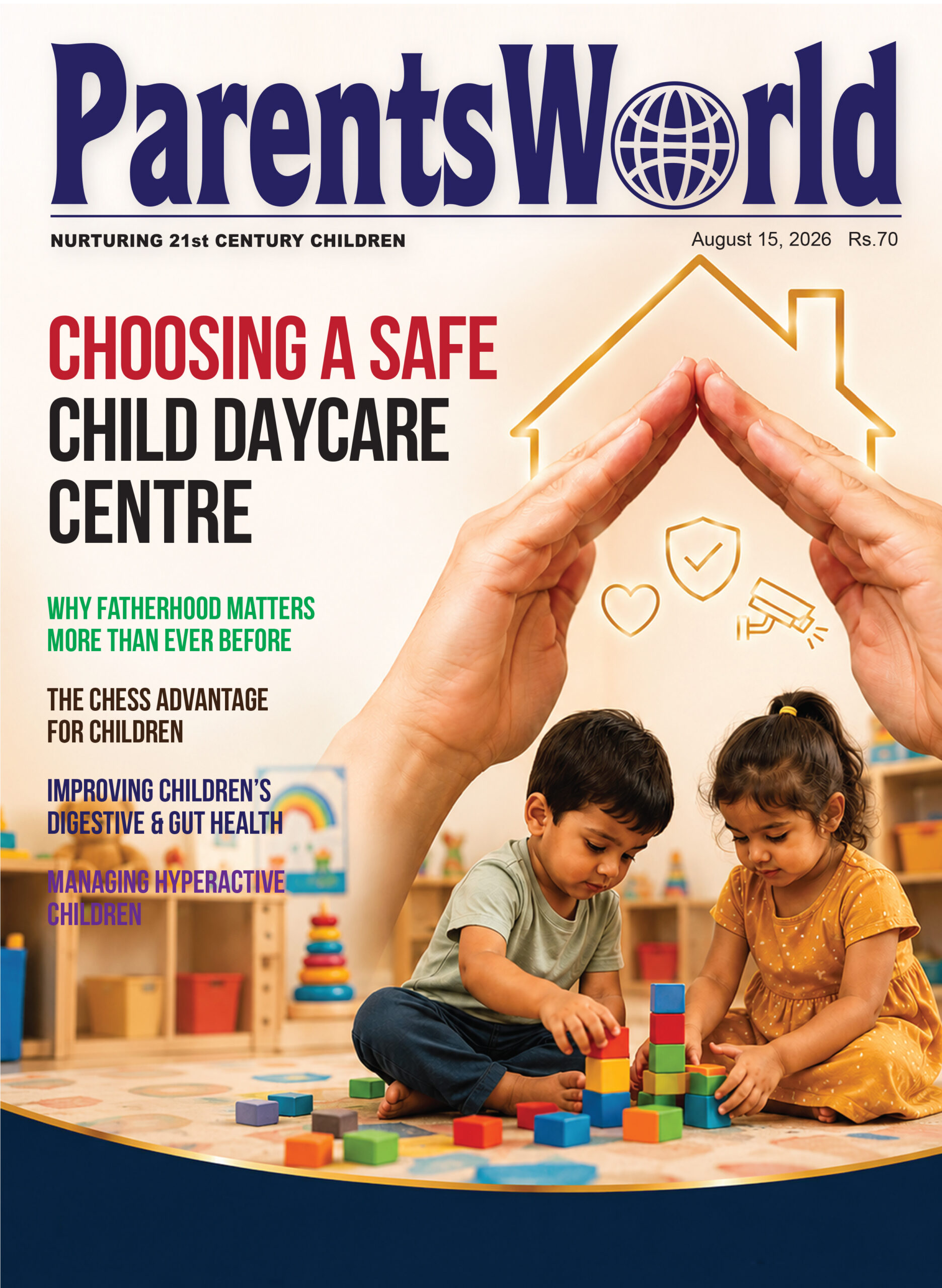
In our cover story this month, drawing on expert insights, real-life examples, and practical guidelines, we examine ways and means to harness AI mindfully to simplify, enhance and enrich parenting. However parenting experts warn that while AI can be a valuable support system, it cannot replace parental attention, conversation, and emotional connection. Used intelligently, AI can reduce everyday parenting stress and open advanced learning possibilities for children. Used excessively, it risks weakening independence and human intuition. Moreover, it’s an important parental duty to educate children about the downsides and risks of AI dependence.
As always, there is more in every issue of PW. Check out our Middle Years story on ways and means parents can nurture the important life skill of empathy in children, and Special Essay in which Prof. Amy Root advises parents how to navigate the evolving parent-child relationship as children transition into adulthood. Also recommended is our Health story highlighting the importance of parents red flagging symptoms of children’s emotional distress and responding with empathy rather than alarm.









Add comment