





Mailbox
 Follow suit!
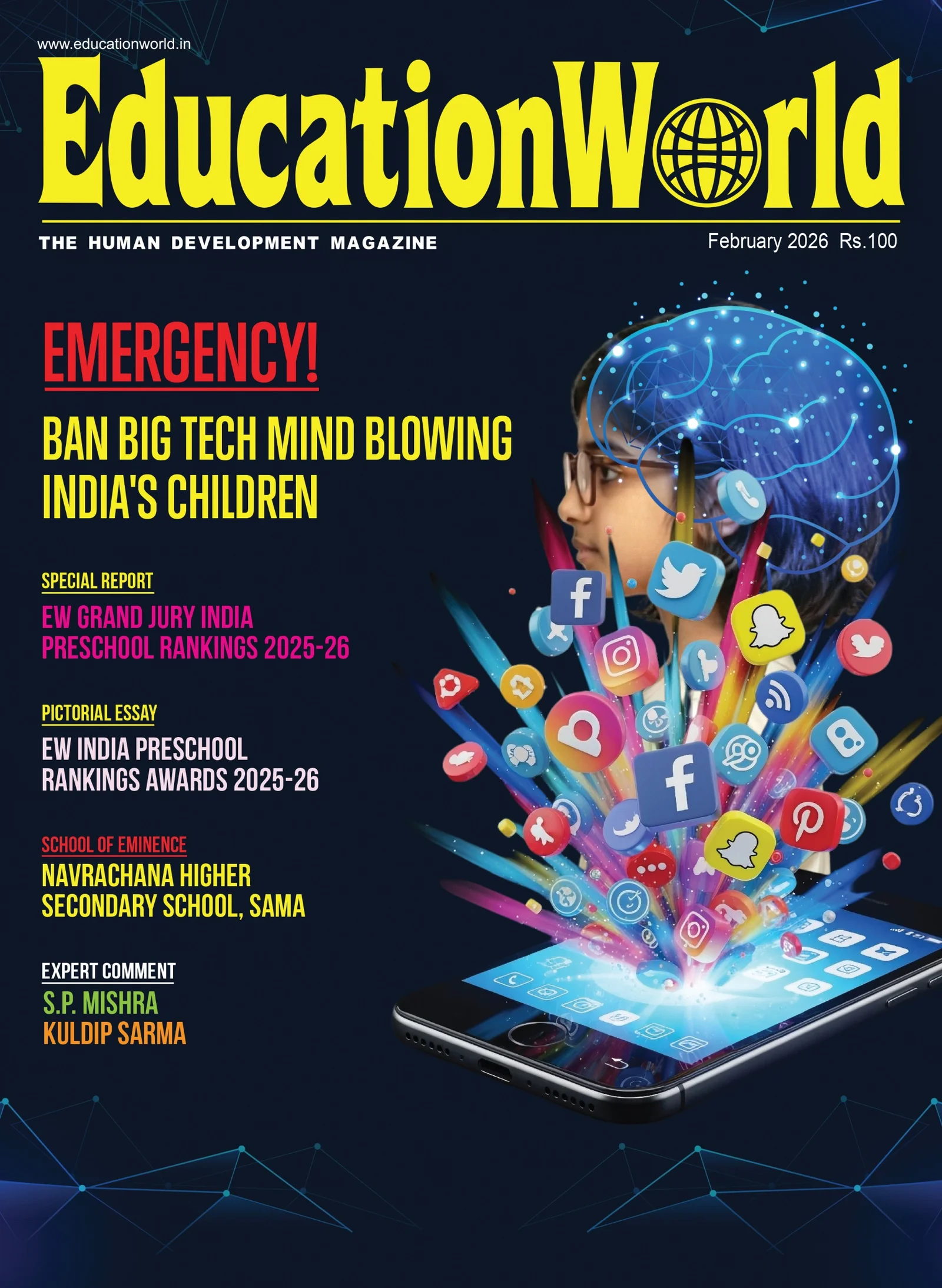
Your cover story ‘Emergency! Ban Big Tech Mind Blowing India’s Children & Youth’ (EW, February) is compelling, timely, and a must-read for parents anxious to learn about the future of education and child safety in the 21st century.
As a parent of two social media junkies, I fully support the Australian government’s recent announcement to ban social media access for children under 16. It has rightly put the onus of compliance on Big Tech corporations which are getting richer by hooking vulnerable children onto their social media apps.
Government of India should immediately enact a similar ban. Stringent curbs on Big Tech will protect young minds from addictive algorithm-driven content, cyberbullying and misinformation. Such an initiative will send a clear signal that child welfare must take precedence over corporate profits.
Sunil Purohit
Delhi
AI: Collaboration call
I want to highlight the increasing significance of Artificial Intelligence (AI) for students. In today’s world, understanding AI is becoming just as essential as studying subjects like science, mathematics, and English. While many countries have already introduced AI in school curricula, most students in India still lack access to such learning opportunities.
AI in education should extend beyond coding skills. Students need to understand ethical issues, privacy concerns, and develop critical thinking skills to evaluate the impact of AI. However, equal access to technology is crucial. Many schools, particularly in tier II-III towns and rural areas, don’t provide adequate computers or reliable internet access.
There is also growing concern that AI may replace certain jobs. India’s current education system, which rewards rote memorisation, does not adequately prepare students for these rapid changes. However, if used wisely, AI can also generate new career opportunities. To achieve this, we need improved education systems, skill development programs, strong policies, and clear ethical guidelines.
AI is a powerful tool with potential to transform lives positively, but only when used responsibly. Schools, governments, and society need to collaborate to ensure that our children are well-prepared for an AI-driven future.
Jubel D’Cruz on email
Infrastructure importance
Your Education News titled ‘Tamil Nadu: Schools closure controversy’ (EW, February) highlights the trend of several government schools functioning with low enrolment, sometimes fewer than 10 students. Poor infrastructure in government schools is a major cause of students dropping out. Most public schools lack adequate classrooms, usable toilets, science labs, playgrounds, and access to digital learning tools.
These basic shortcomings, especially the absence of separate toilets for girl children, directly affect student attendance and retention. Without urgent improvement in facilities and learning environments, student enrolment will continue to fall, undermining the credibility of the public education system.
Rajendra Naik
Chennai
Insightful & timely
Your Teacher-2-Teacher essay ‘Five necessary skills that employers want’ (EW, February) was an insightful and timely guide for youth preparing to enter the workforce.
The essay encourages students to think beyond formal degrees and focus on real-world skills that drive workplace impact. In today’s constantly evolving jobs market, clear communication, critical thinking, adaptability, and digital literacy skills are the need of the hour. These competencies improve employability and enable graduates to make meaningful contributions from day one.
Debashish Sengupta
Kolkata
Insightful analysis
The Expert Comment essay ‘Why higher education reforms are stalled’ (EW, January) highlights the real challenges confronting India’s education system, while reminding readers that reform is ultimately about people — students, teachers, and families — striving for a better future. It analyses the complexity of reform in a vast system with over 50,000 colleges and 1,300 universities, serving millions of students.
The essay clearly explains the structural hurdles, such as policy implementation gaps and systemic inertia that slow progress, while also emphasising the urgency and potential of recent initiatives like the National Education Policy 2020.
Sunaina Ghosh
Bengaluru









Add comment