






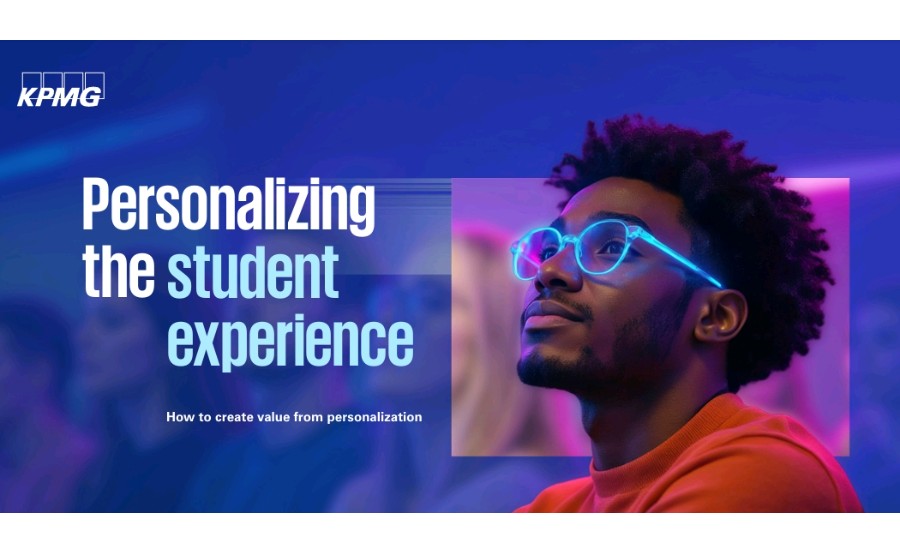
Personalised Learning Can Deliver 4x Better Student Outcomes: KPMG Report
Universities that successfully personalise the student experience are seeing significant gains in student engagement, well-being, academic success and institutional performance, according to KPMG International’s latest global report, ‘Personalising the Student Experience’. Based on insights from over 400 university leaders and 400 students worldwide, the study highlights how personalisation is emerging as a critical strategic imperative for higher education institutions globally.
The report underscores that effective personalisation is not about customising every aspect of the student journey, but making deliberate choices about where individualised experiences create the greatest value. Universities that are succeeding are focusing on critical moments across the student lifecycle, supported by data, AI-enabled insights and strong institutional alignment.
Key insights from the report:
– 63% of universities say personalising the student experience is a high priority, while 54% believe it will be essential for institutional growth over the next three years.
– Students at institutions with strong personalisation capabilities are up to four times more likely to report improved mental health and well-being compared to those at universities with lower levels of personalisation.
– 73% of universities report higher student engagement through personalisation, while benefits also extend to student satisfaction, retention, operational efficiency and institutional agility.
– While personalisation is a strategic priority, only 11% of universities currently classify themselves as leaders in personalisation maturity, highlighting a significant opportunity for institutions to accelerate progress.
– The report finds that 93% of universities are already using AI to personalise aspects of the student experience, from tailored learning pathways and proactive advising to identifying at-risk students and enhancing student support services.
Students increasingly expect universities to deliver experiences comparable to those offered by consumer platforms, with a strong demand for individualised support, a greater sense of belonging, employability-focused learning and timely interventions.
Narayanan Ramaswamy, national head – education and skill development services, KPMG in India, said, “Students today expect universities to recognise their individual needs, aspirations and learning journeys. Our research shows that institutions that embed personalisation into their strategy and operating model can significantly improve student engagement, well-being, academic success and employability outcomes. While AI and data are powerful enablers, lasting transformation comes from combining technology with human-centric design, proactive support and a strong sense of belonging. For India, as higher education continues to expand and evolve under the National Education Policy, personalisation has the potential to improve learning outcomes, enhance employability and help build a future-ready workforce at scale.”
As student expectations continue to evolve, the findings reinforce that personalisation is becoming a whole-of-institution strategy that can strengthen student outcomes, improve retention and enhance long-term institutional resilience. For higher education leaders, the challenge is no longer whether to personalise the student experience, but how to do so responsibly, effectively and at scale to create meaningful impact for students and institutions alike.
Also read: Masters’ Union opens AI labs to women innovators on weekends










Add comment