






Prayoga Institute of Education Research secures Indian Space Research Organisation RESPOND grant for AI-driven space research
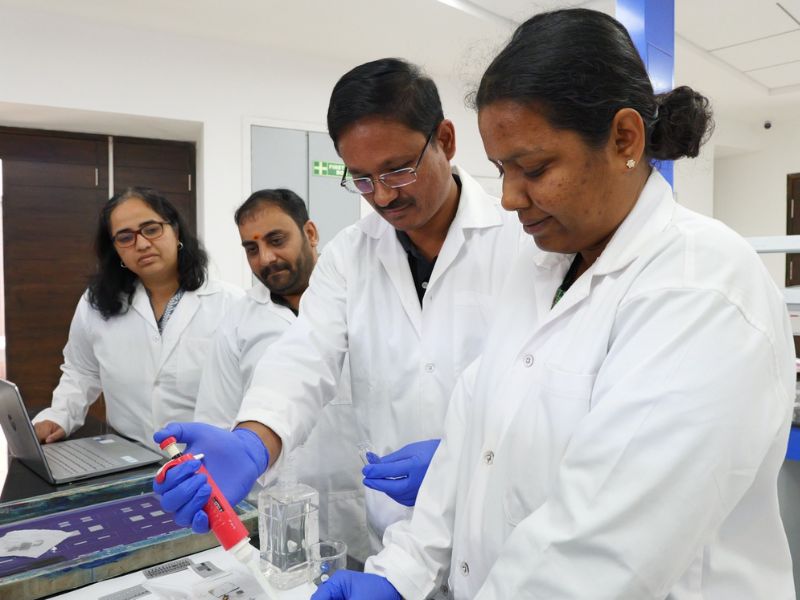
Prayoga Institute of Education Research has received a research grant from the Indian Space Research Organisation (ISRO) under its RESPOND Programme for a project focused on antibacterial efficacy assessment for space and terrestrial environments.
The two-year study aims to develop an AI- and machine learning-integrated automated instrument to assess the antibacterial efficacy of materials used in space applications. The system will enable automated detection and counting of microbial colonies, supporting spacecraft hygiene, microbial monitoring and astronaut safety during long-duration missions linked to India’s upcoming human spaceflight programme.
The project is led by Dr Ramya Prabhu, researcher and principal investigator at Prayoga, along with co-principal investigators Dr Venkata Krishna, Dr Om Prakash and Dr Sai Harshini. The research seeks to strengthen contamination assessment processes on Earth and monitor microbial presence in spacecraft environments.
The grant was awarded under RESPOND Basket 2024, through which ISRO’s Capacity Building and Public Outreach Office identified research priorities related to future missions and invited academic and research institutions to address them.
Dr Ramya Prabhu said the project involves developing automated tools for microbial detection and assessment that support both ground-based contamination monitoring and astronaut safety.
Dr K. S. Nagabhushana, Director–Research at Prayoga, said the grant marks a milestone for the organisation and reflects its focus on scientific research addressing national priorities.
The study is expected to contribute to spacecraft hygiene protocols and advance understanding of microbial behaviour in extraterrestrial environments by integrating microbiology, materials science and AI-driven automation.








Add comment