






Climate man’s new assignment
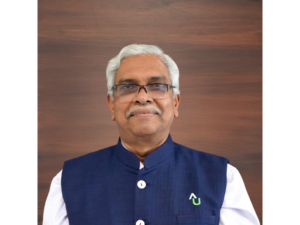
Nair: 12-month immersion program
– Paromita Sengupta (Bengaluru)
Dr. Rajeevan Madhavan Nair aka India’s Climate Man by India’s scientific community, is Vice Chancellor of Atria University, Bengaluru (AU, estb.2018). Founded by Dr. Sunder Raju, chairman of the Atria Group which includes Atria Power and ACT Fibernet, AU is India’s first liberal STEM University which offers an interdisciplinary model of education with students engaged in 30 real-world projects and 12-month industry immersion programmes.
Newspeg. In February, the university launched Atria Beyonder Lab, an applied innovation and ventures platform that boosts research by supporting incubation of early-stage start-ups in green hydrogen, biomedical innovation and advanced materials.
History. A science postgrad of Madurai Kamaraj University with a physics Ph D awarded by Savitribhai Phule University, Pune, Dr. Nair acquired over three decades of rich experience in atmospheric and climate sciences while serving with the Tata Institute of Fundamental Research (TIFR), India Meteorological Department (IMD), Indian Space Research Organisation (ISRO) and the Indian Institute of Tropical Meteorology (IITM), Pune. Between 2015-2021, he served as Secretary, Ministry of Earth Sciences where he led the Deep Ocean Mission, a Rs.4,200 crore national program on ocean exploration, resources, and deep-sea technology. In 2023, he was appointed Vice Chancellor of Atria University.
Direct talk. “Unfortunately, Climate and Earth System Sciences study programmes are not available in most higher education institutions. While some universities offer climate science and modelling programmes, there is pressing need to broaden the curriculum. AU operates as a Living Laboratory for sustainable innovation. Students engage with applied research from the undergraduate years, working with domain experts on projects that are designed to produce scalable, real-world outcomes. Meanwhile, in light of India’s commitment to achieving net-zero emissions by 2070, there is urgent need to build a skilled workforce in this area. Universities need to design interdisciplinary programs that combine science, economics, policy, and technology, to equip graduates to contribute to national and global climate goals. In addition, aligning academic programs with the United Nations Sustainable Development Goals (SDGs) will help students understand the broader societal context and equip them with interdisciplinary skills required for the evolving climate economy,” says Dr. Nair.
Future plans. Unsurprisingly, Nair has drawn up plans to broaden and deepen climate science and earth-science technology study programmes of Atria University. “A curriculum is being finalised to introduce a Master’s degree program in Earth Science Technology, along with a Bachelor’s degree program in Sustainable Entrepreneurship. These programs will integrate science with technology and innovation to prepare students to address real-world challenges related to climate and sustainability,” says Nair.
God speed.









Add comment