






Sarala Birla Academy: Education Beyond The Ordinary
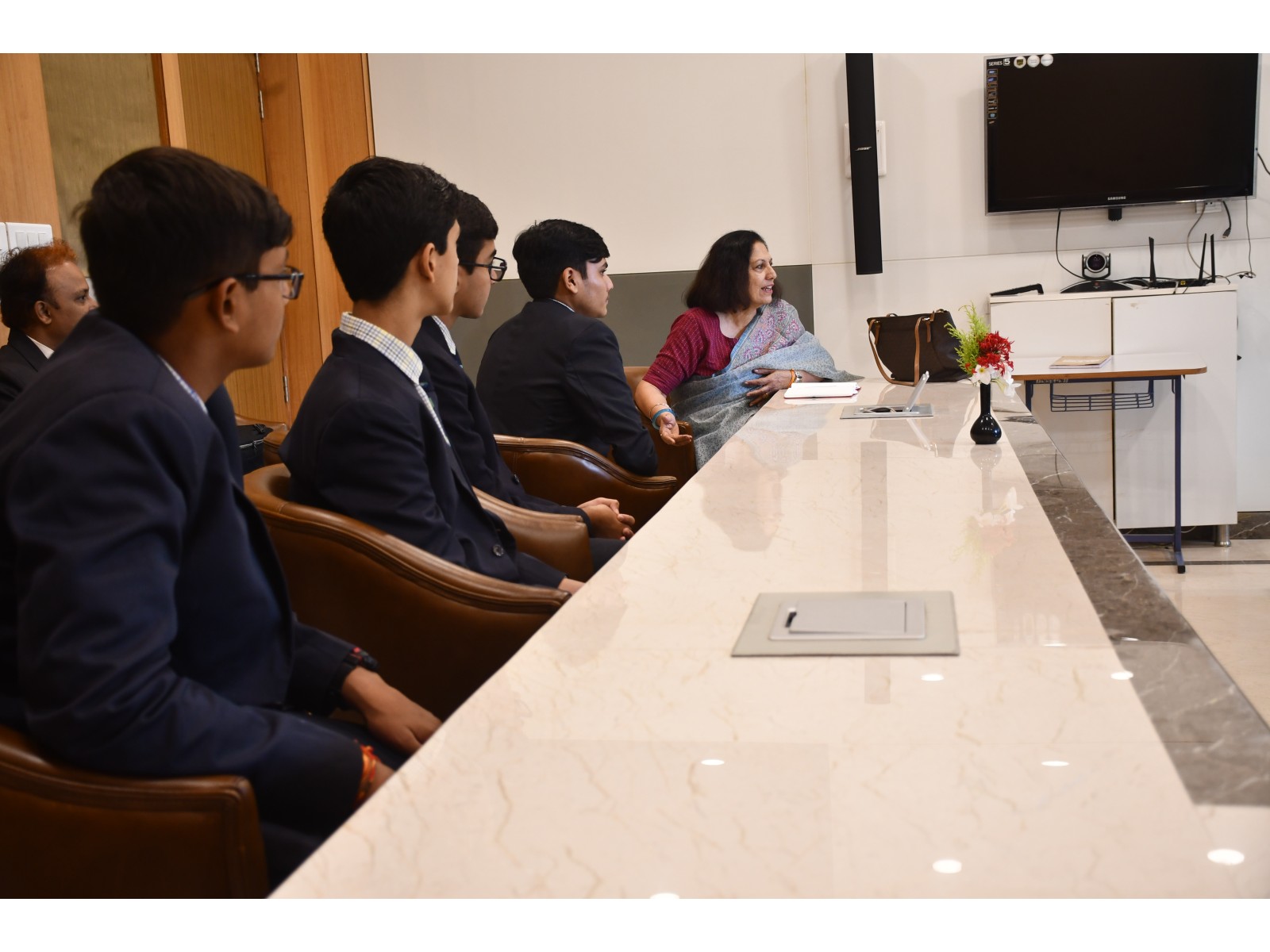
On August 20, 2026, Sarala Birla Academy, Bangalore, welcomed Mrs Rajbir (Bubbles) Sandhu, school support director – South Asia & the Gulf Region, Round Square, for an interaction that proved far more consequential than the customary exchange of institutional courtesies. What unfolded was an invigorating interrogation of what education ought ultimately to accomplish: not simply to furnish young minds with knowledge, qualifications and opportunity, but to equip them with the discernment to understand a complex world, the courage to enter it, and the conscience to leave some part of it better than they found it. In welcoming Mrs Sandhu, the principal Mr Santanu Das reaffirmed the Academy’s commitment to an education in which academic excellence and the formation of character are not competing imperatives but inseparable ambitions.
Mrs Sandhu’s central proposition was both simple and exacting: Round Square is not an ornamental catalogue of exchanges, conferences and international encounters; it is a philosophy of education. Its six IDEALS (Internationalism, Democracy, Environment, Adventure, Leadership and Service) are meaningful only when they acquire flesh and blood in the quotidian life of a school.
At the heart of the conversation lay student agency. Councils, student-led initiatives and experiential programmes offer young people something more consequential than another line on a résumé: the opportunity to identify a problem, devise a response, negotiate obstacles and discover that real decisions, unlike classroom answers, come freighted with consequences. Democracy, Mrs Sandhu observed, is not merely the casting of a vote but the discipline of listening. Leadership is not the possession of a badge but the willingness to assume consequence. Service is not benevolence exercised from a comfortable distance but the readiness to stand alongside another human being.
At Sarala Birla Academy, this philosophy finds expression through the International Forum for Sustainable Peace and Development (IFSPD), the Global Sustainability Councils Programme (GLOSCO), Model United Nations (MUN), RS-Postcard and IFSPD-CXO Shadowing. These platforms propel learning beyond the classroom into research, dialogue, professional exposure and the exhilarating unpredictability of real-world decision-making.
Mr Krishnendu Basu, CAS coordinator, traced the Academy’s Round Square journey from participation in the Round Square International Conference (RSIC) at Mayo College in 2016 through international engagements, leadership summits and MUN initiatives to the hosting of IIMUN at SBA in 2025, which brought approximately seven hundred delegates to the Academy. Yet the more consequential development has been the gradual transfer of authorship: students are increasingly moving from participants to designers, organisers and driving forces.
That is a more meaningful measure of educational maturity. A school has truly empowered its young when they cease asking, “What has been organised for us?” and begin asking, “What shall we build?”
Service, Stewardship and The World Beyond the Self
The discussion of Service introduced a distinction at once simple and profound: service is not charity. Charity can preserve distance; service seeks to dissolve it. Mr Sourav Dasgupta, social service club in-charge, and faculty colleagues shared examples spanning community outreach, environmental initiatives, recycling drives, food audits, gardening, dairy-farm immersions and engagement with underprivileged communities. The clean-up of Radhanagar Beach in the Andamans and educational outreach through games, English and basic computer literacy offered tangible illustrations of Service translated into action.
Yet, the idea extends further. Responsibility encompasses not merely to what we do for others, but to what we leave behind for those who come after us. The planet, too, enters the moral equation. This resonates with the ethos of SBA’s Annual Tours and Treks: to travel not as consumers of landscape but as its custodians; to tread lightly, care consciously and, wherever possible, leave every place better than we found it.
Adventure, too, was liberated from its more theatrical associations. It need not mean spectacular expeditions; it can be the quieter courage of entering an unfamiliar conversation, attempting what one may not master or stepping beyond the well-lit boundaries of certainty.
Environmental consciousness was similarly presented as habit rather than ceremony: conservation, recycling, reuse, food audits and sustained campus initiatives become meaningful when stewardship ceases to be an occasional gesture and becomes instinct.
Internationalism emerged not as the passport stamp of educational exchange but as an education in encountering difference without feeling diminished by it. Music, literature, publications and cultural exchange can enlarge the imagination while deepening one’s understanding of one’s own identity. Through Generation Global and international conferences, Round Square schools learn from one another, creating a living ecosystem of ideas in which every school possesses the humility to be both teacher and learner.
Day Two: When the students took the floor
If Day One explored what Round Square asks of a school, Day Two posed the more searching question: what are we actually doing about it?
In How We Are Implementing RS IDEALS in Our School, SBA students turned the lens upon themselves, speaking with refreshing candour about leadership, failure, discussion, identity and opportunity. Their central insight was perhaps the most important of the two days: Round Square cannot survive as something that happens at conferences while ordinary school life carries on elsewhere. Its real test is the everyday.
Mrs Sandhu’s message to the students distilled the IDEALS into a practical challenge. Internationalism must enlarge the young mind; environmentalism must make students custodians of nature; failure must become an invitation to re-strategize; adventure must demand a departure from the comfort zone; and leadership must culminate in responsibility and action.
The last of these already has a concrete stage. With the SBA Round Square Conference scheduled for October, students have an immediate opportunity to move from discussing leadership to practising it: planning, negotiating, executing, improvising and accepting responsibility for what follows.
Students spoke particularly persuasively about trust. Give a young person meaningful responsibility before complete confidence arrives, they suggested, and responsibility itself can summon confidence into being. A junior council, a House position or a small event may appear modest on paper; psychologically, it says something enormous:
We trust you enough to let you try !
Competence, they observed, does not always precede responsibility. Sometimes responsibility is what summons competence into being. Their understanding of Adventure followed the same logic: it could be raising one’s hand, attempting something unfamiliar or speaking when there remains the possibility of being wrong. Setbacks in competitions, elections and performances had often proved more instructive than victories.
The students’ conception of leadership was strikingly devoid of self-importance. It had less to do with command than with noticing what others need and quietly responding. The conversation naturally turned to debate and discussion. Debate may produce a winner; discussion, at its best, produces understanding. Its rarest virtue is that it permits a person to change their mind without regarding the change as surrender.
An Oxford Union-style debate demonstrated the possibility of disagreement without hostility: challenge an argument without diminishing the person who holds it. From this emerged a sobering thought: perhaps some conflicts persist not because people lack opinions, but because they have forgotten the civilising art of listening.
Perhaps the most memorable student analogy concerned religious tolerance: a person’s religion, one student suggested, is rather like what is being cooked in their kitchen — private, personal and not something a neighbour is entitled to inspect or regulate. Tolerance, perhaps, need not always announce itself in grand declarations. Sometimes it is simply the courtesy of leaving another person’s kitchen alone.
The Question That Remains
The two days ultimately led beyond the vocabulary of Round Square to the larger purpose that gives those ideals their meaning: What kind of human beings should education seek to create?
The answer cannot be adequately measured through grades, trophies or university destinations. The world awaiting today’s students will require competence, certainly; but it will also demand resilience in adversity, compassion in the face of inequity, environmental stewardship, cultural intelligence and leadership grounded in service rather than self-interest.
At Sarala Birla Academy, these are not merely propositions to be admired from afar. They are capable of being lived through the ordinary architecture of boarding-school life: in classrooms and Houses, on playing fields and treks, through service, music, debate, responsibility and the innumerable small negotiations by which young people learn to live with one another.
A sports field can teach resilience.
A boarding house can teach coexistence.
A service project can teach humility.
A council can practise democracy.
A journey can teach stewardship.
A disagreement can teach listening.
This could well be the true measure of an education: not how unequivocally its ideals are proclaimed, but how quietly they take possession of the person ; until courage becomes disposition, service becomes instinct, curiosity becomes habit and responsibility becomes character.
For, that is where Round Square finds its deepest meaning at Sarala Birla Academy. It is not merely another constellation of activities in a student’s already crowded sky; it is an invitation to become larger than achievement alone requires.
Also read: From a Seminar Idea to First Place at IIT Hyderabad







Add comment