






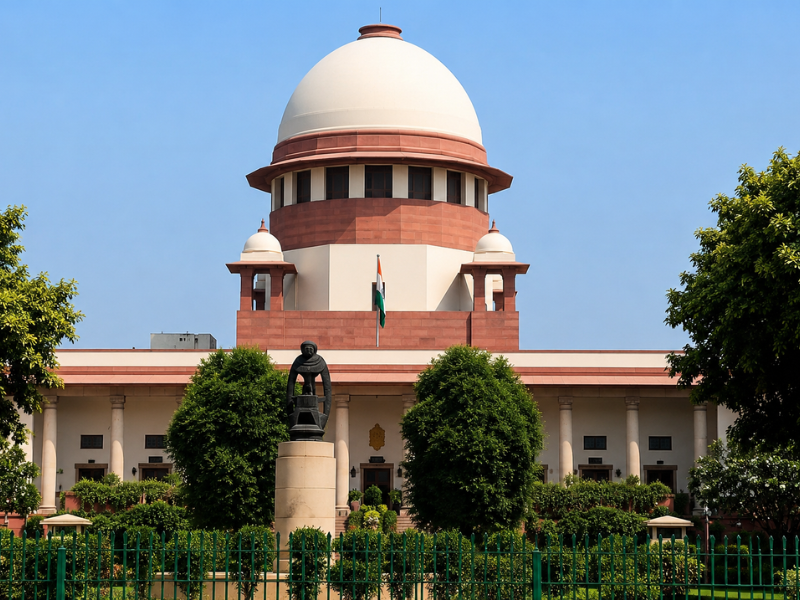
Supreme Court: Private medical colleges cannot be compelled to charge government-level fees
The Supreme Court has held that private medical colleges cannot be required to charge tuition fees equivalent to those of government institutions, observing that such a move could undermine the financial viability of self-financing colleges and affect medical education.
A bench of Justices B V Nagarathna and Joymalya Bagchi made the observation while dismissing a petition filed by an Economically Weaker Section (EWS) candidate from Rajasthan, who challenged his admission to a general category seat in a private medical college with an annual tuition fee of nearly ₹19 lakh.
The petitioner argued that he had applied under the EWS category but was allotted a general category seat, making the fees unaffordable for his family. He also contended that Rajasthan had not fully implemented the 10% EWS reservation mandated under the Constitution (103rd Amendment) Act.
During the hearing, the court observed that government colleges receive public funding, whereas private institutions meet their operational costs independently and cannot be expected to charge the same fees. It also noted that private medical colleges are barred from collecting capitation fees and play an important role in expanding access to medical education.
The Supreme Court declined to interfere with the Rajasthan High Court’s order and advised the petitioner to explore scholarship opportunities to continue his studies.
The bench, however, clarified that the legal issues relating to the implementation of EWS reservation in private medical colleges remain open and may be considered in an appropriate case in the future.
Inputs from Education Times
Also Read: Congress to launch ‘Chhatron Ki Goonj’ nationwide campaign demanding Pradhan’s resignation









Add comment