






Tamil Nadu: Paramedicals Interest Surge
– Shivani Chaturvedi (Chennai)
In early May, tamil nadu experienced a sea change in its political landscape with TVK, a political party registered only two years ago and led by C. Joseph Vijay, a movie star with minimal political experience, emerging as the largest party winning 108 seats in the 234-strong legislative assembly.
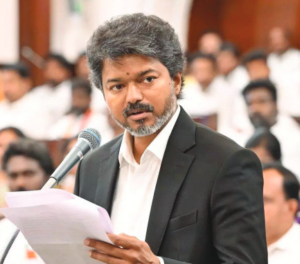
Chief minister C. Joseph Vijay
Thus far, the newly sworn-in chief minister and government have been focused on gathering support from independents to take the party over the 117 seats half-way mark to be invited to form the government. This hurdle was crossed on May 8 and Joseph Vijay was sworn in as Chief Minister on May 10 by Governor Rajendra Vishwanath Arlekar.
However, although it’s early days, monitors of Tamil Nadu’s political theatre discern a departure on several issues from the politics of the two Dravidian parties — DMK and AIADMK — which have alternately ruled in the state since 1965. Among them: reduced emphasis on caste arithmetic that has dominated state politics for the past half century; condemnation of dynasty rule; district cf. department governance; aggressive negotiation of water dispute issues with neighbouring states; stylistic differentiation from previous governments, and practice of more fluid coalition governance.
But on one issue, the new TVK government is on all fours with the previous DMK administration: opposition to the centralised National Entrance-cum-Eligibility Test — Undergraduate (NEET-UG), introduced in 2016 as a single uniform examination to determine admission into 824 medical and 300 dental colleges countrywide, including 74 in Tamil Nadu.
Soon after being sworn-in as chief minister, Vijay reiterated the state’s opposition to NEET and urged the BJP/NDA government at the Centre to cancel this centralised exam on grounds that it discriminates against rural children who can’t afford expensive supplementary tutorials of private sector coaching institutes, and to revert to the previous system of admissions based on class XII scores/marks.
Yet even as the future of NEET-UG has become cloudy with NTA (National Testing Agency), which conducts this annual exam, having botched NEET-UG 2024 and NEET-UG 2026 in quick succession (see Education News — Delhi above), the new TVK government has decreed early admission of school-leavers into nursing and paramedical courses to provide the huge majority of unsuccessful NEET-UG candidates paramedical windows of opportunity. In this connection, it’s pertinent to note that of the 2.27 million school-leavers who wrote the now re-scheduled exam, a mere 1.3 lakh will be admitted into 824 medical colleges countrywide.
Consequently, allied health sciences — once dismissed as “backup options” — are steadily gaining legitimacy and acceptance. Courses in physiotherapy, radiology, dialysis technology, respiratory therapy, emergency care, optometry, cardiac technology, medical laboratory technology, occupational therapy, and B.Sc Nursing are attracting growing interest from students hitherto focused exclusively on admission into medical colleges to secure the coveted MBBS degree.
“There is a huge surge in parallel career planning. School-leavers are signing up for degree and diploma programmes in nursing, physiotherapy, radiology, allied health sciences and life sciences programmes before writing NEET-UG to reduce uncertainty. The trend is particularly visible among rural and first-generation learners. For their families, a fallback option of careers in paramedics programmes is becoming increasingly attractive,” says Manickavel Arumugam, a Chennai-based education consultant.









Add comment