






What India Can Learn from Countries Operating Large-Scale Digital Assessments
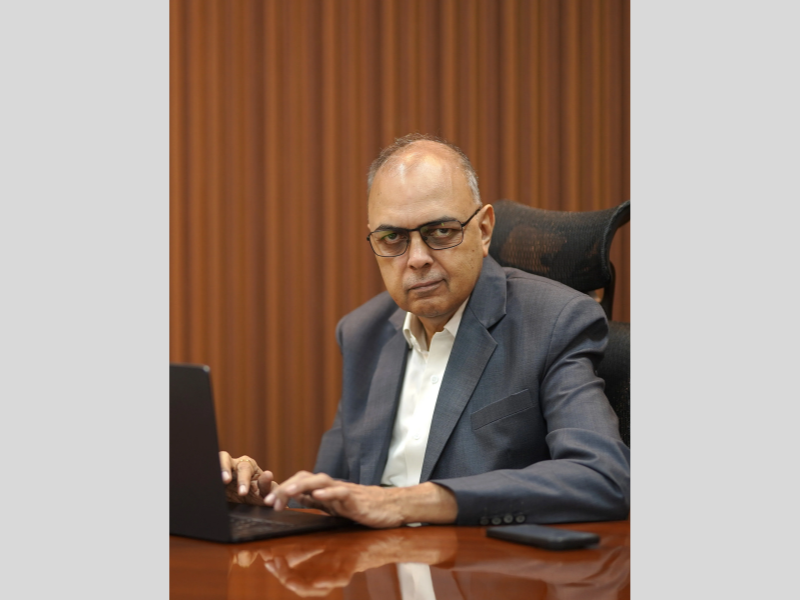
– Dhananjaya Sudhanva, Chairman and Managing Director, Excelsoft Technologies
For millions of Indians, clearing a competitive examination is more than an academic exercise – it
determines entry into higher education, public employment, and career progression. When question papers leak, candidates face unequal difficulty, results are disputed, the damage extends beyond one examination: it erodes trust in the system meant to fairly identify talent.
The first thing India can learn from countries running large-scale, secure, high-stakes assessments is that it can be done digitally, across the full lifecycle -authoring, review, assembly, delivery,
proctoring, marking, publication, and post-exam audit. The Moral of the Story: digital testing must be an integrated ecosystem, not an isolated event.
Assessment integrity is often linked to preventing cheating on examination day, but it begins much earlier. Writing a high-quality question demands subject expertise and precision; each question must be reviewed for accuracy, relevance, clarity, difficulty, prior usage, and suitability for the candidate group. A secure digital question bank attaches such metadata to every question, maintains review histories and flags duplication and inconsistency. Role-based access and separation of authoring and delivery infrastructure reduce human exposure and make responsibility traceable. In platforms built on these principles, this segregation has proved essential to meeting the security and audit requirements of high-stakes examinations.
The same discipline must continue when questions are assembled into test forms. Encryption at distribution alone does not make a test secure; integrity must extend across question authoring, construction, transfer, administration, evaluation, and audit.
Scalability must not compromise fairness. India cannot always conduct a major examination for every candidate in one session. Multiple sessions may be unavoidable, but they can create a perception that one paper was easier than another. The debate following JEE sessions illustrates how perception alone can weaken confidence. Calibrated question banks and psychometric models can create test forms of comparable difficulty, supported by transparent communication of the methodology.
Digital systems also make distributed delivery manageable. Tests can be encrypted centrally, transmitted to authorised centres, and decrypted only when an authenticated candidate begins. Responses can be captured continuously, encrypted on submission, and returned for centralised evaluation-creating a traceable chain from test construction to scoring.
Accessibility is part and parcel of integrity. A fair examination must be accessible. Candidates with disabilities may need extra time or assistive technology, while language and geography should not become barriers. In one of our implementations for a multi-island public school system, examinations were centrally administered across remote-island schools, delivered in several languages, and independently scored for consistency. The lesson for India is clear: accessibility must be engineered from the outset, not added later.
Connectivity resilience matters equally. Systems can continue securely through temporary disruption and synchronise encrypted responses when connectivity returns. For one national examinations board we have worked with, an internationally regarded benchmark for assessment rigor and operational precision, uninterrupted delivery despite connectivity or power failures was fundamental. A hybrid platform automatically preserved and synchronised responses across the candidate device, examination centre, and central platform, preventing data loss during the test.
India already has important foundations for this transition: expanding connectivity, wider device
access and deep experience administering examinations across a vast geography. The larger challenge is operational-establishing equipped, audited centres within candidates’ reach and verifying identity at entry, login and, where proportionate, throughout the examination.
Trust requires transparency and auditability. Digitalisation alone will not restore public confidence. Trust is earned when candidates understand that the system is fair, authorities can demonstrate that controls worked, and every significant action leaves an auditable record. Mature systems complement pre-examination controls with post-examination assurance-reviewing activity logs, scoring behaviour and access records backwards from results to test creation to identify anomalies before outcomes are finalised.
India need not replicate another country’s model. Policymakers can study a few international systems comparable in scale and stakes, understand what has worked and adapt those principles to India’s
diversity and infrastructure. Workflows may differ, but the foundations remain constant: secure design, segregation of duties, controlled human intervention, inclusive access, scientific comparability, and independent oversight.
The goal is not technology for its own sake. It is an examination system in which candidates can trust that their preparation and performance-not leakage, manipulation, location, or the session allotted-will determine the outcome. Digitising the whole lifecycle, combined with strong governance, can
make India’s competitive examinations more secure, scalable, inclusive, and worthy of public confidence.
The timing is especially relevant. Millions within India’s young population are preparing for competitive examinations for education, government employment, and career advancement. As the country advances towards becoming one of the world’s three largest economies, its growth must be matched with competent talent. Transforming the examination ecosystem is therefore not merely a technology upgrade; it is essential infrastructure for India’s economic ambition.
Also Read: An experiment in quality and capacity-building education for Bharat











Add comment