






What Parents Need to Know About Modern Education
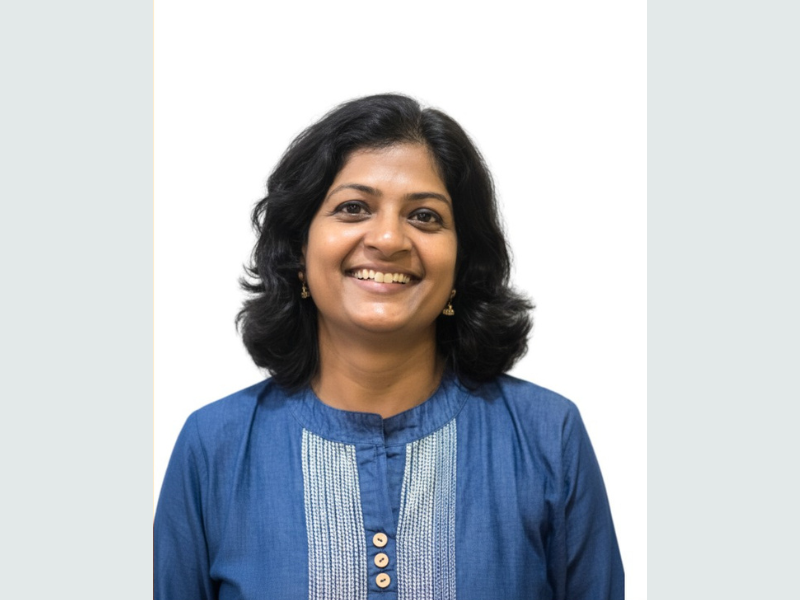
– Raaji Naveen, Co-founder, Beyond 8
Before parents try to understand modern education, they need to ask a simpler question: What does success mean for their child today?
For many of our parents, success was relatively clear: study hard, earn well, gain security, and move the family forward. For many in my generation too, success looked similar—marks, college, career, and stability. It was seen as a peak to be reached. But our children are growing up in a world shaped by artificial intelligence, shifting careers, fractured attention spans, and complex social and environmental challenges. In such a world, success cannot remain a single point. It has to become a range.
That is why parents today need to do something more fundamental than merely learning about new-age schools or modern methods. They need to go back to the drawing board and understand their child—not the child as measured by marksheets, ranks, and comparison charts, but the child as a human being. What energises them? What kinds of questions do they return to? What do they stay engaged with when no one is forcing them? What feels meaningful to them?
Until parents ask these questions, they risk placing old definitions of success on children who are meant for a different future. When success is imposed too early and too narrowly, children may comply, but they do not always come alive. Some become anxious. Some become performative. Some quietly disengage. We then mistake this loss of energy for laziness, when in fact it may be a loss of meaning.
This is why parents need to see education differently. It cannot begin with a fixed system and ask the child to fit into it. It must begin with the learner’s voice. When parents genuinely listen to their child and allow that voice to shape decisions, curiosity does not need to be artificially cultivated. It emerges naturally. Self-worth grows because the child feels seen, not merely judged. Confidence deepens because the child is engaging with something that carries personal meaning. Motivation, then, becomes less of a battle, because children are far more willing to persist when they can see themselves in what they are doing.
This does not mean children should be left without guidance. It means guidance must begin with attention, not assumption. Parents still need to challenge, support, and expand possibilities. But a child who is clearly understood can be guided wisely. A child who is constantly pushed toward someone else’s script may perform for a while, yet remain disconnected from purpose.
And purpose matters because the world does not merely need high scorers. It needs problem-solvers. We need young people who can think clearly, learn continuously, adapt responsibly, and collaborate across differences. We need young people with enough self-worth not to collapse in the face of failure, enough curiosity to keep learning, and enough confidence to enter unfamiliar territory. Such learners can develop skills and capabilities throughout their lives and respond to the many challenges the world will place before them.
That is what parents need to know about modern education. It is not merely about newer tools, smarter classrooms, or future-ready jargon. It is about redefining success itself. When success is no longer seen as one fixed peak, but as a range of meaningful possibilities, the role of education becomes clearer. Its purpose is not just to push children efficiently toward a narrow destination, but to help them become capable, grounded, and alive to the world.
To rethink success, parents must begin not with the system, but with the child.
Also Read: Falling to Stand Tall: Why Our Children Need ‘Risky’ and ‘Destructive’ Play









Add comment