






Ease of operating schools index 2026: Damning indictment of India’s educracy
Even as the educracy countrywide is doing precious little to improve crumbling infrastructure and abysmal learning outcomes in government schools, a newly introduced pathbreaking EoOS Index indicates that it is very difficult to promote private schools offering tuition at all price points
Dilip Thakore
Private schools of all price points: promotion & operation arduous and daunting proposition
The reality that the public (government) school system in all states of the Indian Union is in a shambles and needs to be urgently redressed — the theme song of EducationWorld (estb.1999) for over a quarter century — is belatedly admitted by Niti Aayog, the official think-tank of the Central government.
According to a recently (May 6) released Niti Aayog report titled School Education System in India: Temporal Analysis and Policy Roadmap for Quality Enhancement, of the country’s 1.4 million primary-secondaries, 98,542 — mainly government — schools lack functional girls toilets; 61,540 have no usable toilets at all; 59,829 have no handwash facilities; 119,000 are bereft of electricity; 518,910 don’t have computers and 536,550 don’t have internet connection.
The report also highlights “significant short falls in teacher availability” stating that 7 percent of all schools — 104,000 — are served by only one teacher. Confirming abysmal learning outcomes of children reported by the Annual Status of Education Report (ASER) of the independent Pratham Education Foundation since the early 2000s, Niti Aayog reports that over 50 percent of children in class V can’t read class II textbooks (in their own vernacular language) and 69 percent can’t solve simple division sums.
Unsurprisingly, parents from even the poorest strata of society whose children, if enrolled in government schools, would be provided free-of-charge primary (class I-VIII) education plus a free mid-day meal, nevertheless aspire to enroll their children in fees-levying private schools, mostly affordable budget private schools (BPS) highly extolled by British academic Prof. James Tooley in his revealing book A Beautiful Tree (2009).
Niti Aayog’s report admits as much. It confirms that aggregate enrolment of children in government schools has declined from 71 percent in 2005 to 49.2 percent in 2024-25. The outcome of post-independence India’s embrace of Soviet-style Central planning and socialism is that 48 percent of India’s 250 million school-going children are enrolled in private schools. A sharp contrast with capitalist OECD countries in which the proportion of children in private schools rarely exceeds 5 percent.
Against this dismal backdrop with even bottom-of-pyramid households clamouring for admission of their children into private schools, one would expect the way to be smooth — in the national interest — for not-for-profit and for-profit private initiatives in K-12 education. On the contrary.
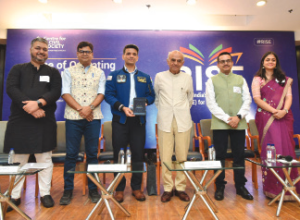
Authors Anand (left), Kumar (second from right) & Maheshwari (right)
According to The Ease of Operating Schools Index — A Comparative Assessment of School Regulatory Frameworks Across Indian States 2026 released last month (July) by Delhi-based think-tank Centre for Civil Society, promoting and operating private schools in 28 states and two Union territories across India is an arduous and daunting proposition. Through detailed examination of state education Acts, laws, rules, regulations, important government orders, notifications, circulars and other legally operative instruments, a new Ease of Operating Schools Index (EoOS) conceptualised by CCS researchers Animesh Kumar, Shaivy Maheshwari and Nitesh Anand assesses ease-of-doing education by private corporates, businessmen, edupreneurs, idealists, philanthropists and non-government organisations.
There is a bewildering array of laws, rules and regulations because under the Constitution, education is a Concurrent List subject with the Centre and states empowered to legislate on it. However, governance and regulation of education institutions falls mainly within the jurisdiction of state governments. Hence wide variations are normative.
Therefore to compile this comparative index, the researchers assessed ease of doing private education under six ‘domains’ of school governance: Regulatory Clarity; Regulatory Compliance; Protection against Regulatory Action; Financial Sustainability and Resource Mobilisation; School Lifecycle Operations; and Institutional Autonomy.
The EoOS Index is perhaps the first-ever formal study to evaluate the “ease of operating schools through a comprehensive legal and regulatory lens”. “The Index seeks to bring educational governance into mainstream policy discourse and provide policymakers with a practical framework for regulatory reform,” says the report. Evidently, the authors believe that since nearly the entire population prefers the option of private schools — India’s estimated 400 million middle class is almost entirely educated in private schools — they should be enabled to flourish and multiply.
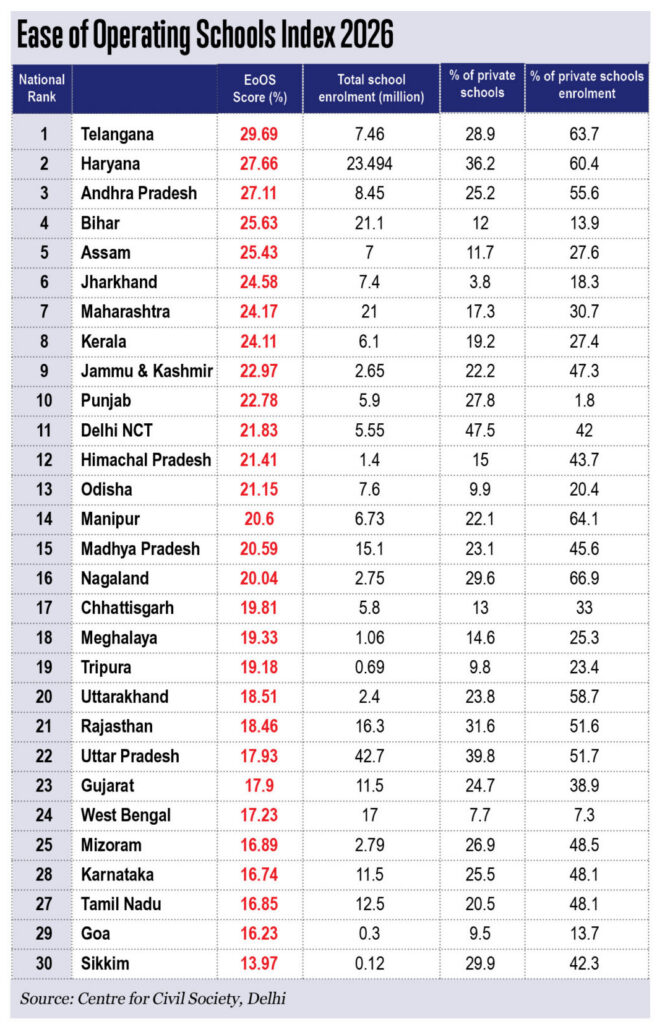
Yet the study concludes that the environment created for promotion and operation of private schools over the past seven decades is hostile rather than enabling. The national average score awarded by the authors of the index is a poor 20.86 out of a maximum possible 100, i.e, 20.86 percent. The country’s most enabling state for private schools is Telangana with an overall score of 29.69. The most discouraging is Sikkim with 13.97 percent. Sixteen of the 28 states score below the national average of 20.86 percent, itself a rock-bottom score.
“The conclusion of the unprecedented EoOS Index 2026 should worry all right thinking people concerned about the education of our children. The national average score is 20.86 out of 100 with even the best performing state Telangana scoring under 30. States score relatively well under Regulatory Clarity, which means that rules are well provided in written form. But their scores collapse under Financial Stability — 4.71, and School Lifecycle Operations — 7.13. This means state governments are very good at telling schools what to do, but very poor at enabling them to survive, adapt, sustain and scale,” says Dr. Amit Chandra, President of the Centre for Civil Society.
 Set against the backdrop of sub-par learning outcomes of government (public) schools countrywide, the disabling environment created for private schools as testified by EoOS Index 2026 to which all government school children who can afford them are fleeing in droves, is an anti-national development, opines Chandra. “This is not a minor inconvenience. It is a major structural problem. When compliance costs for private educators are high and arbitrary, it is the idealistic promoter of genuinely affordable private schools who suffers most,” adds Chandra, an alumnus of the Mahatma Gandhi Krishi Vidyapeeth University, Varanasi, former National Convenor of NISA (National Independent Schools Alliance) and currently President of CCS (see interview p.41).
Discouragement of promoting and operating private schools in India is particularly galling and anti-national because simultaneously the Central and especially state governments, are doing precious little to make the country’s 1.10 million government schools attractive, hospitable destinations for children, as confirmed by the Niti Aayog report referred to above. Defined by crumbling buildings lacking supportive infrastructure such as laboratories, lavatories and libraries, government schools are experiencing declining enrolments every passing year. Consequently, children of bottom-of-pyramid households who can’t afford even BPS fees are driven into premature employment, early marriage and the swelling ranks of informal, low-paid daily wages workforce which is increasingly transforming into drifting migrant labour.
This is the outcome of continuous and pervasive government control of the education sector from preschool to Ph D since the dawn of independence. It has had a severe adverse impact on national development, an outcome ignored by policy formulators, economists and the media until on the eve of the new millennium when EducationWorld (estb.1999) began highlighting this national blind spot. Even thereafter, persistent whistleblowing has failed to arouse the lazy establishment to pay greater attention to developing the dormant potential of the world’s largest child and youth population.
The result is that India’s total factor productivity is among the lowest worldwide on every metric of development — per capita farm and factory output, school and higher learning outcomes and health and welfare indices. In particular, because of persistent neglect of primary education, the country’s population multiplied 3x between 1950 and the new millennium as establishment eminences and globally reputed economists refused to acknowledge the verity that education is the best contraceptive.
Therefore, contemporary India’s per capita income (adjusted for purchasing power) is a mere $2,600 per year cf. neighbouring China’s $14,000 with the latter having transformed into a global technology and manufacturing superpower. Although China is a communist dictatorship — the usual excuse of establishment worthies for democratic India’s relative backwardness — it’s pertinent to note that other Asian countries which accorded greater importance to primary education – Malaysia, Vietnam, Indonesia, Philippines and Japan — have substantially larger per capita incomes.
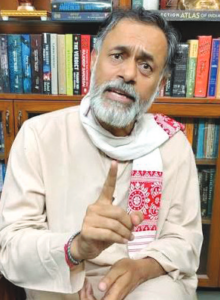
Yadav: education-employment breakdown
“The biggest mistake in post-independence India that has opened up a Pandora’s Box of ills and afflictions that have disabled the national development effort from Nehru’s time down to the present ruling dispensation is neglect of education, especially primary education. From Nehru’s time to present day, public education has been starved of funding and attention. In 1967, the Kothari Commission recommended that public annual expenditure — Centre plus states — on education should be a minimum 6 percent of GDP. This target has never been achieved. Even though India has recently universalised primary education, its quality in rural schools — as repeatedly testified by ASER — is lamentable. As a result, millions of automatically promoted children — the RTE Act, 2009, prohibits the detention of children in any primary class — drift into low-quality, over-subsidised state government colleges which recklessly certify them as graduates. But when they venture into real-world workplaces, they are hopelessly unsuitable for employment. True, Nehru had the foresight to promote a handful of IITs and other high-quality higher education institutions, but their number is too few for our large population. Moreover, even our best colleges and universities suffer in comparison with the world’s best. Students’ fees are over-subsidised and their budgets are too small to fund real research and knowledge creation. And since the BJP government was voted to power in 2014, neglect of education has accelerated,” says a professor of political science in a top-ranked university, speaking on condition of anonymity.
This dismal diagnosis is endorsed by Yogendra Yadav, a well-reputed public intellectual and President of the left-of-Centre Swarajya Party which inter alia, advocates better terms of trade between urban and rural India. Writing in the Indian Express (July 22) on the agitation of the newly constituted Cockroach Janata Party demanding the resignation of Union education minister Dharmendra Pradhan following the NEET-UG 2026 exam question papers leak and CBSE’s OSM scandal, Yadav comments: “The issue that brought them together was much larger and more enduring than just the recent paper leaks. There were, of course, students who suffered the NEET cancellation and the CBSE scam, parents who lost their children due to this fiasco, aspirants waiting indefinitely for jobs, and victims of recruitment scams. But more than direct sufferers, the protesters were primarily potential sufferers, those who know that it could be their turn tomorrow, those who realise that the education-employment system has broken down. Anger against Union education minister, Dharmendra Pradhan, is only the tip of the iceberg. The underlying urge is for equitable, meaningful and quality education and for a universal right to employment. It is after half a century — since the JP movement in Bihar in 1974 — that a youth protest has placed education and employment at the centre of the national agenda.”
It’s against this backdrop of the country’s youth, if not the gerontocratic establishment, having made the connection between education and employment, that CCS’ pathbreaking EoOS Index 2026 assumes high importance. Since a mountain of evidence has piled up over the past 79 years that multi-tasking government cannot provide robust primary-secondary education, shouldn’t it entrust this vital duty on non-government organisations with proven experience in the field and/or for profit specialist enterprises in delivering high quality pre-collegiate education?
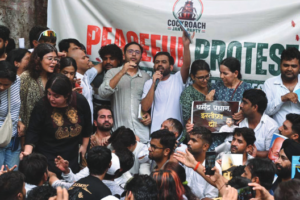
CJP protest in Delhi: beyond examinations stir
In this connection, several proposals have been advanced, including charter schools under which government schools are leased to NGOs or for-profit enterprises which contract to fulfill a ‘charter’ of mutually agreed learning outcomes in consideration of a fixed fee payable by government. Alternatively for several years, CCS has been proposing a Voucher System under which students are given a School Education Voucher of equivalent value to the per-capita cost of child education in a government school. The voucher is encashable in any government or private school of every child’s choice, with a top-up option in case of a private school. But for various reasons — resistance of powerful teachers unions and fear of mass exodus from under-performing government schools — these eminently sensible proposals have not fructified.
However now with the penny having dropped within the collective mind of Gen Z students — even if not in the collective mind of the moribund establishment — that there is a vital connection between high-quality preschool to Ph D education and respectable, fulfilling employment — as testified by the angst of youth protests under the banner of the Cockroach Janata Party in Delhi and countrywide, there’s every reason to ease the business of private education. To this end, CCS’ pathbreaking EoOS Index 2026 which details the bewildering number of speed-breakers placed in the path of private school promoters and operators, has rendered a valuable public service in the cause of reform and decluttering the regulatory system.
According to the authors, “school regulation is multidimensional and affects institutions through multiple channels”. To capture these dimensions, the EoOS Index evaluates schools across six domains — Regulatory Clarity Predictability and Accessibility (assesses the extent to which school regulations are publicly available, particularly through official government channels, and whether regulatory requirements are clear, stable and rule-based); Regulatory Compliance (examines procedural and administrative burden imposed on private schools); Operations without Arbitrary Regulation Action (evaluates the extent to which school operations are protected from discretionary regulatory action); Financial Sustainability and Resource Mobilisation (how easy is it for schools to mobilise, utilise, allocate and manage financial resources); School Lifecycle Operations (how easy is the promotion of greenfield schools, expand existing schools and/or shut them down), and Institutional Autonomy (extent to which operational, managerial and flexibility is available to schools within the legal framework). Through a complex formula of according weightage to 23 ‘indicators’ and 164 ‘ sub-indicators’, the ease of starting, operating and sustaining private schools in 28 states and two Union territories is assessed, with each state awarded scores between 1-100.
Evidently, the domains selection methodology and weightage accorded to every domain and sub-domain is conceptually sound. Because reviewers of the EoOS Index 2026 are eminent scholars and educationists Harish Doraiswamy, Project Director, Central Square Foundation; Rahul Ahluwalia, Co-founder, Foundation for Economic Development; Vardan Kabra, Co-founder Fountainhead Schools and Sr. Vice President ARISE, and Rohan Joshi, CEO Ahvaan Trust.
In the circumstances, EoOS Index 2026 which awards the 22 states of the Indian Union including Bihar, Uttar Pradesh, Rajasthan, Madhya Pradesh, Maharashtra, Karnataka and Tamil Nadu which grudgingly host 90 percent of India’s 500 million child and youth population, an average score of 20.86 percent for ease of private school education — even while their public school education is deplorable — is a damning indictment of nationwide neglect of human capital development. This prolonged countrywide neglect of education has torpedoed the national goal of Viksit Bharat (developed India) and $30 trillion GDP by 2047, the centenary of India’s independence from almost two centuries of brutal, extractive British rule.
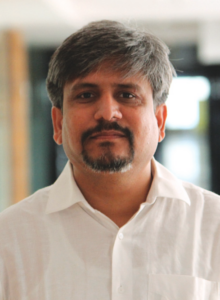
Mishra: mission impossible
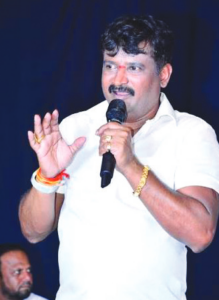
Shashi Kumar: multiplied complexity
“Let me state this plainly: In contemporary India, it is easier to start a private factory than a private school. Licence-permit-quota raj that was buried in 1991 did not die. It simply migrated into education and has been thriving there ever since. A private school promoter must obtain essentiality and land conversion certificates, produce recognition, affiliation, and fire and safety clearances from a procession of authorities, each sequential, none bound by timelines and all subject to the pace and pleasure of individual officers. And because education is in the Concurrent List (of the Constitution), this maze exists in 30 versions — schools perfectly legal in one state may be unqualified in the next. As a result, crores of rupees are frozen in land and buildings for years before the first child is admitted. The long admission queues and high fees of private schools parents complain about are not symptoms of greed; they are symptoms of scarcity manufactured by the gate-keeping of state governments,” says Dhirendra Mishra, a former school teacher and currently Promoter-director of Life Educare, a Raipur-based education consultancy, which these formidable hurdles notwithstanding, has advised and enabled the establishment of 70 private primary-secondary schools especially in tier II-III towns and cities countrywide.
Disillusionment with government policies that do little to improve teaching-learning standards in government schools while targeting private institutions, runs deep within private sector educators. D. Shashi Kumar, General Secretary of the Associated Managements of Primary and Secondary Schools Karnataka (KAMS) which has a membership of 5,000 private — mainly budget private — schools statewide, is disappointed, but not surprised, that this southern state which is the premier hi-tech ICT (information communication technology) hub of India is ranked #28 in the EoOS Index with a score of 16.74 percent, well below the national average (20.86).
According to Shashi Kumar, after liberalisation and deregulation of the Indian economy in 1991, the state’s educracy has multiplied the complexity of laws governing private schools in the state. Newly amended laws and regulations require private school promoters and operators to obtain annual clearances for a spate of compliances including fire, safety, stability, land conversion, building plan, fire safety clearances for old buildings — 68 compliances in 2024 which due to KAMS’ efforts have been reduced to 22. “It is humanly impossible for a private school promoter or operator to comply with all the compliance requirements of the education ministry without paying speed money at all levels,” says Shashi Kumar.
A determined champion of the fundamental right of private edupreneurs to carry on the business, and profession of education as provided by Article 19 (I) (g) of the Constitution, in 2014, Shashi Kumar won a famous verdict in the Supreme Court after waging a 24-year battle against the Karnataka government’s 1994 diktat that Kannada must be the medium of instruction of all children statewide until completion of class VII. After the customary legal delay of 20 years in 2014, in State of Karnataka vs KAMS, the apex court ruled that parents — not the State — have the right to choose their children’s medium of instruction. In the interim until he won the case, education ministry officials and school inspectors earned huge fortunes from English medium schools to turn a blind eye to the reality that thousands of schools were teaching in the English-medium for 20 years.
“Now I am in discussions with government to introduce online single window clearance for all compliances. This is necessary to attract genuine educationists, idealists and philanthropists into education for the benefit of Karnataka’s children,” says Shashi Kumar, who operates the New Blossoms Education Society School himself and has practical experience of the unease of doing education in post-liberalisation India.
Quite obviously, in the new IT and AI age when the world’s largest population of children and youth exceeding 500 million will necessarily need to produce farm products, manufactures and services accepted around the world, Gen Z needs to be equipped with robust foundational K-12 education, a precondition of developing an innovative, globally competitive higher learning system. This makes it incumbent upon the Central and state governments to shed dead habit and pay focused attention to developing the country’s abundant — and high potential — human capital.
The recent unprecedented students’ agitation in Delhi under the aegis of the Cockroach Janata Party demanding accountability for government neglect of education issues, is manifestation of snowballing youth angst and indignation against official policies that have neglected upgradation of public education while simultaneously discouraging private initiatives in education. Against this backdrop, publication of the EoOS Index 2026 is a timely reminder of the utter failure of the Central and state establishments to carry forward the letter and spirit of economic liberalisation and deregulation of 1991 into Indian education.
“Human capital is the true currency of growth”
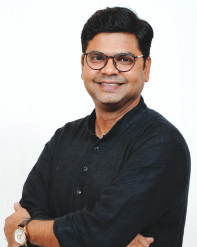 Dr. Amit Chandra is President of the Centre for Civil Society, a Delhi-based think-tank (estb.1997), which has published the Ease of Operating Schools Index 2026. Excerpts from an interview:
Congratulations for publishing the unprecedented Ease of Operating Schools Index 2026. What considerations prompted the conceptualisation and publication of EoOS 2026?
Private unaided schools operate in a climate of regulatory uncertainty that would be unacceptable in any other sector. Across 28 states and two Union territories, school operators navigate a maze of inconsistent, overlapping, and often archaic requirements on land, infrastructure, teacher qualifications, compensation, recognition, affiliation, and fees revision. A school legally operating in Madhya Pradesh may face insurmountable barriers in Maharashtra. Recognition processes stretch into years. Fee revision approvals are discretionary and opaque. Inspections are unpredictable.
This is not a minor inconvenience. It is a structural problem. When compliance costs are high and arbitrary, it is the small, lean, genuinely affordable school that suffers most. Ease of Operating Schools Index is a concrete mechanism to measure that regulatory framework — a systematic, annual, state-by-state ranking of how simple or burdensome it is to establish, run, and sustain private schools. India’s Ease of Doing Business reforms demonstrated that public rankings create a competitive spirit within state governments to act. The same logic applies here.
Simultaneously, the Central and state governments are doing precious little to improve infrastructure and learning outcomes in government schools. What’s your comment?
Partially agree. Both the Union and state governments are focused on building schools and improving facilities. Government spending has gone up from 2.88 percent to 4.1 percent of GDP, and the number of teachers have nearly doubled in the past two decades, resulting in nearly universal enrollment. Yet, the increased investment, improvement in infrastructure, and deployment of human resources are not producing improved learning outcomes. Rural class V reading levels fell from 53 percent to 45 percent between 2005 and 2025, according to the Annual Status of Education Report.
Adoption of socialism as national ideology after independence created a deep divide between academia and industry with the result that in higher education there is a pervasive misalignment between college/university curriculums and industry requirements. To what extent do you agree?
There’s real truth here. Decades of centrally controlled curricula insulated the academy from labour-market signals, and a licence-permit-quota mindset that migrated from industry into education. I would frame it less as an ideological indictment and more as an institutional design failure: when the state is both provider and regulator of education, it has no market feedback loop to correct misalignment. That’s a K-12 problem too, and it’s exactly why EoOS focuses on institutional freedom rather than curriculum content.
Idealists, philanthropists are discouraged from promoting K-12 schools because of the unease of doing education. What’s your comment?
Absolutely, and it’s the report’s most urgent finding. When recognition takes years, fee revisions are discretionary, and 30 states impose differing, often archaic requirements, only well-capitalised, legally sophisticated players can survive. The mission-driven small operator serving a low-income neighbourhood is squeezed out. Ironically, that’s precisely the actor India’s Constitution and its education history — Gandhi’s Swaraj, Tagore’s pluralism — assumed would build the system.
The Cockroach Janata Party agitation in Delhi reflects deep disappointment with decades of neglect of the education system. To what extent do you agree?
It reflects a generation that inherited both a stagnating public system and, in many cases, an unaccountable private system. Exam leaks, opaque fee hikes, and regulatory capture on both sides erode trust simultaneously. I’d read it less as anger against the ‘players’ and more as anger at ‘governance failure’. The gap between spending and outcomes, and between obligation and enablement — that’s what EoOS is trying to document with evidence rather than slogans.
Any other comment?
EoOS isn’t an argument for no regulation. It’s an argument for better regulation. Clarity, predictability, proportionality, and accountability aren’t anti-regulatory demands; they’re what NEP 2020 itself calls for. Education needs its 1991 moment, the state moving from controller to enabler. If India is to achieve the dream of Viksit Bharat, we must recognise that human capital is the true currency of growth. Roads, ports, factories, and digital infrastructure are vital, but they will take us only halfway. Our children are our greatest asset. The India of 2047 will be built by the minds we nurture today. Let us therefore commit ourselves to reforms that expand choice for students, bring healthy competition among schools and make institutions accountable.
Time to review forced charitable status
The world over including Communist China and Vietnam, entrepreneurs are permitted by the State to establish not-for-profit and for-profit education institutions, including schools. But in India the current position is that all education institutions must necessarily be charitable institutions. They must be managed by charitable trusts or not-for-profit societies.
This compulsory charity status had the effect of transforming education into an amateur’s occupation, preventing qualified entrepreneurs and skilled business managers from entering the education sector. Simultaneously this injunction has provided opportunity to government bureaucrats to rigidly monitor private schools, colleges and universities to ensure that they maintain their charity status.
Indeed to the extent that instead of focusing on improving crumbling infrastructure and rock-bottom learning outcomes in 1.10 million public (government) schools and higher education institutions, the attention of the educracy is primarily focused on regulating 450,000 private schools which host 48 percent of India’s 250 million school-going children.
The roots of over-regulation of private education can be traced back to observations and judgements of the Supreme Court, which in the heyday of Soviet-inspired socialism (1950-90) was packed with Leftist judges whose knowledge of economics was not as good as law. Way back in the early I960s while hearing a case titled Delhi University vs. Ram Nath (1963), Chief Justice Gajendragadkar observed in an obiter dicta that education is a mission and vocation, not a trade or business.
This observation was seized upon by socialists of the Congress and Left parties that introduced heavily regulated “licence-permit-quota raj” imposed upon industry, to also control the academy. Subsequently despite liberalisation and deregulation of industry and the economy in 1991, in Unni Krishnan vs. State of Andhra Pradesh (1993), a full bench of the apex court by a majority of 4-1 explicitly declared that education is necessarily a “charitable activity”. Subsequenty a decade later in the milestone TMA Pai Foundation vs. State of Karnataka (2002), the majority of an 11-judge bench of the Supreme Court held that education is an “occupation” under Article 19 (1) (g) and affirmed the right of private education institutions to manage their own admissions and levy reasonable tuition and other fees. Nevertheless the apex court maintained that their charitable character justifies regulation against “profiteering”.
These judgements opened a Pandora’s box of government rules and regulations to control private school and college education fees and a spate of litigation against state government laws. Worse, the forest of rules, regulations and laws has discouraged many bona fide educationists, idealists and philanthropists from promoting private schools to introduce new pedagogies and differentiated learning.
Instead this vacuum has been filled by edupreneurs of shady antecedents and questionable business practices who have no hesitation bribing their way through the greedy educracy countrywide. As a result corruption and bribery are rife within the education sector. Against the backdrop of winds of liberalisation and change worldwide and to facilitate the entry of bona fide educationists and skilled organisation management practices in education, the Supreme Court needs to review and reverse its judgement in Unni Krishnan’s Case.








Add comment