






Mailbox
Welcome first step
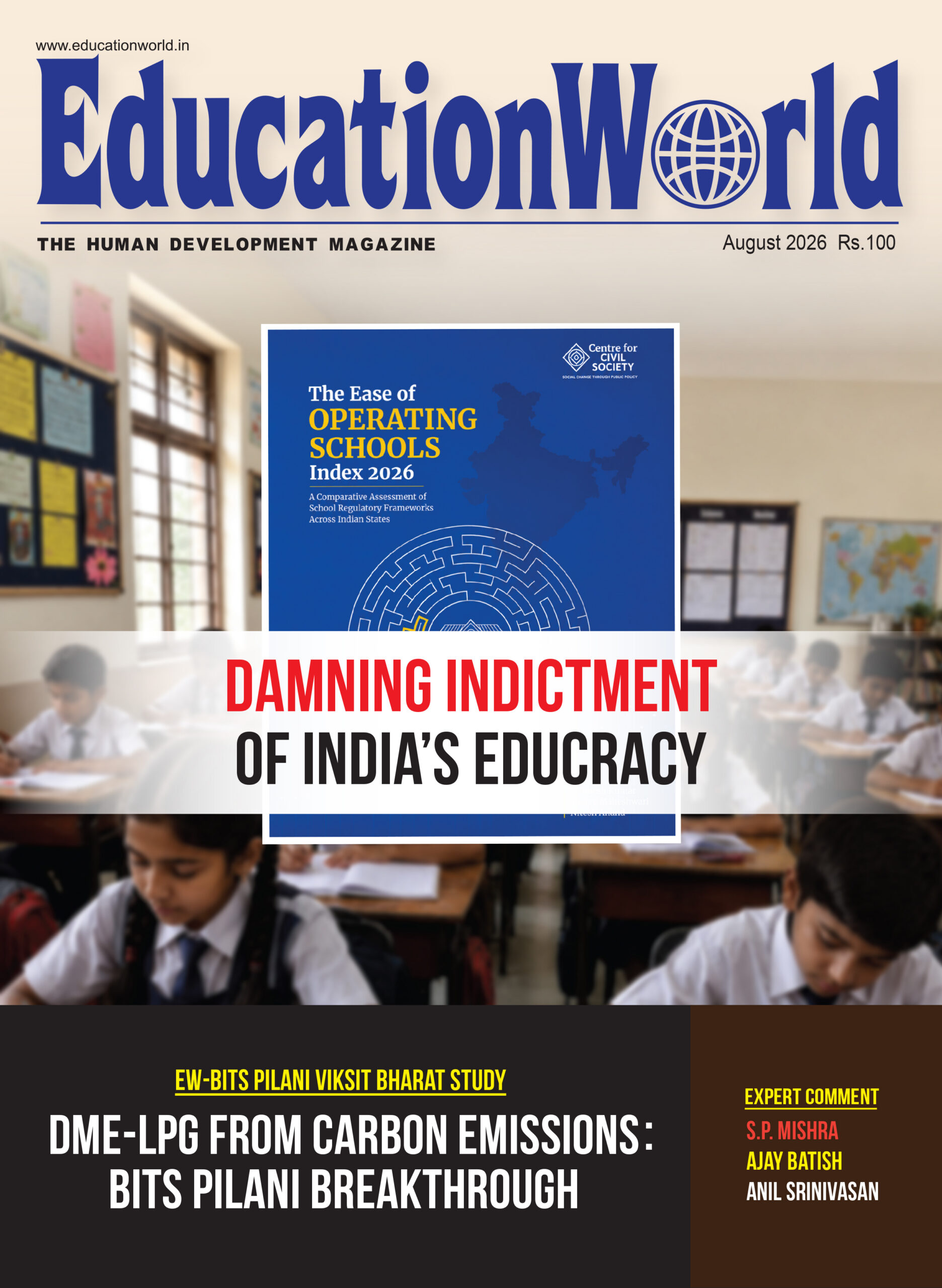
Recurring paper leak scandals, examination disruptions, and the resulting erosion of public trust have exposed deep flaws in India’s public exams system. The student protests at Delhi’s Jantar Mantar organised by the Cockroach Janata Party reflect growing public disillusionment with the education system. As highlighted in your well-researched July cover story ‘Declining Reputation of India’s Largest School-Leaving Exams Board’, restoring credibility of national examinations requires much more than ad hoc investigations or re-examination. It demands leadership that acknowledges systemic failures and pursues meaningful structural reforms.
The resignation of Union education minister Dharmendra Pradhan is the first step towards restoring accountability, public trust and paving the way for comprehensive reforms.
Debashish Dubey
Chandigarh
Public trust damage
Your Education News ‘Unsavoury Reputation” (EW July) presents a troubling picture of Maharashtra, once regarded as a leader in education and governance. The alleged masterminds of the NEET-UG 2026 and Maharashtra Teacher Eligibility Test exam paper leaks have been traced to cities in Maharashtra. Although the government has announced investigations, stricter laws, and a shift to online examinations, these measures have come only after significant damage to public trust.
Rather than reacting after every scandal, the government must build a secure, transparent, and tamper-proof public examinations system.
Shivank Nivane
Pune
Hands-on learning neglect
I enjoyed reading your interview with Pravesh Dudhani (EW July), Founder-Chancellor of Sikkim’s Medhavi Skills University. I fully agree with Mr. Dudhani that India’s challenge is not only a shortage of formal skills training but also systemic neglect of hands-on learning starting from school classrooms.
Therefore, there is an urgent need for all education institutions to evolve from centres of knowledge into ecosystems where learning and work are seamlessly connected.
Vandana Nayak
Thiruvananthapuram
Unconvincing contention
While author Anil Kapasi advocates greater collaboration between schools and coaching institutes in his Teacher-2-Teacher essay ‘Case for Schools-Coaching Institutes Cooperation’ (EW July), it is worth questioning why coaching centres have become indispensable in the first place. If admission into higher ed institutions is determined largely by competitive entrance examinations, shouldn’t school curricula, pedagogies, and assessment be better aligned with these requirements? Students will not seek expensive external coaching if schools prepare them for entrance exams.
Coaching institutes should be optional rather than essential for academic success.
Pramod Kulkarni
Bengaluru
Clear roadmap
Your Special Essay ‘Factories of Unemployment Need to Adapt for AI Era’ (EW July) offers a thought-provoking critique of India’s higher education system at a time when AI is rapidly transforming the global economy. By highlighting the urgent need for curriculum reform, interdisciplinary learning, entrepreneurship, and AI integration across disciplines, Yogi Kochhar presents a clear roadmap for making higher education more relevant and future-focused.
However, policymakers and educators must ensure that AI enhances rather than replaces human teaching-learning. India should establish robust AI governance systems before pursuing large-scale adoption.
Ravi Kumar
Noida
Right not charity
Your Special Report ‘RTE Act, 2009: Why all Schools Must Respect s.12 (1) (c)’ is a timely reminder that education is a fundamental right, not a privilege. S.12 (1) (c) of the RTE Act was enacted to ensure that children from economically disadvantaged backgrounds have access to quality private schooling and the opportunities that accompany it.
Unfortunately, many private schools continue to evade or dilute this statutory obligation through indirect barriers, procedural hurdles or lack of awareness among parents. Such practices defeat the very purpose of the legislation and perpetuate education inequality. As the recent Supreme Court judgement emphasises, compliance with s.12 (1) (c) is not an act of charity; it is a legal and moral obligation.
Harish Jose
Kochi









Add comment