






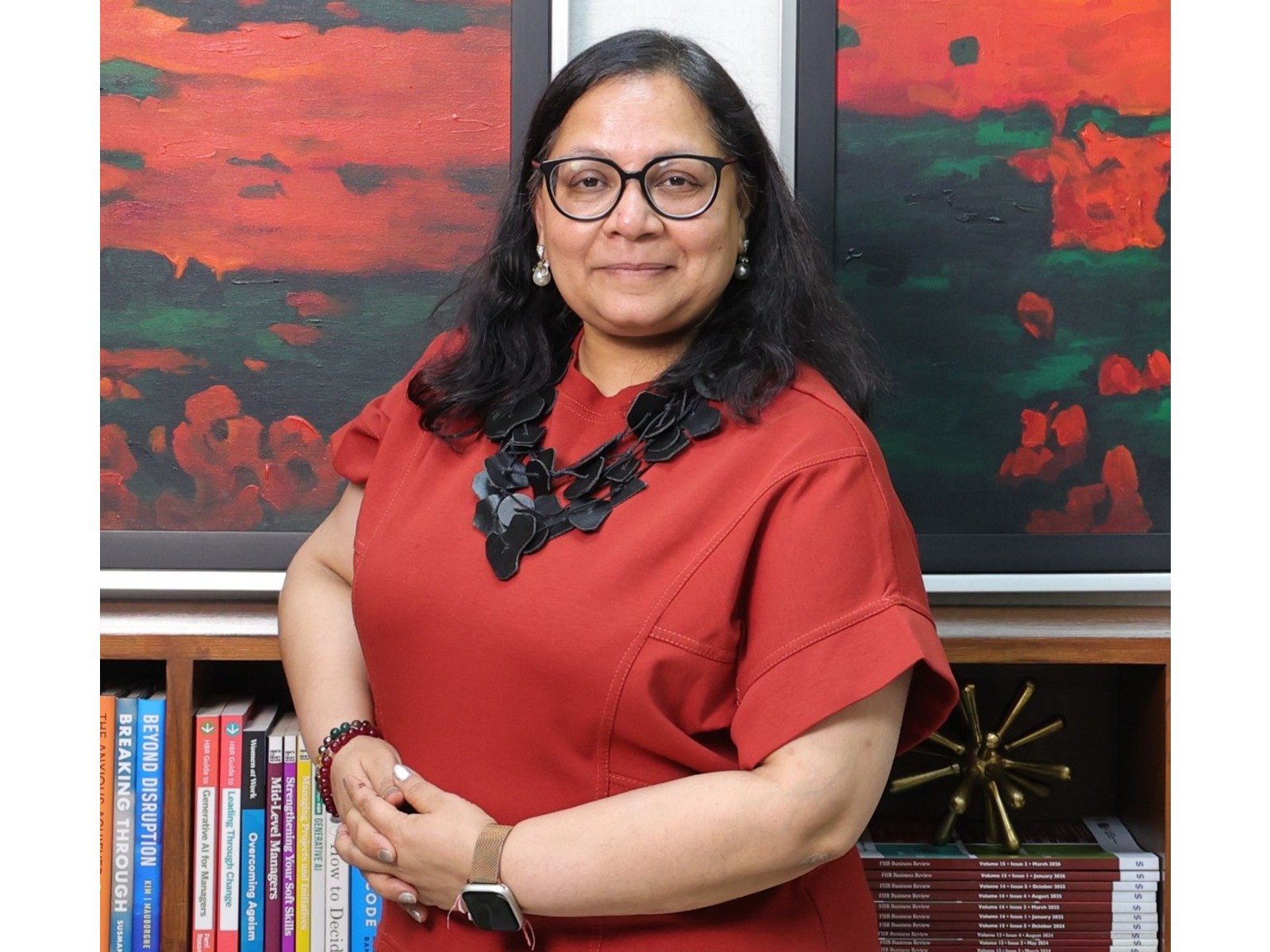
Exclusive Interview: Prof. Radhika Shrivastava on Reimagining Management Education for 2030
As artificial intelligence (AI) forces a rethink on the value offered by a MBA degree, Delhi-based Fortune Institute of International Business (FIIB) (estb.1995) believes the answer lies in pairing technology with human judgement. FIIB, featured in EducationWorld’s top private B-School rankings, runs its AI curriculum via FIIBX, its AI-native learning framework, while corporate mentoring, social internships and international research partnerships aim to keep classroom learning close to ground realities.
Leading this agenda is Radhika Shrivastava, president & CEO, FIIB who has headed the institute since 2009. An MBA alumna of IIM Bangalore, she spent more than nine years with the International Finance Corporation in Washington, DC, before moving into education. Speaking to Dipta Joshi from EducationWorld, she discusses the institute’s latest offering, the FIIB2030 programme launched this July.
There is increasing debate about the value of an MBA degree today as artificial intelligence (AI) becomes more prevalent in every field. Comment.
The value of an MBA has never been limited to acquiring information. In an age where information is increasingly accessible through technology, its true purpose becomes even more relevant.
AI can generate answers, but leadership still requires judgment. Organisations need professionals who can interpret context, navigate uncertainty, manage people, think strategically, and make ethical decisions.
In many ways, the rise of AI increases the importance of management education because professionals must learn how to leverage technology while understanding its broader business and societal implications. The institutions that will remain relevant are those that continuously evolve their curriculum and learning models while preserving the core purpose of management education: developing capable and responsible leaders.
What key skills are employers looking for when they hire MBA graduates today?
While technical expertise remains important, employers today are increasingly looking for adaptability, digital fluency, critical thinking, and the ability to work effectively alongside technologies such as AI. While earlier AI literacy was largely confined to technology roles, today every manager is expected to understand how data, automation, and AI influence business decisions. Another significant shift is the growing importance of data literacy. Professionals across functions are expected to interpret information, make evidence-based decisions, and navigate ambiguity with confidence.
Interestingly, as technology becomes more powerful, distinctly human capabilities such as creativity, empathy, ethical judgment, collaboration, and leadership have become even more valuable. The future workforce will require a combination of technological awareness and human-centred skills rather than one at the expense of the other.
How does FIIB balance academic rigour with industry relevance in an AI-driven environment?
We do not believe AI should sit in a single elective course. It should influence how students learn, solve problems, and make decisions across disciplines. At FIIB, AI is integrated across the curriculum, with over 90 percent of our courses incorporating analytics-driven projects and practical applications. Students have access to personalised AI tutors, while FIIBX, our AI-native educational framework, is helping redesign learning around capabilities, career pathways, and real-world problem-solving.
At the same time, we remain deeply committed to academic rigor. Technology can support learning, but it cannot replace critical thinking, judgment, ethics, and leadership. Our role is to ensure students graduate with both strong managerial foundations and the technological fluency required to thrive in an AI-driven economy. This is why we introduced the FIIB2030 programme.
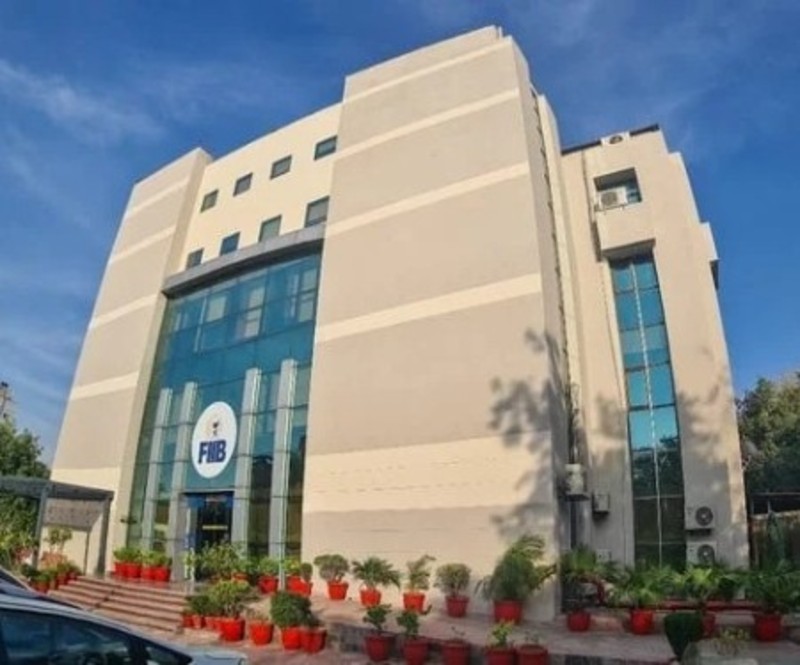
What is the ‘FIIB2030’ programme and how is it different from your other programmes?
FIIB2030 is our roadmap for ensuring that management education remains relevant in a world being reshaped by AI, sustainability imperatives, and changing workforce expectations. The strategy is built around six priorities: excellence in teaching and research, market-relevant programmes, student success, infrastructure enhancement, outreach and engagement, and institutional capacity development.
What makes FIIB2030 distinctive is its focus on impact. Whether through stronger industry partnerships, global research collaborations, AI-enabled learning, sustainable infrastructure, or community engagement, every initiative is designed to improve student outcomes and societal relevance. Ultimately, our goal is not just to prepare students for jobs, but to develop leaders who can think critically, adapt continuously, and create meaningful impact in an increasingly complex world.
MBA programmes today go beyond the ‘traditional internship’ to ensure their students experience deeper interaction opportunities with the industry. Does FIIB also offer such prospects?
Every FIIB student completes multiple internships and corporate projects before graduation, but industry engagement begins much earlier.
More than one-third of our courses include live projects, fieldwork, certifications, or industry-linked assignments. Students regularly engage with business leaders through corporate mentoring, leadership talks, consulting assignments, industry visits, and experiential learning opportunities.
One of our most impactful initiatives is the corporate mentoring programme, where students work on real business challenges under the guidance of experienced professionals from organisations across our extensive corporate network. These engagements allow students to apply classroom concepts to real-world situations while receiving direct industry feedback.
Our objective is simple: students should not wait until graduation to understand industry expectations; they should experience them throughout their learning journey.
What role should business schools play in addressing challenges such as climate change, inequality, and inclusive growth?
I believe business schools have a responsibility that extends beyond preparing students for corporate careers. They must help shape leaders who understand the broader social, environmental, and economic implications of business decisions. Challenges such as climate change, inequality, and inclusive growth are no longer peripheral issues. They are increasingly central to business strategy, investment decisions, risk management, and organisational sustainability.
At FIIB, this commitment is reflected in our work around the Sustainable Development Goals featured on Haub Business School Dashboard for 400+ UNSDG related activities, a PRME champion for responsible management education, and partnerships with social sector organisations. Students need to understand that long-term business success and societal well-being are deeply interconnected. The future will require leaders who can create economic value while contributing positively to people and the planet.
Further, these values become meaningful only when students experience them in action and thus, we have a Social Internship Programme, through which students work directly with social sector organisations to address real community challenges.
Over the years, our students have completed more than 1,300 social internships, contributing to projects that create measurable social impact while developing empathy, leadership, and problem-solving skills. This is complemented by partnerships with over 50+ social sector organisations, village development initiatives under Unnat Bharat Abhiyan, digital literacy programmes, and a range of student-led activities focused on inclusion and sustainability.
Also read: Focus shifts from degrees to skills in entry-level hiring: Gi Group report









Add comment