






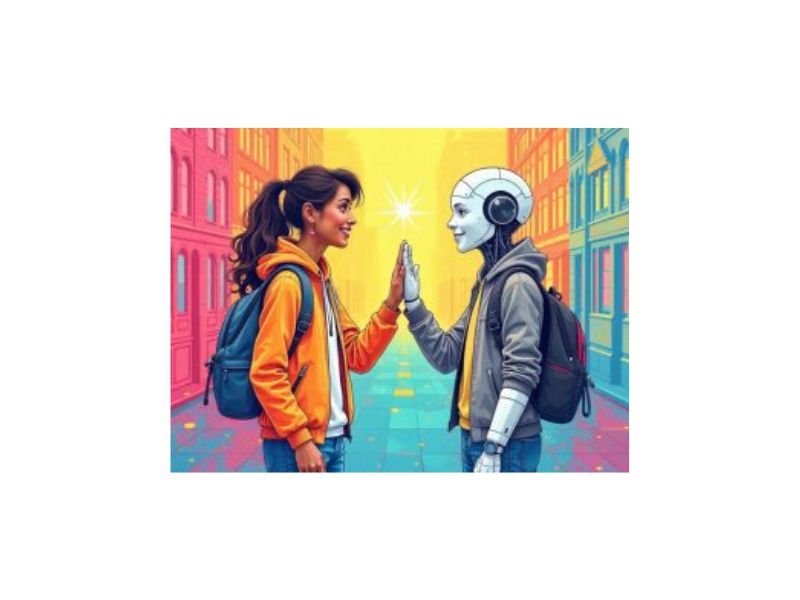
AI will enhance learning
– Dr. Kiran D C, Associate Professor, School of Computational and Data Sciences, Vidyashilp University
Generation Z has grown up in an age of smartphones, streaming platforms and instant recommendations. Quick, adaptive and personalisation-driven, they expect learning to be interactive, visual and relevant qualities that align seamlessly with the potential of artificial intelligence (AI).
Walk into a modern classroom today, and you’ll see students collaborating on AI-powered platforms, exploring challenges that go far beyond textbooks. Compared to the era of heavy backpacks and static learning, today’s education landscape is dynamic and responsive, reflecting the rhythm of Gen Z learners.
For decades, textbooks defined learning—teachers lectured, students memorised, and exams tested recall. The arrival of the internet revolutionised this model, making knowledge global and accessible. However, while students gained independence, they also faced challenges like information overload and inconsistent quality.
Generation Z learners value personalisation, relevance and interactivity. They prefer collaborative, problem-based learning over passive listening. They constantly ask, “Why does this matter, and how can I apply it?” – a question that demands classrooms designed around engagement and application.
The Evolving Role of Faculty: Today’s educators are no longer just content experts; they are learning designers and mentors. At Vidyashilp University, faculty integrate AI-powered platforms to adapt lessons to individual needs, encourage critical evaluation of AI outputs, and foster creativity through collaborative projects. The goal is not to compete with AI but to guide students in using it wisely.
The teaching of Object-Oriented Programming Systems (OOPS) at Vidyashilp University goes beyond coding. Students identify real-world problems – such as streamlining campus services or managing hostels – and design solutions using OOPS principles.
AI tools support this process by generating diagrams, testing designs and simulating user interactions. Yet, the core thinking – problem identification, structural design and ensuring data authenticity—remains human-led. This approach transforms OOPS into a platform for applying concepts responsibly to real challenges.
AI as a Learning Partner: AI is reshaping how students prepare for competitions, projects and presentations. Generative tools help structure ideas, simulate jury questions and provide feedback on delivery. In hackathons, AI expands students’ perspectives by revealing global case studies and alternative solutions, fostering deeper and more creative thinking.
AI has revolutionised how ideas are presented. Static slides are being replaced by AI-generated infographics, animations and visualisations that bring complex concepts to life – making learning not just informative but memorable.
AI also enhances emotional learning experiences. Students can ask questions privately, receive personalised feedback and gain confidence. While issues such as plagiarism and over-reliance persist, these are opportunities to teach responsible and ethical AI use rather than reasons to avoid it.
Looking Ahead: In the years ahead, classrooms may feature AI tutors, immersive augmented-reality environments and adaptive assessments. Yet, the essence of education – human connection – will remain central. The evolution from textbooks to AI-driven learning marks a shift from static knowledge to personalised discovery. For Gen Z, the most effective classrooms are those where technology and teachers work together. AI does not replace educators; it empowers them to inspire curiosity, creativity and lifelong learning.
Also Read: Online Degrees Now on Par with Traditional Education









Add comment