






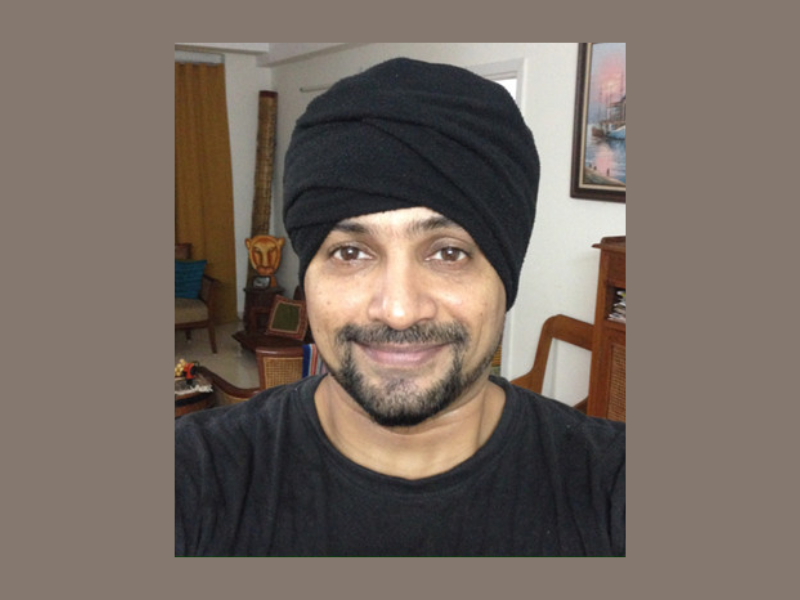
Getting children READY
– Naveen Mahesh, Co-founder, Beyond 8
Every discipline has a unit of measurement. Electricity has the ohm. Physics has the quantum. Education, too, must have a fundamental unit. Let us call it “Ready.” Not ready for an exam. Ready for life.
A student who is Ready can learn independently, communicate clearly, recover from failure, work with others, make decisions under uncertainty, and apply knowledge beyond the classroom. Marks contribute to being Ready, but they are only one part of it.
For decades, our high school system has treated marks as the dominant signal of success. And to be fair, marks matter. They reflect discipline, preparation, and subject mastery. They open doors to higher education. They cannot be dismissed.
But they are not the whole story.
If you are a parent reading this, pause for a moment. Were you a school topper? Many professionals today were not. Some were average students. Some struggled in specific subjects. Yet they went on to build meaningful and successful careers.
Part of that story belongs to India’s economic expansion. New industries emerged. Opportunities widened. But another part of that story lies deeper. They succeeded because they learned how to become Ready. They adapted. They learned on the job. They communicated. They built relationships. They handled setbacks. None of those qualities appeared on their report cards.
Today’s teenagers are stepping into a more competitive and unpredictable world. The margin for error is thinner. The safety net of rapid economic expansion is not as forgiving. If previous generations could grow into success by becoming Ready over time, this generation must begin building that readiness earlier and more deliberately. Which means our definition of high school success must expand.
After middle school, something subtle shifts. Curiosity narrows into caution. Exploration gives way to “What will come in the boards?” Learning becomes about performance in a three-hour window.
But the real world does not function in three-hour windows. It demands collaboration across personalities. It demands ethical judgment without answer keys. It demands problem-solving when variables are unclear. It demands resilience when effort does not immediately translate into reward.
Boards test knowledge. Life tests application.
To build Ready, teenagers need exposure beyond textbooks. They need internships, projects, community engagement, and industry interactions. They need structured reflection to understand their strengths and motivations. They need opportunities to speak, present, debate, lead, and sometimes fail safely.
They also need ownership. When learning feels imposed, effort becomes compliance. When learning feels chosen, effort becomes investment. Students who see purpose in their work often perform well in exams too — not because of pressure, but because of alignment.
Marks increase readiness. But marks alone do not define it.
Perhaps the more useful question for families and schools is not simply, “What did the student score?” but “Is the student getting Ready?”
Ready to think independently.
Ready to adapt.
Ready to build.
Ready to stand on their own.
Boards will continue to matter. Credentials will continue to open doors. But if we mistake the milestone for the destination, we limit our children at the very moment they are capable of expanding.
Education deserves its own unit of measurement. Let that unit be Ready.
Also Read: Why simulation-based training is becoming essential in India’s medical colleges









Add comment