






India’s Most Admired Government Autonomous Colleges 2026-27
Though the overwhelming majority of the 1,788 undergrad colleges granted autonomous status by UGC are privately promoted, a small number (234) of colleges established by state governments have also met the qualifying standards set by UGC
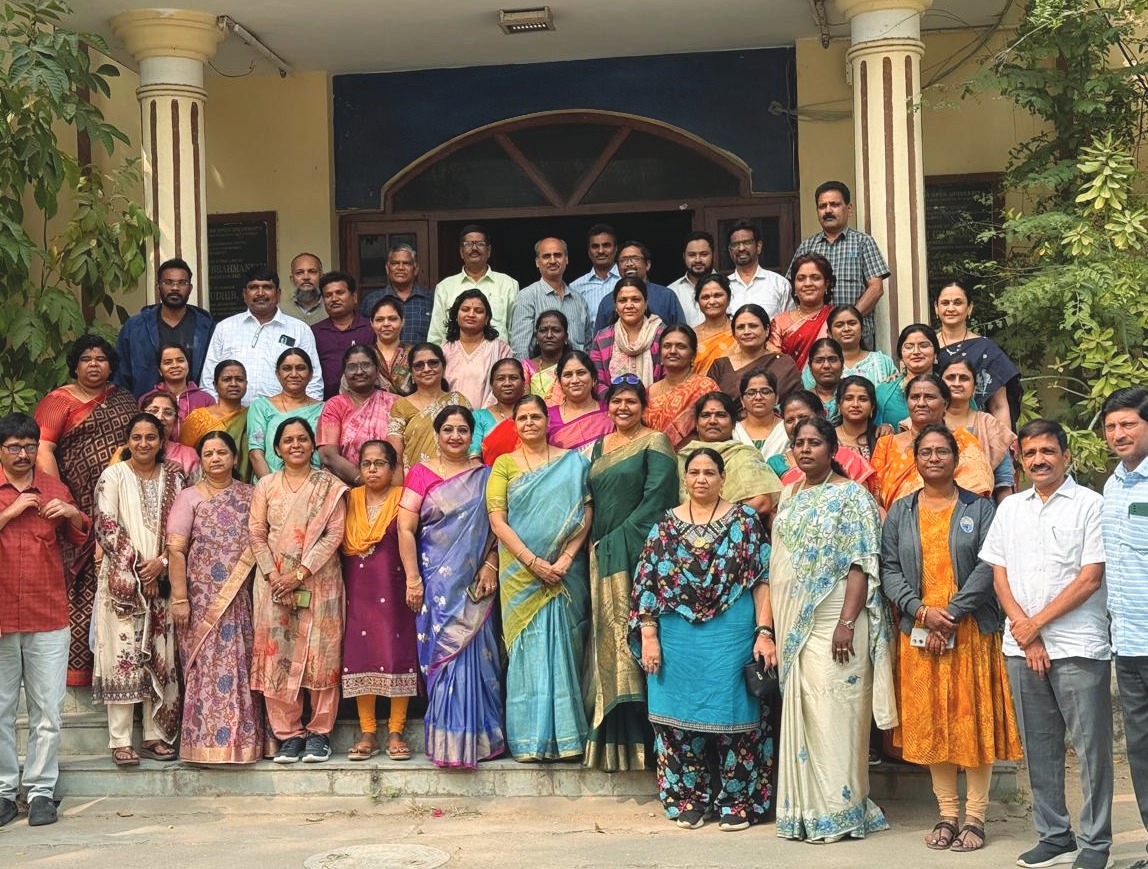
GDCW, Begumpet’s Dr. Padmavathi (centre): #1 third consecutive year
Of the 1,788 undergraduate colleges (out of 53,000) granted autonomous status by the Delhi-based University Grants Commission (UGC), the overwhelming majority — 1,554 — are privately promoted. Private colleges awarded autonomous status include high-profile institutions such as St. Xavier’s College, Mumbai and Kolkata, St. Joseph’s and Mount Carmel, Bengaluru, Narsee Monjee and Mithibai colleges, Mumbai and Loyola College, Chennai, among others (see p.46). However, a small number (234) of colleges established by state governments have also met the qualifying standards set by UGC.
These 234 state government autonomous colleges have been awarded an ‘A’ grade or higher by the National Assessment and Accreditation Council (NAAC), accreditation for a minimum of three programmes from the National Board of Accreditation (NBA), or an equivalent rating from a UGC-approved accrediting agency. While admittedly there’s a quality difference between private and government autonomous colleges — evident in the total scores awarded by this year’s sample respondents to top-ranked colleges in the two categories — the latter serve the important social purpose of advancing equity in higher education by providing heavily subsidised undergraduate education to students from low-income households.
Therefore, to acknowledge their nation-building role and encourage them to improve and excel, since 2021, in the annual EW India Higher Education Rankings, when Arts, Science and Commerce (ASC) colleges were segregated into autonomous and non-autonomous categories, government autonomous colleges are also ranked and assessed separately inter se.
To compile this year’s rankings of India’s Top Government Autonomous ASC Colleges, field representatives of the Bengaluru-based AZ Research Partners Pvt. Ltd interviewed 2,175 sample respondents comprising college/university faculty, college students, and industry representatives and persuaded them to rate sufficiently well-known colleges on six parameters of tertiary education excellence, viz, competence of faculty, faculty welfare and development, curriculum and pedagogy, career readiness/placement record, infrastructure and quality of leadership/governance. Low-profile institutions rated by less than 25 respondents are not ranked.
In the 2026-27 league table of India’s best government autonomous colleges, there’s no change at the top. Government Degree College for Women (GDCW), Begumpet, Hyderabad (estb.1971) has maintained its #1 rank for a record third consecutive year with highest scores under three of the six parameters of collegiate education excellence — faculty welfare and development, curriculum and pedagogy and leadership/governance quality. Presidency College, Chennai is again ranked #2, Maharaja’s College, Kochi, Ernakulam #3, and Maharani’s Science College for Women, Mysuru #4. The only disruption in top table is promotion of the Government Holkar (Model Autonomous) Science College, Indore, to #5 (#6 in 2025-26) ranked jointly with the Meenakshi Government Arts College for Women, Madurai (5).
Dr. K. Padmavathi, an alumna of Osmania University who has served as head of several government colleges in the state and is the incumbent Director of GDCW, Begumpet, is “delighted” that GDWC is ranked India’s #1 government autonomous college for the third year consecutively.
“It’s also very encouraging that we have been awarded highest score under the parameters of faculty welfare and development and curriculum and pedagogy, and high scores for career readiness and placements. This is because we conduct regular in-house professional development programs for our 115 faculty, focusing on AI integration, Indian Knowledge Systems, e-governance and other contemporary best practices. Our faculty are given incentives for research publications, patents, conference participation, and funded research projects. Faculty welfare and development is an important priority to prepare our 4,813 women students, 70 percent of whom are from disadvantaged socio-economic households and first-generation learners, to be job-ready. Moreover, for the same reason we regularly update our curricula, have established Centres of Excellence in collaboration with industry and business organisations such as the Telangana We-Hub, EduNet, and TNS India Foundation, and launched programmes such as ‘AI Careers for Women’ to support students’ skill-building and future-readiness,” says Dr. Padmavathi.
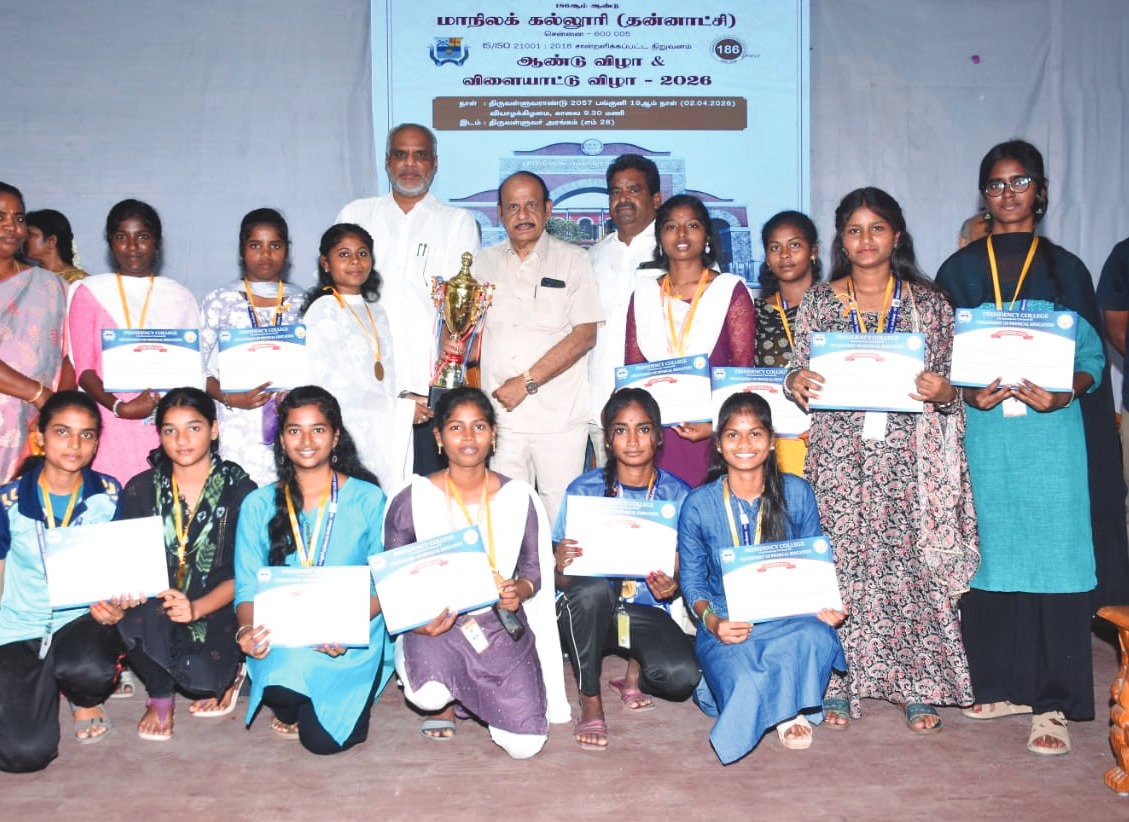
Presidency, Chennai’s Dr. Raman (centre left): 100,000 applications for 2,300 seats
Dr. R. Raman, Principal of Presidency College, Chennai (estb.1840), is also pleased that the 186-year-old college has retained its India #2 rank with highest scores under the parameters of career readiness/placement and infrastructure. “Though I am disappointed that we have narrowly — by two points — missed #1 rank, it’s gratifying that Presidency College is consistently ranked among India’s very best autonomous government colleges. We are one of the country’s oldest government colleges with a legacy of over a century of academic excellence. We receive over 1 lakh admission applications annually for 2,300 undergraduate seats. This is because of widespread awareness of our rigorous academics, continuous assessments, internships, and strong placement support. Over 200 of our faculty have doctorate qualifications and contribute actively to research. Our eight-member placement cell has established strong links with industry and regularly organises skills training programmes with industry support. Currently, we are engaged in enhancing and upgrading our campus infrastructure and will be adding new labs, hostels, and a 2,042-seat auditorium. This explains our highest score under career readiness/placements and infrastructure parameters,” says Raman.
The sole non-peninsular India college ranked in the Top 5 is Government Holkar (Model Autonomous) Science College, Indore. Established in 1891, Government Holkar College has been steadily rising up the league table from #7 in 2023-24 to #6 in 2024-25 and #5 this year. It has been awarded high scores under the parameters of curriculum and pedagogy, infrastructure and leadership/governance quality.
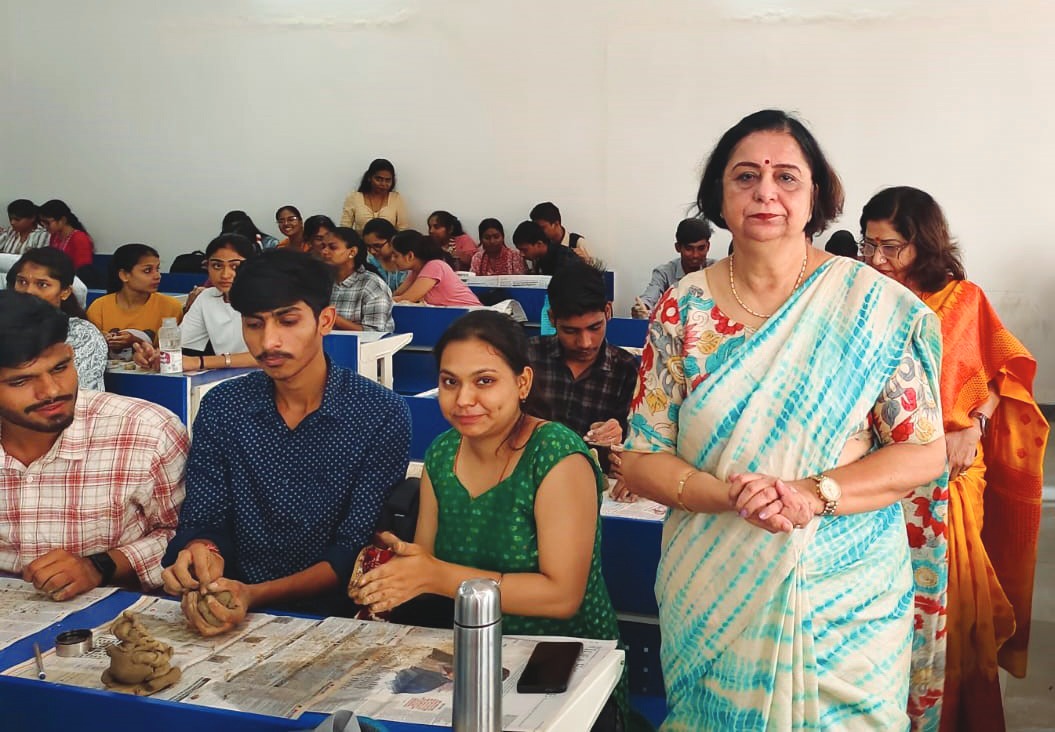
Holkar College, Indore’s Dr. Anamika Jain: model modern autonomous institution
“We are very proud that we are ranked among India’s Top 5 government autonomous colleges. Founded by his High Highness Shivaji Rao Holkar in 1891, the college has successfully transitioned from a traditional seat of learning to a modern, model autonomous institution. While all EW survey evaluation parameters are interconnected and important, we accord the highest value to leadership and governance, which is the precondition of ensuring that excellent standards are maintained across all other parameters. The college management has successfully led the implementation of NEP 2020 to realise the vision of Viksit Bharat — we have integrated Indian Knowledge Systems, 21st-century skills, and sustainability frameworks into our curriculum. We are committed to providing our students a transformative learning environment rooted in societal impact and a scientific temper,” says Dr. Anamika Jain, principal, Government Holkar (Model Autonomous) Science College, which has 13,651 students and 275 faculty on its muster rolls.
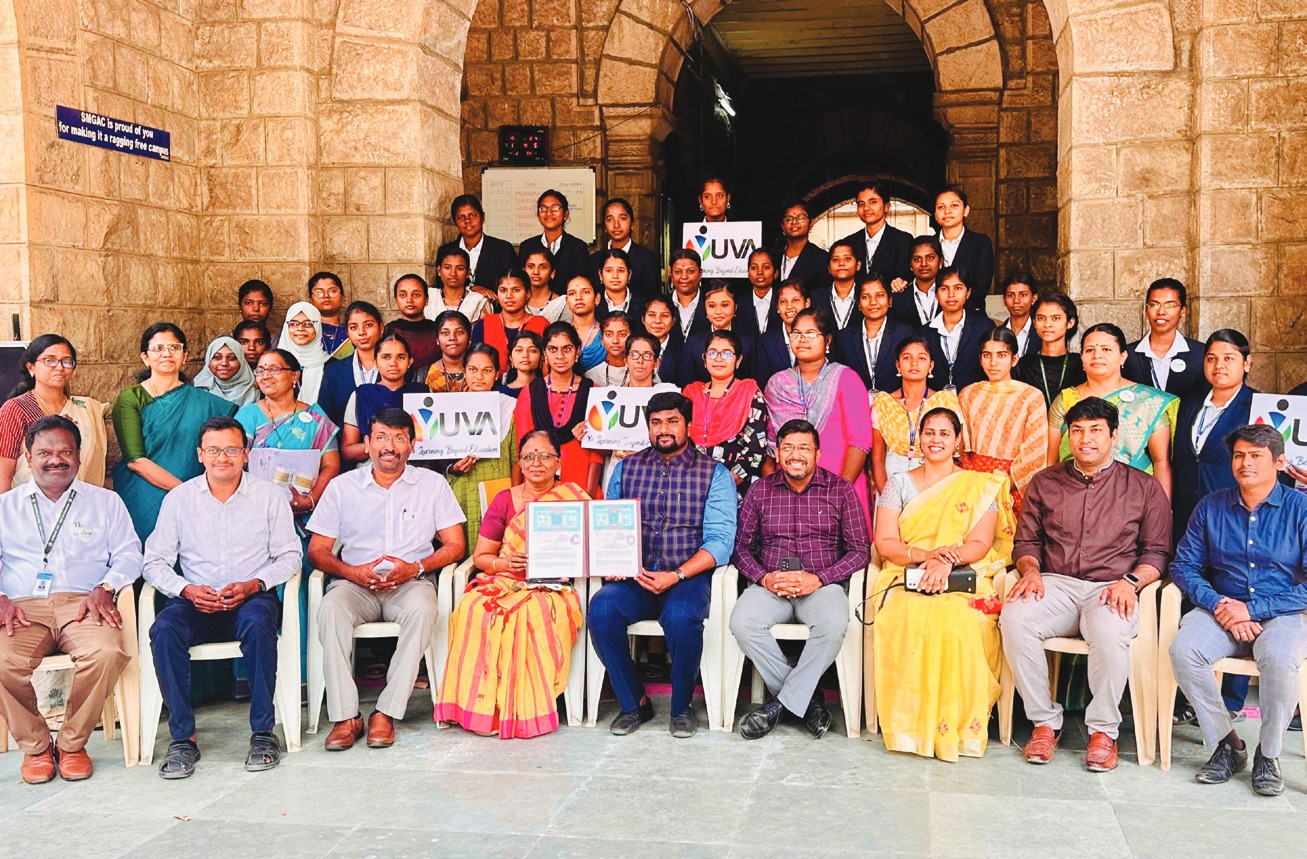
SMGACW, Madurai’s Dr. Vanathi (centre left): high career readiness/placements score
Dr. S. Vanathi, Principal of the Sri Meenakshi Govt Arts College for Women (SMGACW, estb.1965), Madurai, is also satisfied with the college’s consistent Top 5 ranking and good scores under the parameters of career readiness/placement and infrastructure.
“We are honoured to be ranked India #5 for the second consecutive year. SMGACW has earned an excellent reputation for providing inclusive, values-based and job-oriented education, particularly to first-generation women learners. Our top priority is to ensure our students acquire the academic knowledge and skills to be industry-ready and successful in the workplace. Therefore I am especially pleased with our high score under the parameter of career readiness and placements. This is recognition that we have introduced communication skill development programmes, launched a data science course in collaboration with IIT-Madras, established centres in collaboration with industry, such as the HP Centre of Excellence and the ICT Academy, and regularly organise job fairs and provide career guidance support. We have also availed the Central government’s RUSA funds to develop laboratories, hostels, classrooms, and digital resources, which explains our high score under the parameter of infrastructure. A major achievement is our students’ excellent performance in sports and NCC events at the university, national, and international levels, reflecting our all-round education focus,” says Vanathi. Currently, SMGACW has an enrolment of 4,525 students mentored by 203 faculty.
Beyond top table, Smt. Sarladevi Satishchandra Agarwal Government First Grade College, Bellary is ranked #6 (7) followed by the Sarojini Naidu Government Girls PG College, Bhopal at #7 (7), Yuvaraja’s College, Mysuru at #8 (8) and Government College, Anantapur (Andhra Pradesh) at #9 (9). The Top 10 table is completed by Government Thakur Ranmat Singh College, Rewa (MP) which has made a great leap forward from #18 in 2025-26 to the Top 10 table this year.
This year’s 83-strong league table of government autonomous colleges is dominated by institutions nurtured by the governments of Madhya Pradesh, Telangana, Odisha, Karnataka and Tamil Nadu. The populous states of West Bengal, Maharashtra, Gujarat, Bihar, and Uttar Pradesh don’t host sufficiently reputed government autonomous colleges (institutions evaluated by less than 25 sample respondents are eliminated from the EW rankings) for inclusion in the league table of India’s Best Government Autonomous ASC Colleges 2026-27. That’s not a good augury for national development.








Add comment