






India’s Top-Ranked Non-Autonomous ASC Colleges 2026-27
Even though autonomous colleges are widely perceived as the best and first choice of school-leavers signing up for undergrad Arts, Science & Commerce courses, some non-autonomous colleges which teach beyond the prescribed curriculum and have a tradition of high-quality co-curricular and extra-curricular education, are highly venerated
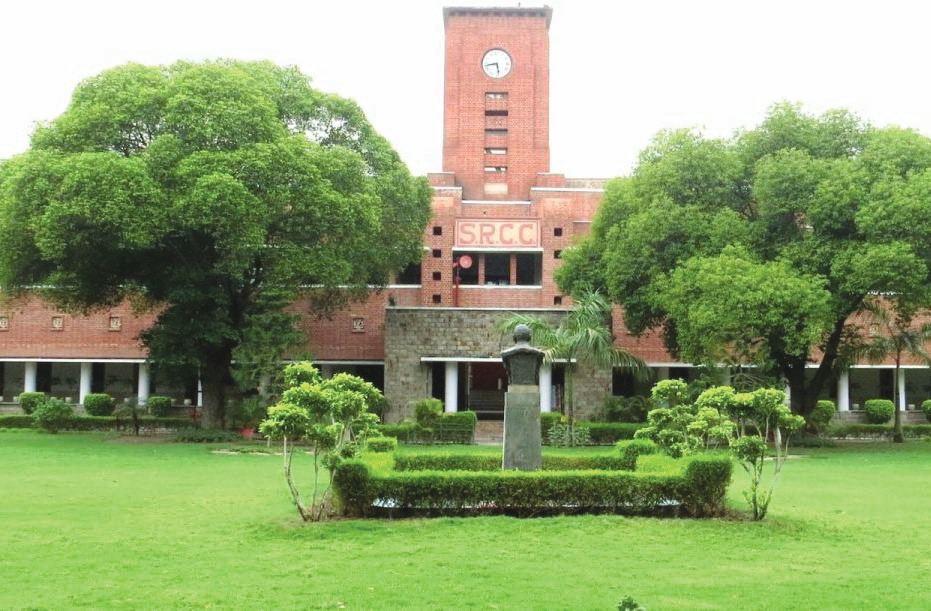
Shri Ram College of Commerce, Delhi: India #1 after long wait
Under the control-and command socialist economic development model ill-advisedly adopted by newly independent India after 1947, higher education was — and remains — strictly controlled by the Central government operating through its agencies — the University Grants Commission (UGC) which governs Arts, Science and Commerce (ASC) higher education institutions (HEIs), and the All India Council for Technical Education (AICTE) which regulates engineering and technology HEIs.
As a concession to well reputed ASC higher education institutions, UGC has awarded a small number of them (1,788) autonomous status, i.e, they can set their own syllabi and administration systems, although the tuition fees they prescribe are governed by state governments because they pay faculty and staff salaries. This is to ensure that in line with socialist ideology, tuition fees are affordable. Indeed, they are too affordable contributing a mere 5 percent of annual institutional expenditure as against the global average of 20 percent.
This has resulted in the massification of higher education with government subsidies for higher education normatively consuming 30-35 percent of the education budgets of the Central and state governments at the expense of public primary-secondary education which is bedeviled with crumbling classrooms, inadequate and ill-trained teachers and almost total deficit of labs, libraries and lavatories. School students routinely promoted upward through the 1 million-strong government school system are deprived of strong foundations to avail the full benefit of higher education. Unsurprisingly, as reported by the State of Working India 2026 of Azim Premji University, Bangalore, 40 percent of graduates of India’s HEIs are unemployed for 12 months or more.
Control and command of HEIs has resulted in the vast majority of ASC undergraduate colleges countrywide being classified as ‘non-autonomous’. Even though autonomous colleges are widely perceived to be the best and first choice of school-leavers signing up for ASC courses, under the country’s complex higher education system some non-autonomous colleges — which despite being tied to the apron-strings of their affiliating universities teach beyond the prescribed curriculum and have a tradition of high-quality co-curricular and extra-curricular education — are highly venerated. Indeed, the ‘cut-offs’ demanded by some non-autonomous ASC colleges affiliated with Delhi University (St. Sephen’s, Shri Ram College of Commerce among others) are higher than of top-ranked autonomous ASC colleges. Like I said, it’s a complex higher education system.
In this year’s EW league table of India’s most respected non-autonomous ASC colleges, the perennially second ranked Shri Ram College of Commerce, Delhi (SRCC) has ended the decades-long run at the top of St. Stephen’s College, Delhi. With top scores under the parameters of faculty competence, curriculum & pedagogy and infrastructure, SRCC has bested St. Stephen’s by a single point. SRCC and St. Stephen’s are seated at top table with six Delhi colleges – Lady Shri Ram at #3, Hindu College #4, Miranda House #5, Sri Venkateswara College promoted to #6 (from #8 in 2025-26), Maitreyi College awarded a big promotion to #7 (11) and Hansraj #8 (7) — all affiliated with Delhi University which presides over 90 affiliated colleges. Evidently, there is a national perception that undergrad colleges affiliated with Delhi University sited in the national capital right under the nose of national leaders, receive preferential treatment and provide superior higher education at rock-bottom price. Hence the high cut-offs demanded by Delhi’s prized undergrad institutions.
The Top 10 table is completed by the Barrackpore Rastraguru Surendranth College, Kolkata #8 (9); S.K. Somaiya College of Arts & Science, Mumbai #9 (13); Jesus & Mary College, Delhi (9) and Kirori Mal, Delhi (6) jointly ranked #10 — further testimony of the dominance of Delhi University colleges in the EW 2026-27 league table of ASC colleges.
Evidently, Prof. Simrit Kaur, principal of this year’s top-ranked Shri Ram College of Commerce is so immersed in deep scholarship or invested with poor life skills — take your pick — that despite a rain of email and telephone messages to celebrate SRCC’s historic promotion to India’s #1 ASC college, she failed to respond to a brief emailed questionnaire or requests for a telephonic interview to share the secret of SRCC’s success. This despite her impressive profile on the college’s website proclaiming that she has a Masters in economics and Ph D from unspecified universities and is a Visiting Professor at Ho Chi Minh City, Vietnam and Kingston University, London. Nevertheless, she preferred to pass up the chance of advertising — free-of-charge — her college and her own leadership mantra in the country’s premier education magazine. Hmm…
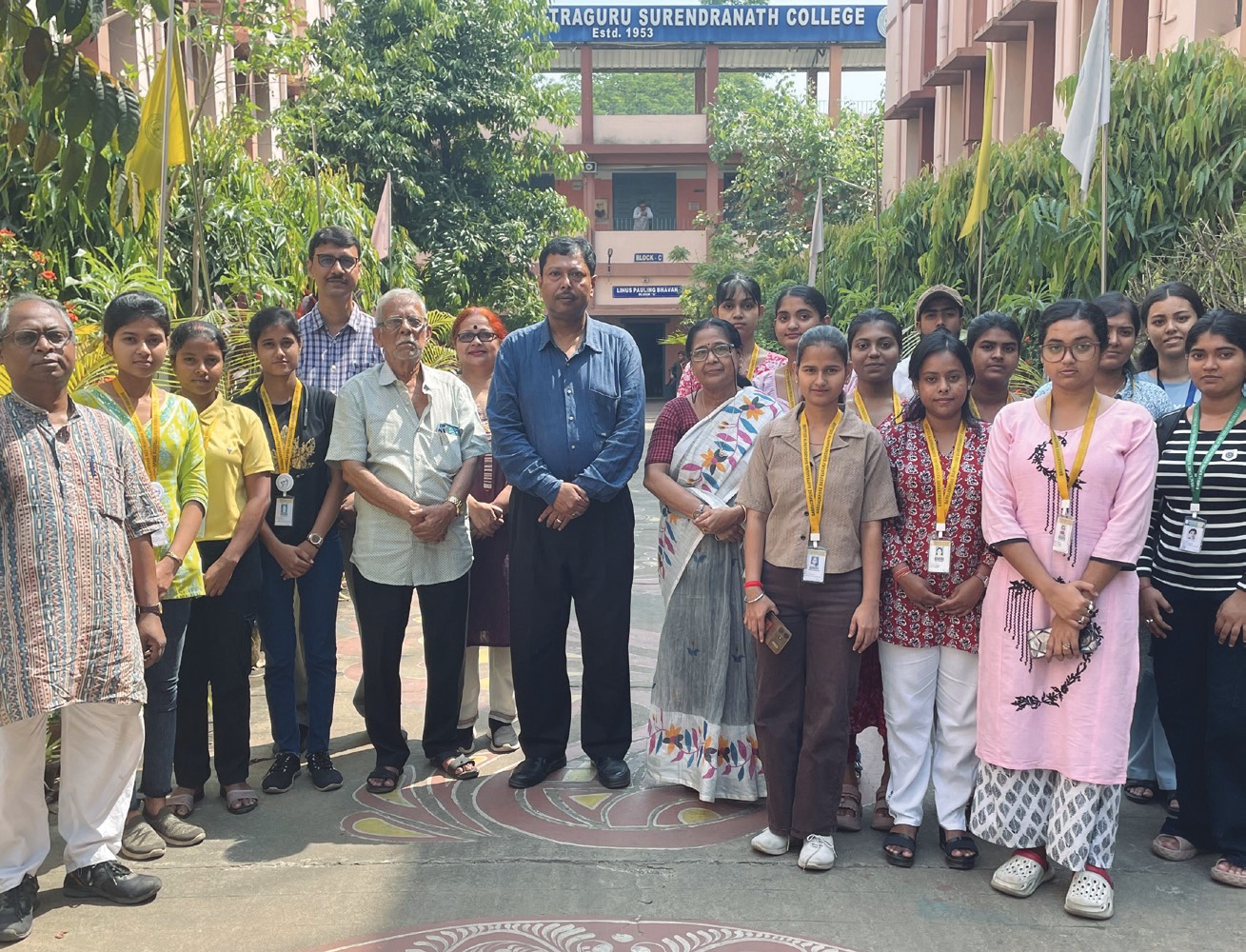
BRSC, Kolkata’s Dr. Monojit Ray (centre): renewed confidence
However, Dr. Monojit Ray, principal of the Barrackpore Rastraguru Surendranath College, Kolkata — India’s top-ranked non-Delhi non-autonomous ASC college — had no hesitation about sharing the secrets of this vintage (estb.1953) institution’s success in a difficult environment.
“We are exhilarated by our promotion to India #8 and consolidation of our West Bengal #1 ranking. This has instilled a sentiment of confidence in our faculty to take on new challenges and opportunities. In particular, we are delighted with our high scores under the parameters of faculty competence and career readiness. This is proof that our always-learning faculty is succeeding in making our students future-ready by equipping them with the ability to think critically, communicate efficiently, and making them aware of the value of teamwork and professionalism. In this regard, we are doing our best to ensure they learn through internships, field trips, extension activities and co-curricular avocations,” says Ray, an alum of the Ramakrishna Mission Vivekananda Central College and Western Calcutta University who served a long stint as faculty with the Navdeep Vidya Sagar College, Kolkata (1999-2016) prior to being appointed principal of BRSC. Currently, this West Bengal’s #1 non-autonomous ASC college has 4,281 students mentored by 143 faculty.
Likewise, Dr. Purushottam Wadje, an English and economics alum of Pune and Kolhapur universities who was appointed Principal of the S.K. Somaiya College of Arts, Science & Commerce, Mumbai (SKSCASC) in 2023, is delighted with the college’s promotion from #13 in 2025-26 to Top 10 (#9) this year.
“We are deeply honoured by this recognition, especially being Maharashtra #1 among non-autonomous ASC colleges. It is public recognition of our continuous effort to provide quality education, develop critical thinking, and nurture socially responsible graduates. It’s great motivation to take the lead to strengthen Maharashtra’s higher education ecosystem. As per the mandate of NEP 2020, we are actively preparing for greater academic autonomy in a phased and sustainable manner,” says Wadje.
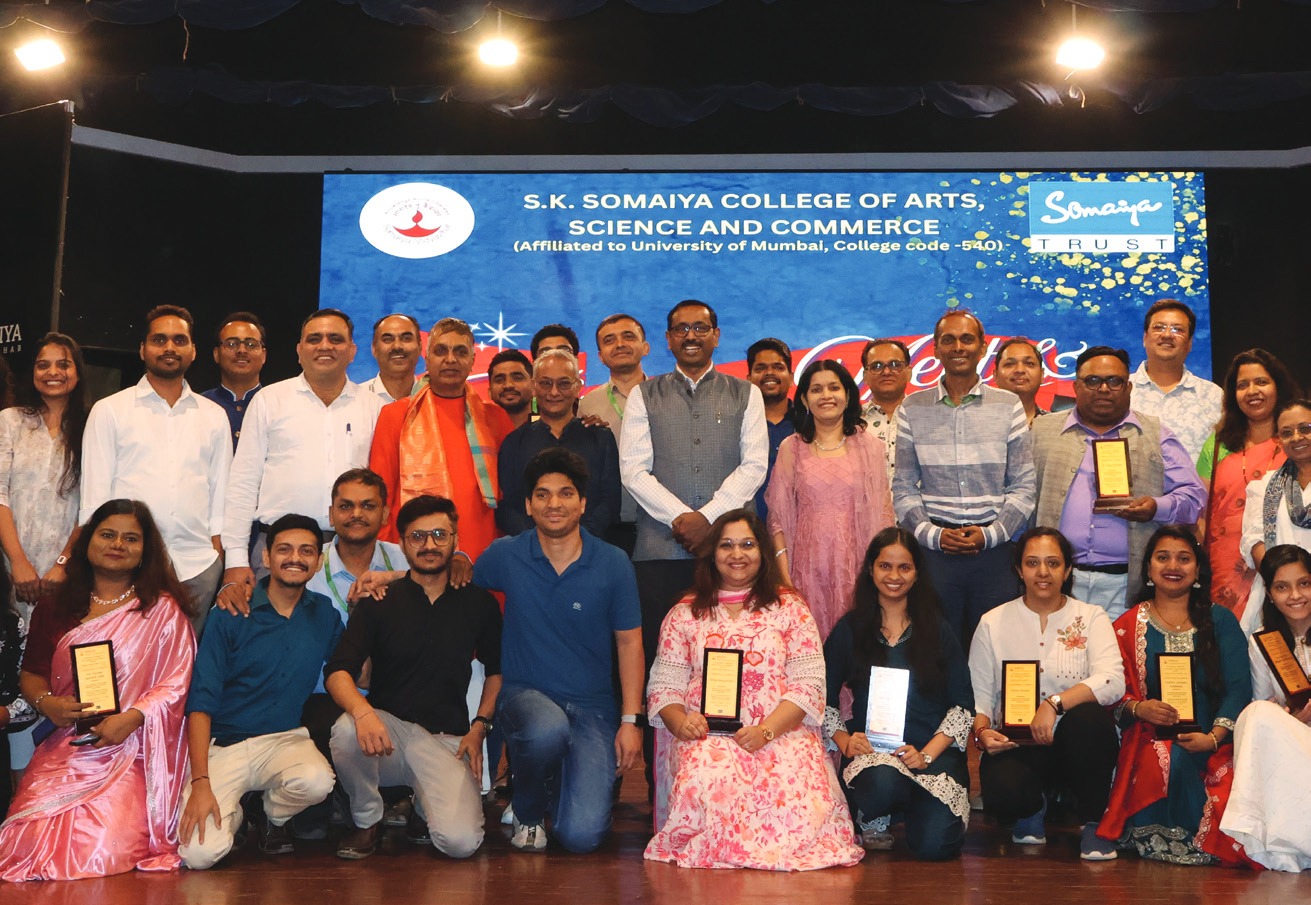
SKSCASC, Mumbai’s Dr. Purushottam Wadje (centre): industry-linked curricula
In particular, Wadje is pleased with the high above-rank score awarded to SKSCASC under the parameter of career readiness. “I am well aware of the countrywide problem of unemployed graduates. In SKSCASC, we address this problem through industry-linked curricula, internships, skill development initiatives, and career readiness programs to prepare our students for a rapidly changing jobs market. Our focus is on encouraging faculty to engage with industry through internships and live projects, and by systematically involving trained industry professionals within the academic framework. The objective is to ensure that students acquire conceptual clarity and hands-on experience.This balanced approach not only enhances leadership capabilities but, more importantly, enables us to consistently develop graduates who are confident and competent,” adds Wadje.
Beyond the Top 10, several undergrad ASC colleges have made spectacular advances into the EW Top 20 league table of India’s most admired non-autonomous Arts, Science and Commerce Colleges 2026-27 league table. Among them: Lady Brabourne College, Kolkata promoted to #15 (from #32 in 2025-26); PCM SD College for Women, Jalandhar #16 (25); Ghanshyamdas Saraf College, Mumbai #17 (29); Rosary College of Commerce & Arts, Goa #19 (30); Ayurvedic & Unani Tibbia College, Delhi #19 (23); Seshadripuram College, Bengaluru #20 (26) and Sunbeam Women’s College, Varanasi #20 (34).
An additional feature of the annual EWIHER is that for purposes of comparison, we also provide the NIRF — National Institutional Rankings Framework — rankings of the Union education ministry. Readers are invited to note the huge difference in the EWIHER and NIRF rankings bearing in mind that the latter are based upon self-submitted data of HEIs which are seldom audited. Your editors have often commented on the opacity and self-evident anti-private institutions prejudice in the NIRF rankings. Nevertheless, readers enamoured of official rankings are also provided an option to note NIRF rankings.
Moreover, it’s also important to note that non-autonomous, i.e. government controlled colleges, that are often modestly ranked in the national table may well be heavyweights in their host states some of whom are as large and populous as most European countries. Therefore as noted above the S.K. Somaiya Arts & Science College, Mumbai which is ranked #9 in India is #1 in Maharashtra (pop.129 million). Similarly, Bishop Cotton Women’s College, Bengaluru, India #13 is #1 in Karnataka (pop.68.5 million); Arya Mahila PG College, Varanasi ranked India #16 is #1 in Uttar Pradesh (pop.241 million) and Sunbeam Women’s College, Varanasi, India #20 is #2 in UP.
Readers should also note that we have ranked a mere 121 of the country’s most well-reputed of the country’s 51,000 non-autonomous colleges. There may well be some islands of academic excellence that we have inadvertently omitted. If so please draw our attention to them and/or request them to complete and submit the nomination form on our website (www.educationworld.in).
A last word of caution to India’s youth. The days when a mere college/university degree was sufficient qualification for employment are gone. Therefore, school-leavers should choose undergrad colleges after due care and diligence. And even after admission, should apply themselves earnestly in the quest for new knowledge creation and application. The daunting statistic that 40 percent of graduates entering the country’s increasingly complex and rapidly changing jobs market are unemployed for over 12 months is a warning that real, self-driven academic and life skills learning must happen in India’s best colleges and universities.
An additional feature of the annual EWIHER is that for purposes of comparison, we also provide NIRF rankings of the Union education ministry









Add comment