






India’s Top 250 Private Engineering Colleges 2026-27
A significant proportion of graduates certified by India’s 5,868 engineering colleges enter the jobs market without adequate industry skills. Therefore, it’s important for school leavers aspiring for technical higher education to carefully choose the most suitable engineering colleges providing latter-day complex workplace skills
India’s 5,868 engineering colleges and universities certify and graduate 1.5 million young hopefuls annually — one of the largest cohorts of technical talent in the world. Yet, a significant proportion of these certified graduates enter the jobs market without the skills industry needs. According to the Unstop Graduate Employment Report 2025, 83 percent of engineering graduates leave college without a job or internship offer. A more recent 2026 report of the Delhi-based recruitment firm Aspiring Minds found that while 92 percent of India’s engineering students can correctly explain technical concepts in MCQ format, only 38 percent could partially write the relevant software code, and a mere 4.4 percent could produce a fully working, efficient software program.
The alarming unemployability of India’s engineering graduates apart, the gap between engineering education and workplace readiness explains why the country’s 5,868 engineering colleges and universities have failed to produce any globally game-changing product/service such as the internet or smartphone. It also explains the pathetic condition of the country’s public infrastructure including roads, bridges, railways, etc which is neither robustly built nor maintained.
Against this backdrop, the annual EducationWorld pan-India engineering institutions rankings league tables were introduced way back in 2013 to enable school-leavers aspiring for engineering education to carefully choose the most suitable engineering colleges/universities. Initially, the EW league tables included and ranked the Central-government promoted Indian Institutes of Technology (IITs) and National Institutes of Technology (NITs). But in 2016, your editors resolved to exclude IITs and NITs because these institutions not only routinely top all media league tables, but also because they admit a mere 2 percent of the 1.4 million class XII graduates who write the annual IIT Joint Entrance Exam.
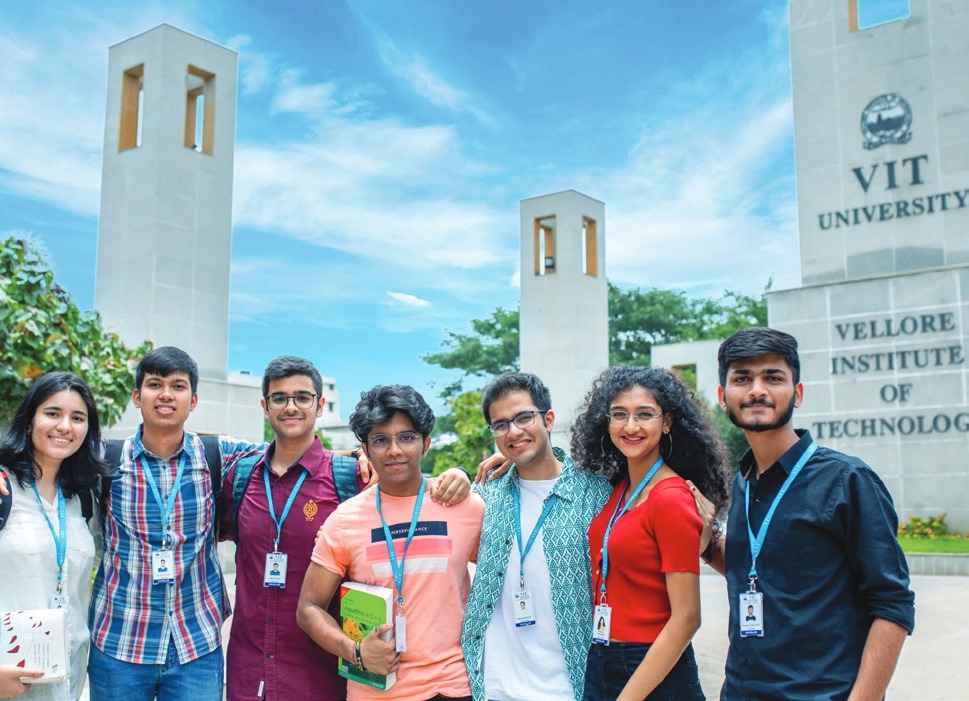
Vellore Institute of Technology students: free publicity loss
Therefore, in our EW survey of India’s best engineering colleges (and universities), we focus upon evaluating the best among private engineering and technology education institutes to enable 98 percent of students who don’t make the cut into IITs/NITs to choose the most locationally and aptitudinally suitable non-government engineering colleges, some of whom are closing the IITs/NITs versus rest gap.
To compile the 2026-27 EW league table of India’s best private engineering institutions, the well-known market research company AZ Research Partners Pvt. Ltd, Bengaluru, interviewed 2,175 sample respondents including higher ed faculty, college students and industry representatives countrywide. The sample respondents were persuaded to rate engineering institutes/colleges (of whom they had sufficient knowledge) on nine parameters of excellence — faculty competence, career readiness/placement, research and innovation, industry interface, value for money, infrastructure, faculty welfare, leadership and governance, and curriculum and pedagogy. The scores awarded by respondents under each parameter were totalled to rank the country’s Top 250 private engineering colleges/institutes inter se.
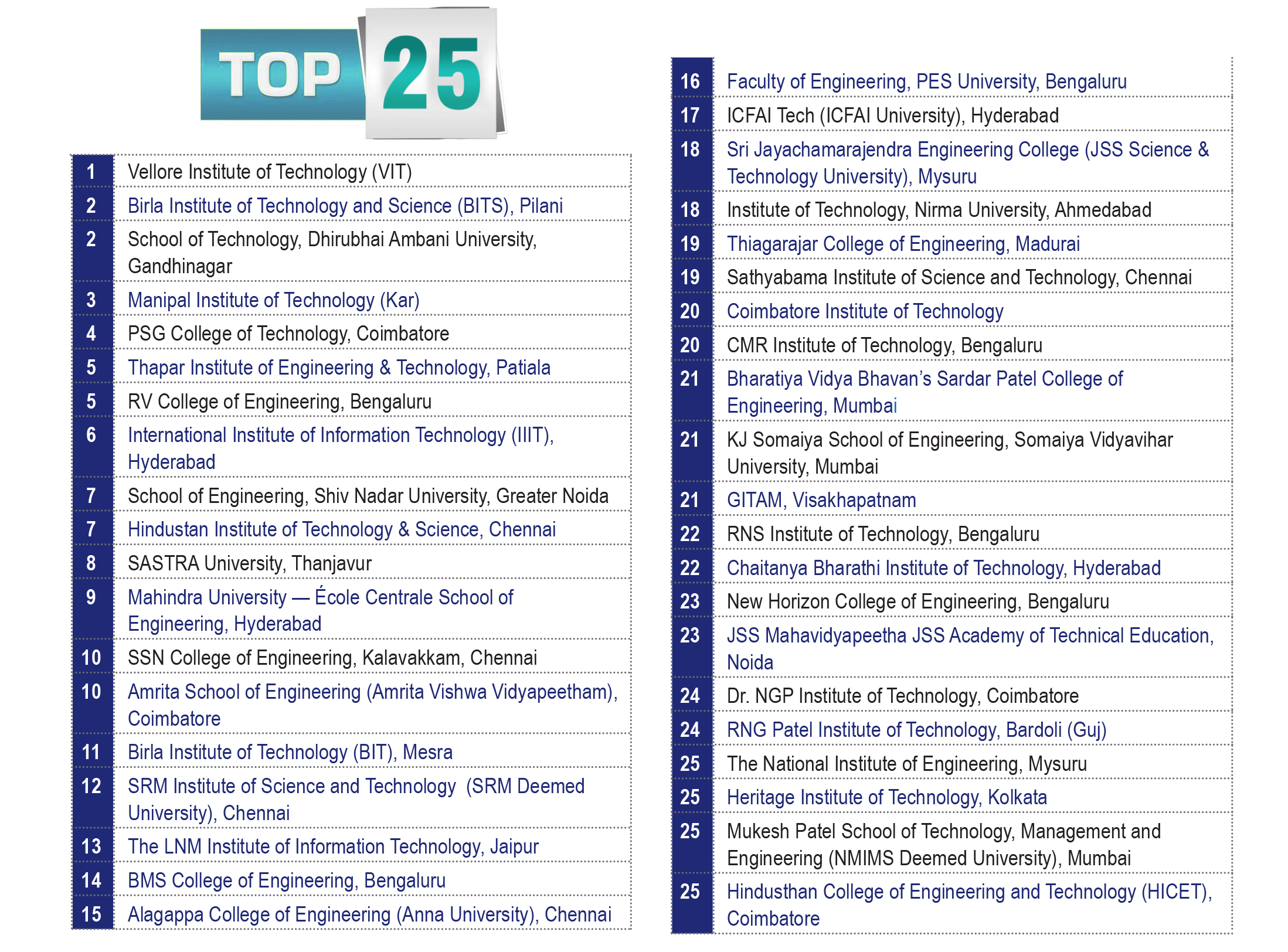
This year’s top table of India’s best private engineering institutes has undergone a change in seating order. The Vellore Institute of Technology (VIT), Tamil Nadu ranked #2 in 2025-26 is promoted to #1 with the Birla Institute of Technology & Science (BITS), Pilani, ranked #1 for three consecutive years (2023-25), obliged to share #2 rank with the School of Technology, Dhirubhai Ambani University, Gandhinagar (2).
Established in 1984 by former politician-turned-philanthropist G. Viswanathan, and conferred deemed university status in 2001, VIT operates five campuses in Vellore, Chennai, Amaravati, Bhopal and Mauritius with an aggregate enrolment of 67,000 students mentored by 2,020 faculty. Several emails and phone calls to VIT top brass for an interview to share the secrets of its success went unanswered. Their loss of free publicity.
In sharp contrast, Dr. G. Venkatesh, Director of the School of Technology, Dhirubhai Ambani University (SoT-DAU, estb.2001), sited on an impressive 50-acre campus in Gandhinagar (Gujarat), was more than willing to share SoT-DAU’s success mantra.
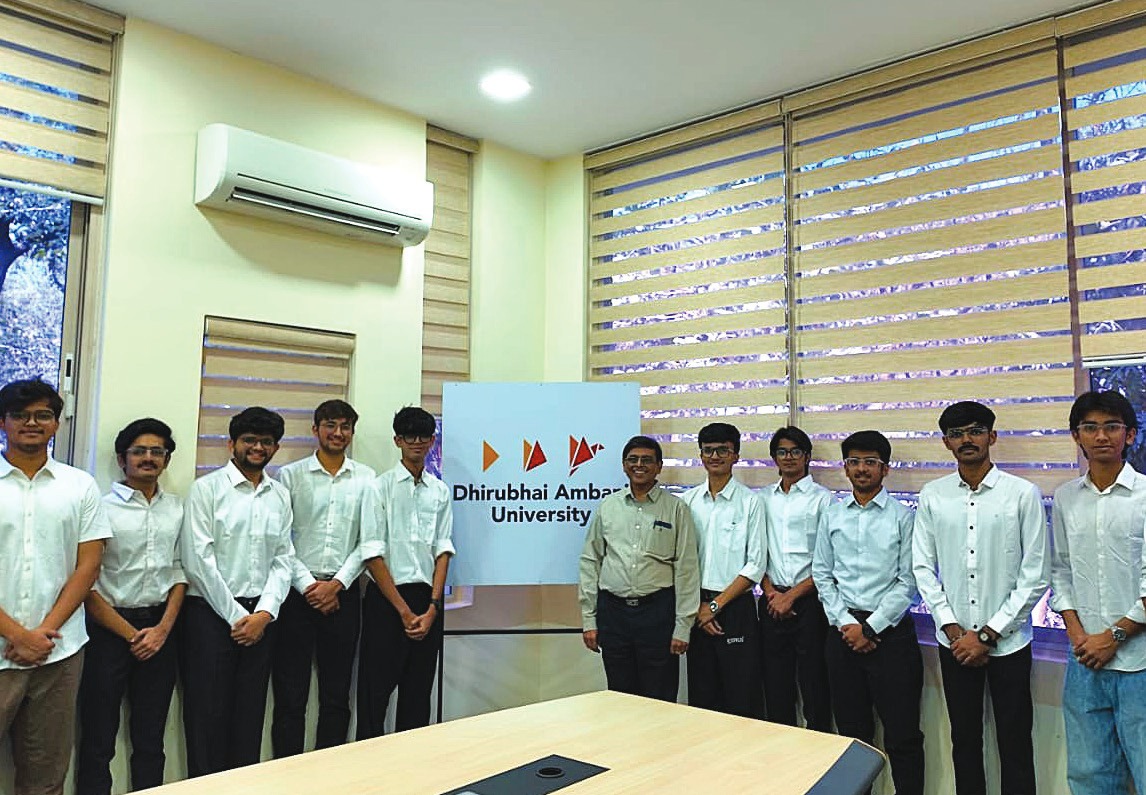
SoT-DAU’s Dr. G. Venkatesh (centre right): disruptive technologies proactive response
“I am pleased that we have retained our national #2 rank. This academic year marks a pivotal milestone as we are proactively responding to the transformative impact of disruptive technologies such as AI and machine learning. We have introduced two innovative AI-integrated four-year degree programmes and two dual degree programmes to be taught by highly qualified faculty. Therefore, it’s very satisfying to learn that we have been awarded highest score under the parameter of faculty competence, and high scores for faculty welfare and development and placements. I believe the future of industry will be shaped by the convergence of AI, data science, communication engineering, and information technology, with interdisciplinary learning driving advanced research and application. SoT-DAU is fully prepared to equip students with the knowledge and skills to succeed in the new AI-powered digital age,” says Venkatesh, an alum of IIT-Madras and Tata Institute of Fundamental Research, Mumbai and former visiting faculty of IIT-Bombay. Currently, SoT-DAU hosts 2,359 students and 91 faculty.
In this year’s Top 10 league table of private engineering colleges, most institutions are ranked a notch or two above their 2025-26 ranks. Manipal Institute of Technology, Karnataka has been promoted to #3 (5), PSG College of Technology, Coimbatore is ranked #4 (4), Thapar Institute of Engineering & Technology, Patiala has inched up to #5 (6) jointly with RV College of Engineering, Bengaluru (5). The Indian Institute of Information Technology, Hyderabad is ranked #6 (3), School of Engineering, Shiv Nadar University, Greater Noida — promoted by IT tech billionaire Shiv Nadar — is tied at #7 (8) with Hindustan Institute of Technology & Science, Chennai (8), while Mahindra University Ecole Centrale School of Engineering, Hyderabad has lost ground to be ranked #9 (6). The Top 10 table is completed by SSN College of Engineering, Kalavakkam, Chennai, jointly ranked #10 (7) with the Amrita School of Engineering, Coimbatore (11).
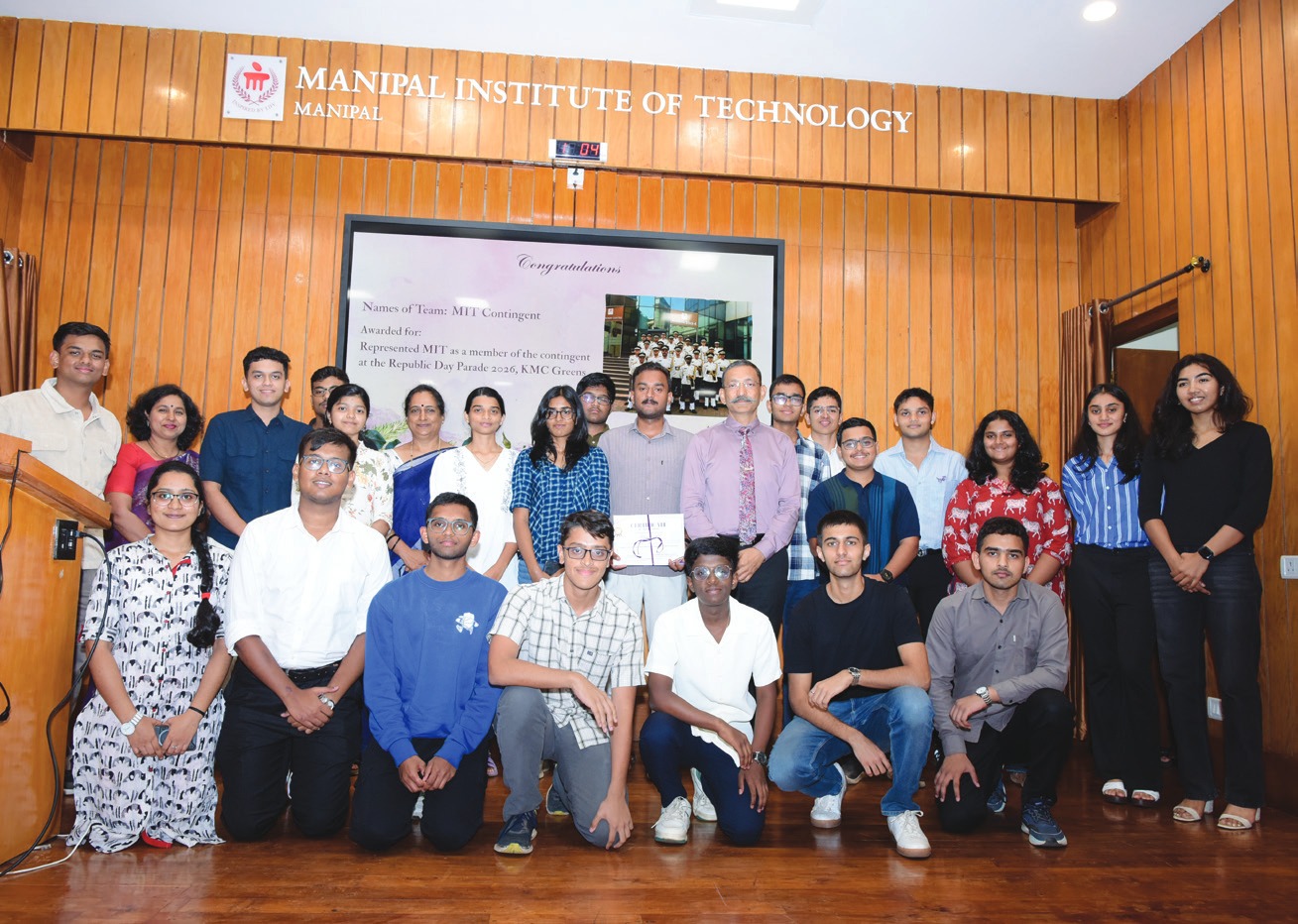
MIT’s Dr. Anil Rana (centre right): holistic future-ready education focus
Cdr. (Dr.) Anil Rana, Director of Manipal Institute of Technology (MIT, estb.1957), a constituent of the Manipal Academy of Higher Education (MAHE) — ranked among India’s Top 3 private multidisciplinary universities (see EW April) — is delighted that the 69-year-old MIT is steadily moving up the league table from #5 in 2025-26 to #3 this year. MIT is awarded top score under the parameters of faculty welfare and development, and high scores for research and innovation and industry interface.
“It is highly encouraging to be ranked among India’s Top 3 private engineering education institutions as reflected by measurable progress across key parameters. This promotion reaffirms our commitment to delivering holistic, future-ready engineering education. Over the past year, we have strengthened our faculty profile through targeted recruitment of research-active scholars and robust professional development initiatives, resulting in higher-quality research publications and projects, and interdisciplinary output. Industry interface has deepened through collaborations and co-created curricula with leading companies, ensuring closer alignment of MIT with India Inc. Our objective is to also emerge as a nodal centre for AI study programmes, while enhancing the global exposure and interdisciplinary learning of our students. Our high scores for faculty development and research and innovation indicate we are moving in the right direction,” says Cdr. Rana, an alum of IIT-Delhi, IIT-Bombay and a former Indian Navy officer, and director of MIT since 2021. Currently, MIT has 11,206 students and 714 faculty on its muster rolls.
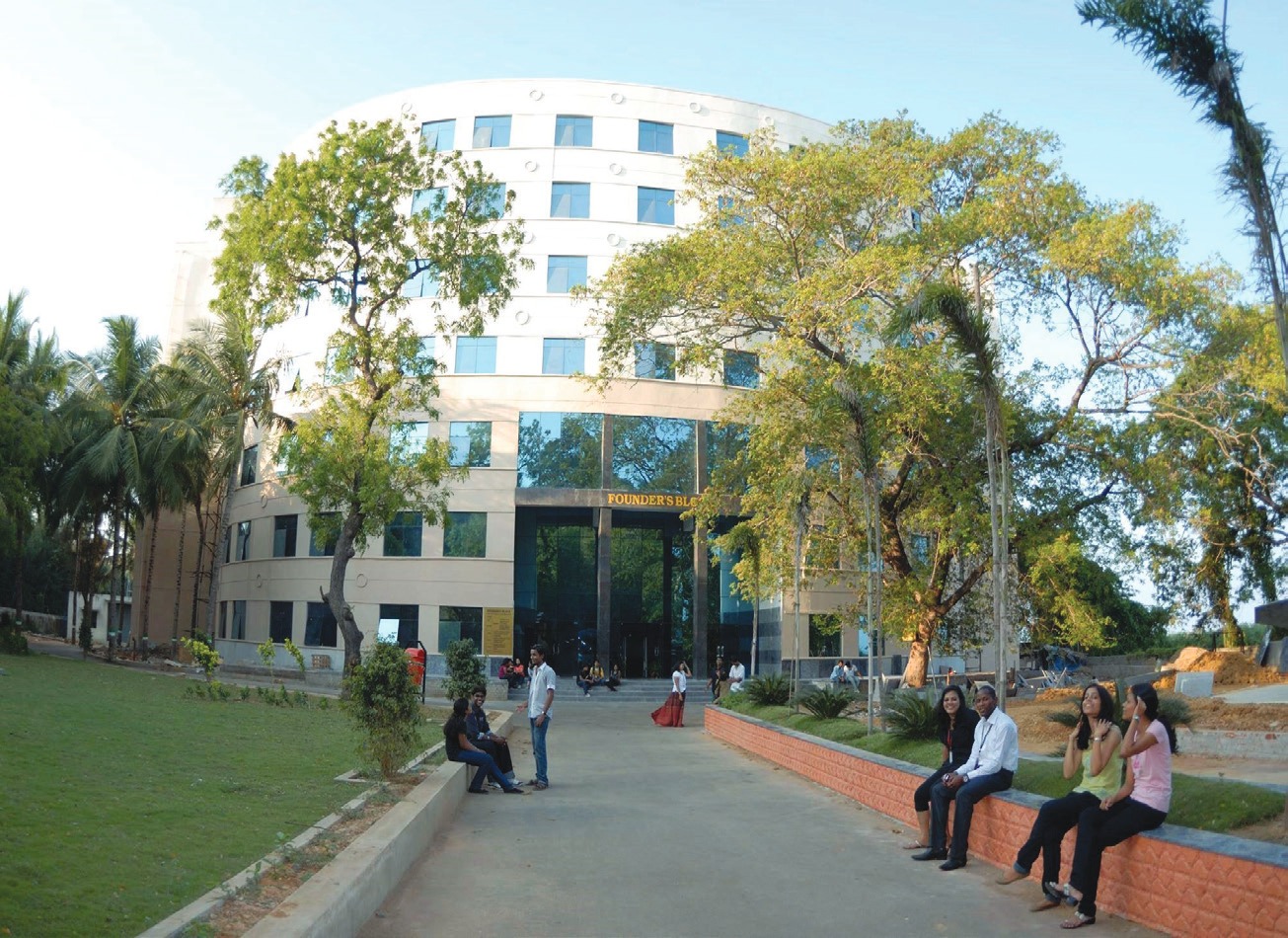
HITS, Chennai: workplace skills priority. Inset: Dr. M. Subramaniam
Likewise, Prof. (Dr.) Muthukumar Subramaniam, Registrar of the Hindustan Institute of Technology and Science, Chennai (HITS, estb.1985), a deemed university since 2008, is gratified with HITS’ promotion to #7 (8) and high scores under the parameters of curriculum and pedagogy and industry interface.
“Our steady advancement in the Top 10 table reflects our success in providing industry-ready engineering education. All our study programmes integrate industry exposure and experiential learning. Supported by state-of-the-art laboratories, experienced faculty, and industry collaborations, our students are ready to confidently address workplace challenges when they graduate. Therefore, workplace skills development is high priority. Recently, we signed an MoU with Ethnotech Academic Solutions and the National Skill Development Corporation to establish a Centre for Future Skills. This tripartite partnership will create transformative opportunities for students to develop advanced competencies and enhance their employability. I am happy your survey acknowledges our deep engagement with industry and has awarded us high scores on the parameter of industry interface,” says Dr. Subramaniam, an alum of Madurai Kamaraj University, BITS-Pilani, Anna University and former dean of SRM, Chennai, appointed Registrar of HITS in 2024.
Beyond the Top 10, several institutions have risen impressively in the 250-strong league table of India’s best private engineering education institutes. Among them: Institute of Technology, Nirma University, Ahmedabad to #18 (#45 in 2025-26), Sathyabhama Institute of Science & Technology, Chennai to #19 (#26), CMR Institute of Technology, Bengaluru to #20 (#34), and GITAM, Visakhapatnam to #21 (#43).
Moreover, it’s important to note that although some colleges are modestly ranked nationally, they are highly ranked in their host states. For instance, The Heritage Institute of Technology, Kolkata ranked #25 nationally is the #1 private engineering college of West Bengal (pop.105 million); GITAM, Visakhapatnam, ranked India #21, is the #1 private engineering college of Andhra Pradesh (pop.53 million); and Panipat Institute of Engineering & Technology ranked #71 is #1 in Haryana (pop.31.6 million). Therefore, students reluctant to travel to distant destinations in quest of quality engineering education, should study state and city rankings carefully.
It’s important to note that although some engineering colleges are modestly ranked nationally, they are highly ranked in their host states









Add comment