






Myopia in Preschoolers: Early Warning Early Prevention

Dr. Tarun
Traditionally, afflicting school-going children and adolescents, myopia is developing in preschoolers, raising serious concerns about children’s long-term eye health
Pediatric eye specialists across the world are reporting a disturbing trend: myopia (short-sightedness, i.e, distant objects appear blurred) is being diagnosed at increasingly younger ages in children, as early as three and five years. Traditionally, afflicting school-going children and adolescents, myopia is developing in preschoolers, raising serious concerns about children’s long-term eye health. A recent study titled ‘Prevalence of Myopia and Premyopia in Preschool Children in China’ found a 3.7 percent prevalence among preschoolers. Other studies indicate that up to 10.7 percent of pre-primary children indicate signs of premyopia. Overall, within children and adolescents, the prevalence of myopia increased from 24.3 percent in 1990 to 35.8 percent in 2023 (‘Global impact of myopia’ published in Ophthalmology Times (2025)).
Early age of onset of myopia is dangerous because it significantly increases the risk of high myopia in adulthood. High myopia is associated with potentially blinding complications such as retinal detachment, myopic maculopathy, glaucoma, and early cataract formation.
Dr. Tarun Singh, Consultant, Pediatrics & Neonatology, Bhagwan Das Hospital and Kalpavriksh Healthcare, Sonipat, spoke to PW’s Kiran Balimane about the causes of early myopia, symptoms and preventive measures.
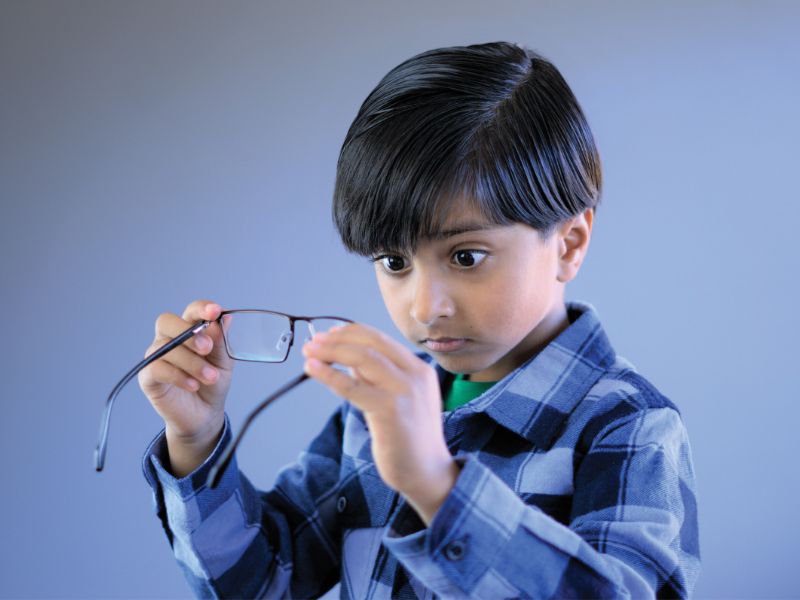 The human visual system is designed to mature through a delicate balance of near and distance vision, exposure to natural light, and varied visual stimuli. Modern environments have disrupted this balance. One of the strongest contributors to early-onset myopia in children is excessive near-work activity, particularly prolonged exposure to mobile phones, tablets, televisions, and digital devices. Toddlers today are being introduced to digital screens during critical periods of visual development, when the eye is still learning how to focus efficiently. Sustained screen exposure increases accommodative stress and promotes axial elongation of the eyeball, the structural basis of myopia. When myopia develops early:
- Progression of the disease is faster and more severe
- The likelihood of developing high myopia increases substantially
- Visual impairment adversely affects motor skills, learning ability, and social interaction
- Undiagnosed vision problems lead to low academic achievement and reduced self-confidence
Outdoor time
One of the most consistent and robust findings in myopia research is the protective effect of outdoor activity. Children who spend more time outdoors have significantly lower risk of developing myopia, regardless of genetic predisposition.
Exposure to natural daylight stimulates retinal dopamine release, which plays a critical role in regulating eye growth and preventing excessive elongation. Indoor lighting, even when bright, does not replicate this protective effect. Unfortunately, urban living, academic pressures, safety concerns, and digital screen dependency have drastically reduced outdoor playtime of children, including toddlers.
Prevention
Here are some practical, evidence-based measures parents need to take to prevent children from developing myopia:
- Limit recreational digital screen time, especially in children under five years
- Encourage at least one to two hours of outdoor play daily
- Promote activities that involve distance vision, such as ball games or spotting distant objects
- Ensure regular vision screening, ideally beginning around three years of age or earlier in high-risk children
- Encourage healthy visual habits, including adequate lighting and frequent breaks during digital screen tasks
Addressing the growing prevalence of myopia in young children requires a collective effort. Parents, pediatricians, ophthalmologists, educators, and policymakers must work together to create environments that support children’s healthy visual development. Ocular health counseling should become an integral part of routine pediatric care, alongside nutrition, immunization, and physical development monitoring.
Increasing prevalence of early childhood myopia is a warning sign of how rapidly changing lifestyles are affecting childhood health. While genetic factors play a role, its dramatic rise observed globally and in India, is largely driven by environmental influences — most notably excessive digital screen exposure and lack of outdoor activity.
The good news is that early intervention works. By restoring balance between digital screens and sunlight, near work and distance vision, we can protect our children’s eyesight and long-term ocular health.










Add comment