






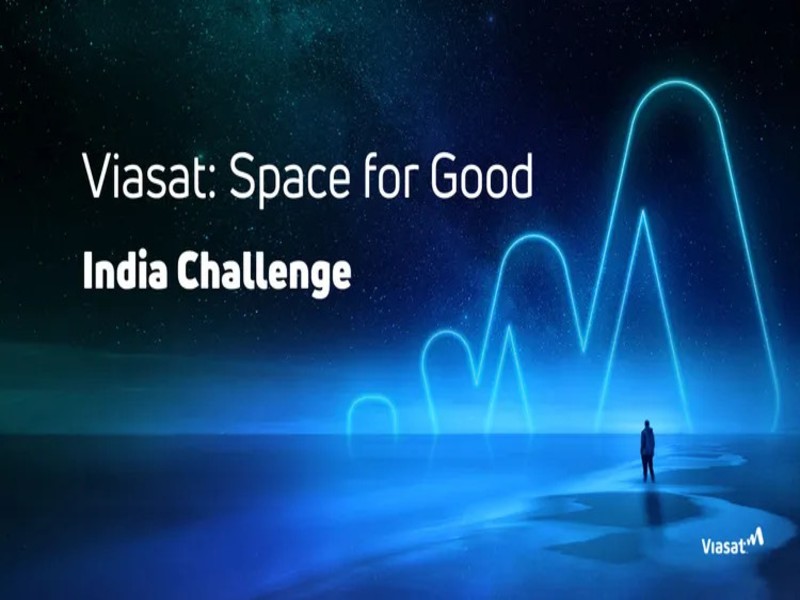
Viasat launches nationwide hunt for India’s next space tech innovators
– Ronita Torcato
Indian astronomers are revolutionising our understanding of the cosmos, from discovering ancient, Milky Way-like galaxies 12 billion light-years away to charting dust maps of our own galaxy.
The universe has always sparked human curiosity, but today’s young scientists aren’t just looking at the stars — they are actively figuring out how to use them to save lives on Earth.
If you are a university student with a passion for STEM and an eye on the cosmos, your launchpad has officially arrived.
Global communications giant Viasat has invited submissions for the 2026 Viasat: Space for Good India Challenge. This global STEM initiative is a call to India’s brightest minds to develop sustainable, real-world space solutions.
The 2026 challenge isn’t asking students to build sci-fi fantasies. Instead, it pushes them to tackle pressing, tangible issues across several critical tech frontiers:
*Ensuring the cosmos remains usable for generations without becoming choked with space debris.
*Bridging communication gaps by connecting everyday devices directly via satellite.
*Maximising satellite networks.
*Marshalling humanitarian and disaster response by using space tech to predict, manage, and even mitigate natural disasters.
“Last year’s programme showcased the incredible ingenuity and ambition of students across the country,” says Gautam Sharma, managing director of Viasat India. “With the return of Viasat: Space for Good in 2026, we are expanding opportunities for students to explore bold ideas that can transform space technologies while addressing real-world challenges.”
The top three winning teams will take home substantial cash prizes to help further their academic or entrepreneurial dreams:
Reward Tier Prize Amount
1st Place ₹5,00,000
2nd Place ₹3,75,000
3rd Place ₹2,75,000
The real prize, however, could be employment and the career trajectory. Since its inception in 2024, the Space for Good initiative has engaged over 10,000 students globally.
According to Viasat, 93 percent of participants reported a huge increase in their awareness of space and telecom careers while 53.45 percent saw an increased desire to pursue jobs within the space sector.
The competition is open to all students enrolled in Indian universities (including graduate and PhD candidates) who are 18 years or older. But getting to the top won’t be easy. Teams will have to prove their grit across three phases:
Phase 1: The Written Pitch (Deadline: July 19, 2026)
Teams must submit a comprehensive written proposal outlining their sustainable space solution.
Phase 2: The Digital Short (August 3 – August 23, 2026)
30 standout students will be tasked with distilling their complex ideas into a punchy, 3-minute digital video submission.
Phase 3: The Mentorship & Finals Prep (Starts September 7, 2026)
The top six finalists are chosen. Each finalist will be paired one-on-one with a Viasat industry mentor to sharpen, stress-test, and polish their ideas for the grand stage.
The journey culminates during Finals Week (October 24 – October 27, 2026). The six finalists will fly to New Delhi for the live presentations and awards ceremony on October 27, where they will pitch directly to a panel of top-tier industry experts. The best part? Viasat is covering all expenses for the finalists.
For details on rules, team registration, and submission guidelines, visit the official challenge portal at HeroX: Viasat Space for Good India 2026.
Also read: University of Galway, VIT Vellore sign MoU to strengthen research and academic collaboration









Add comment